Biography
Irmina of Oeren
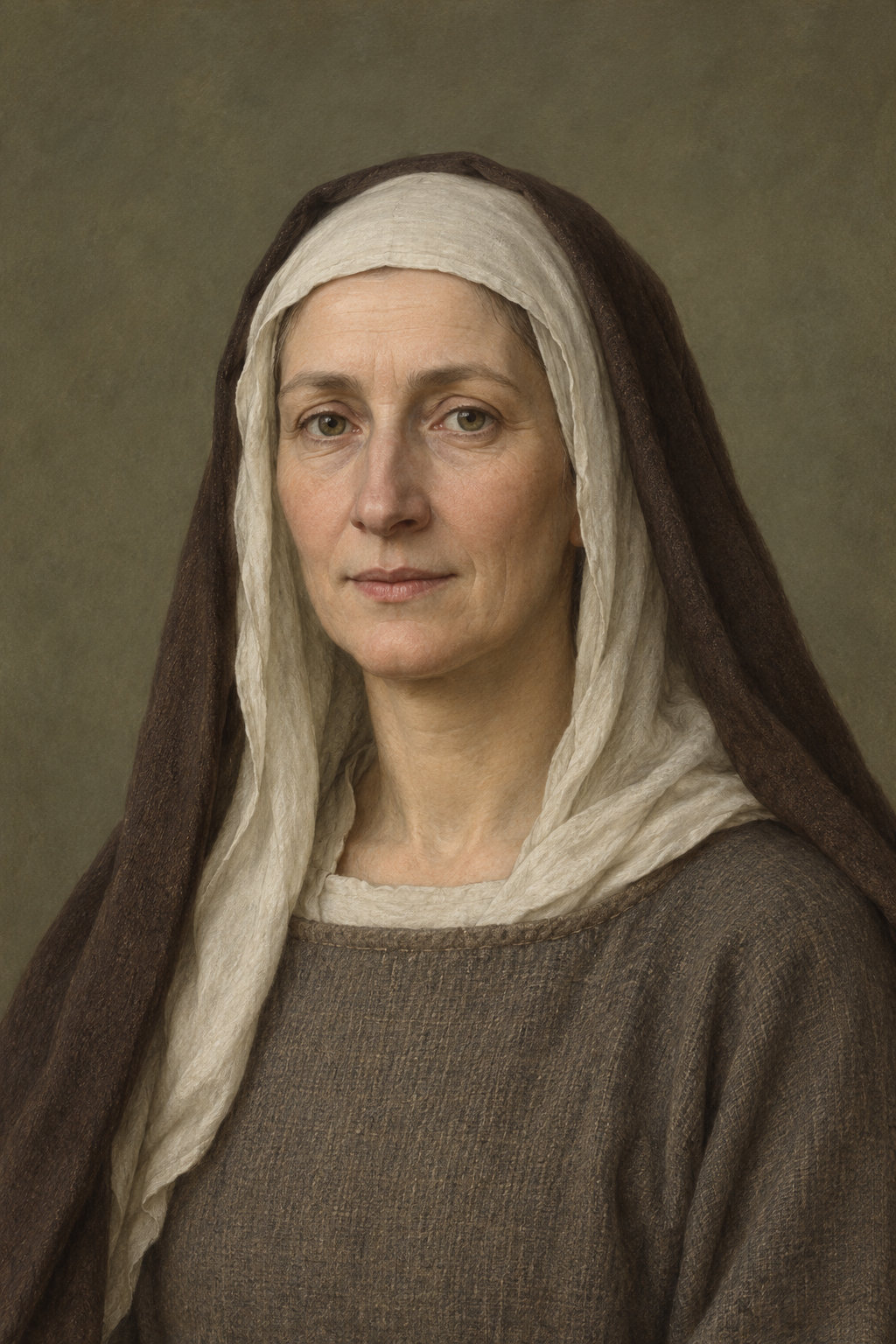
About Irmina of Oeren
Irmina of Oeren was an abbess at Trier whose gifts helped establish Willibrord’s monastery at Echternach. She appears as the second abbess of Oeren in 697–698, succeeding Modesta. Her community drew its members from the nobility. Irmina herself belonged to the aristocratic society of Austrasia, but her parents cannot be identified with confidence.
Oeren already existed before Irmina became its leader. Founded around the middle of the seventh century, the monastery was originally dedicated to Mary. Its name recalled the Roman storehouses, or horrea, on the site. Although Irmina is commonly called a Benedictine abbess, the community’s observance of the Benedictine Rule is first documented in 953.
The historical reconstruction associates her with Hugobert as his wife, while the proposed identities of their daughters remain disputed. Her better-attested legacy is the support she gave Willibrord. With episcopal and communal consent, she provided property for his foundation in 697–698, followed by liturgical furnishings in 699 and further land in 704. These gifts supplied the material basis for a community whose spiritual leadership belonged to Willibrord.
A much later biography by Thiofrid of Echternach made her a daughter of King Dagobert and told of a fiancé who died before their wedding. The New Catholic Encyclopedia cautions that this narrative, written roughly four centuries after her lifetime, is unreliable. It should not turn her royal ancestry or the tragic engagement into established facts.
Her exact death date is unknown. Another abbess, Anastasia, is recorded in 710. Even the original burial place is uncertain, though later tradition associated her tomb with Oeren. The former monastery eventually bore Irmina’s name. Its religious community ended with secularization in 1802; the site subsequently served as a hospital. Its buildings thus entered a new phase of care after centuries of monastic life.
Her memory also lives in local observance near Echternach. The parish account describes a solemn Mass at Rosport on the Sunday after her January 3 feast, followed by the distribution of blessed bread. It links this custom with an older tradition of supplying bread to neighboring villages during famine. In devotional art, a charter recalls her donation, while bread expresses charity.
The Diocese of Trier adopted Irmina as a patroness in the fourteenth century.
Wondering how to weigh the stories and sources? Learn how to read a saint biography.