Biography
Isaac of Armenia
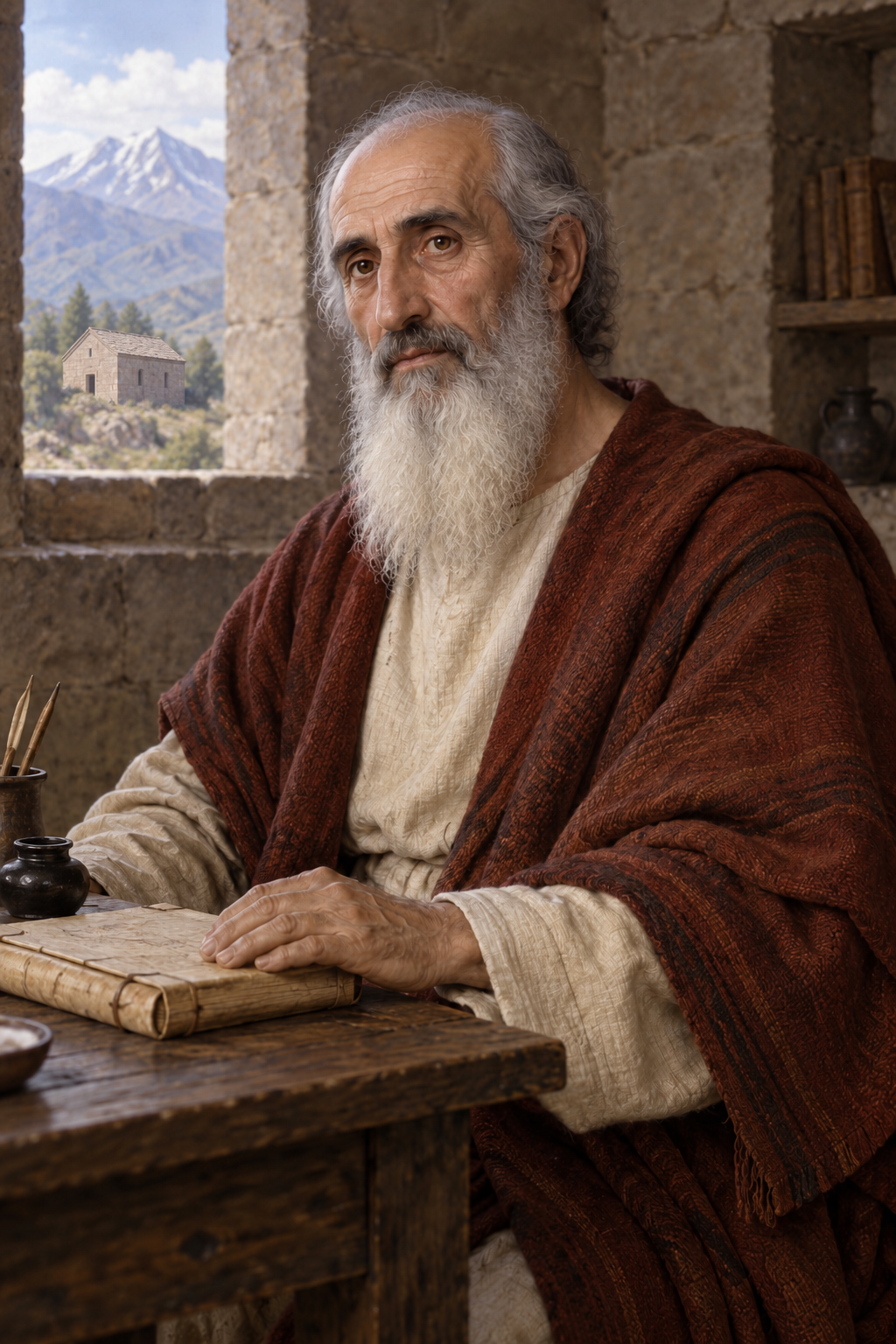
About Isaac of Armenia
Isaac of Armenia is better known in Armenian tradition as Sahak the Parthian. As catholicos, or chief bishop, he helped make Christian teaching available in Armenian through translations, schools and the training of readers. His family connected him with Nerses the Great and Gregory the Illuminator, earlier leaders of the Armenian Church. His early years are much less clearly documented than his mature work. The fifth-century writers Koriun and Lazar of Parpi chiefly illuminate the cultural movement in which Sahak supported Mesrop Mashtots and the new Armenian alphabet.
A strong literary education prepared him for this work. The Catholic Encyclopedia places his studies in Constantinople and describes his knowledge of Eastern languages. It presents him as a leader concerned with both religious teaching and education. Armenian schools and translations needed people who could move between different languages, and Sahak sent disciples to centers including Edessa, Melitene and Byzantium. Their work brought the writings of Greek and Syriac Christian teachers into Armenian, including Athanasius, Cyril of Jerusalem, Basil, the two Gregorys, John Chrysostom and Ephrem.
The Armenian diocese’s account places this educational effort in a divided country. Armenia had been partitioned between Roman and Persian powers, with the larger eastern portion under Persian control. Sahak worked in Persian Armenia while Mesrop traveled to outlying provinces, neighboring lands and the Greek sector. Their partnership joined learning to preaching. Schools, pupils and translated books were parts of the same undertaking, intended to give Armenian Christians the means to understand Scripture and the teaching of their Church. The work extended over decades and helped establish the literary culture remembered as Armenia’s Golden Age.
Koriun gives a close view of the practical labor behind the achievement. In his Life of Mashtots, Sahak and Mesrop send pupils to Edessa to translate Christian writings from Syriac. Some continue their training among Greek speakers. Koriun includes himself among the students who later return from Constantinople with copies of Scripture, writings of the Fathers and the canons of Nicaea and Ephesus. Sahak then works with Eznik to compare earlier translations against better copies. The narrative depicts the teachers spending their days and nights reading and correcting books alongside their assistants.
His position also drew him into political conflict. The historical dictionary edited by Henry Wace and William Piercy connects the crisis of his leadership with the end of the Armenian Arsacid monarchy in 428. It describes his retirement into western Armenia and the appointment of other patriarchs under Persian authority. Armenian nobles later sought his return. In this account, he initially refused full restoration and entrusted administration to another, before eventually resuming some episcopal responsibilities. The succession was therefore more complicated than an uninterrupted exercise of office: Sahak could retain spiritual authority while another man held administrative power.
His contact with other churches continued during these unsettled years. The same historical dictionary describes letters carried by Mesrop to the emperor Theodosius and dealings with the imperial commander Anatolius. It also notes a lasting change in Armenia’s relationship with Caesarea over the right to ordain bishops. These episodes show the wider setting of Sahak’s leadership, in which Armenian, Persian and Roman authorities all affected the Church’s affairs. He did not attend the Council of Ephesus himself.
Not every later work bearing Sahak’s name can confidently be assigned to him. Krikor Maksoudian distinguishes his well-attested supervision of early translations from uncertain claims about particular canons, hymns and the present liturgical books. Some hymns ascribed to him show the style of later centuries. The account also remembers Sahak as a married man and the father of a daughter who became the mother of Vardan Mamikonian. His family line linked him to Gregory the Illuminator, but his enduring place in Armenian memory also rests on work shared with pupils and fellow translators.
Koriun locates Sahak’s last illness at Belrotsats in Bagrevand. He describes pupils and companions carrying the body to Ashtishat, where it was buried with psalms and funeral rites. The account preserves the grief of Mesrop, who survived his colleague only a short time. Koriun names Yeremia among the pupils who arranged the burial and identifies Douster, Vardan’s wife, as a participant. He also describes an annual gathering in the month of Sahak’s death to keep his memory.
Their shared remembrance continues in the Armenian Church. The diocesan booklet identifies a joint feast on the Thursday after the fourth Sunday following Pentecost and a separate observance for Sahak before Lent. These movable commemorations honor the two teachers whose schools, books and pupils helped establish Armenian Christian learning.
Sahak died around 439. The Catholic Encyclopedia records uncertainty extending to 441, rather than a securely established day and year. It also rejects the claim that he attended Ephesus. His correspondence and the later attribution of writings require separate judgments; his work as a teacher and supporter of Armenian translation is much more securely established.
Wondering how to weigh the stories and sources? Learn how to read a saint biography.