Biography
Isaac of Nineveh
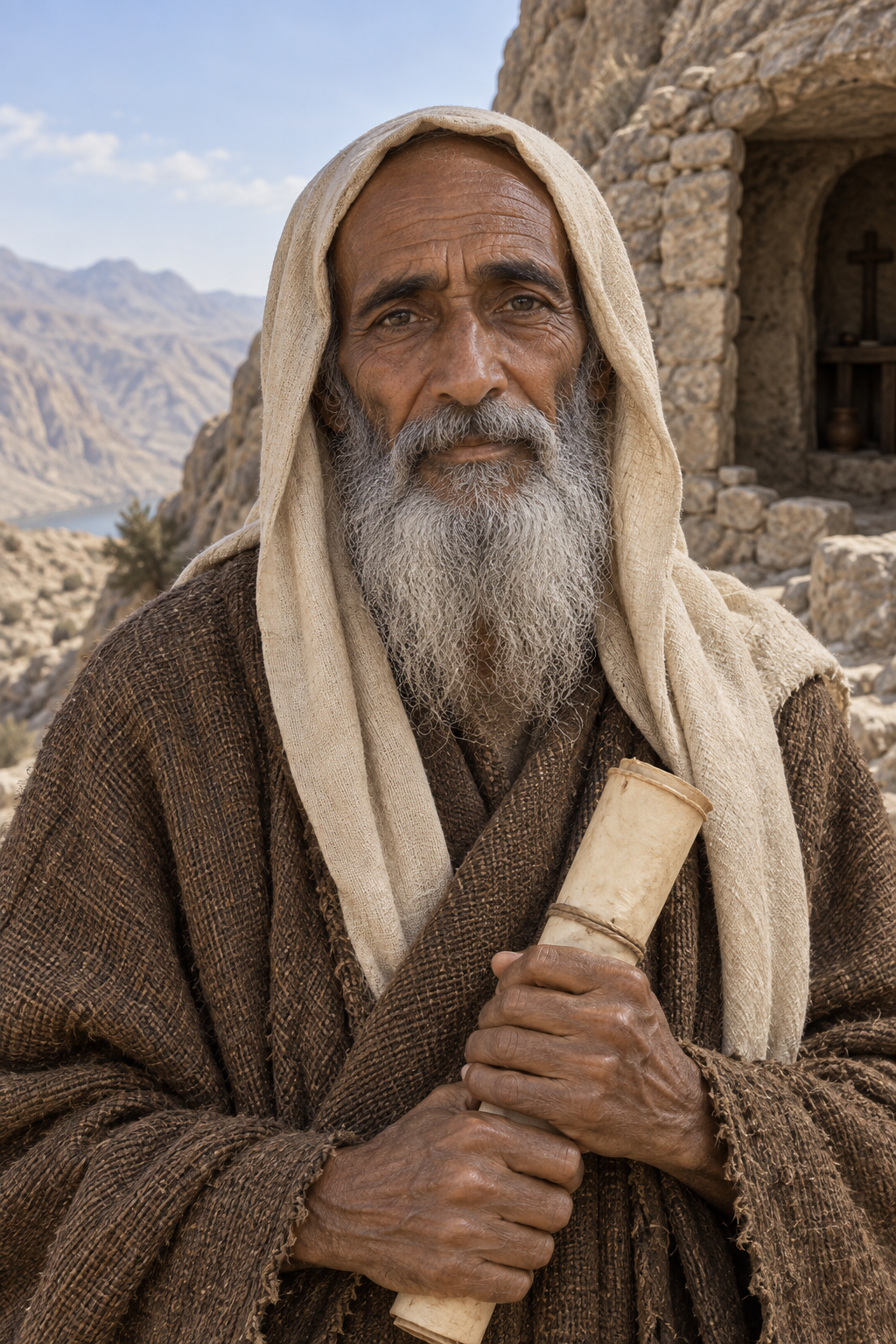
About Isaac of Nineveh
Isaac came from Beth Qatraye, the Persian Gulf region, probably around 613.
His homeland belonged to a wider Christian landscape along the Gulf, including what is now Qatar, Bahrain and the neighbouring Arabian coast. It was also a place of learning: other Syriac writers from the region produced biblical interpretation, spiritual instruction and commentaries on worship. Isaac's later work grew from that intellectual world, rather than from the country now called Syria.
According to a later biographical notice, Isaac studied church writings and their commentaries before becoming a monk and teacher in his homeland. The patriarch George subsequently brought him to Mesopotamia. The notice connects that invitation with Isaac's kinship to Gabriel, a church interpreter.
George's visit came during efforts to restore church unity in the region. A synod at Dayrin in 676 addressed a division between Gulf communities and the patriarchal authorities. Brock places Isaac's move and appointment probably in that year; Isaac's own attendance at the synod is not established.
He was consecrated for Nineveh at Beth Abe monastery. After five months he resigned; the reason is uncertain. Isaac then lived among mountain hermits in Beth Huzaye before moving to Rabban Shabur.
Isaac recalled urging an exhausted monk to eat regularly rather than exceed his strength. He also answered his brother's invitation in a letter, explaining why he feared disturbing his solitude.
He urged gentleness toward wrongdoers rather than harsh correction.
The later notice remembers him as gentle in speech and says that fellow monks wrote down his teaching after he became blind. It places his burial at Rabban Shabur after a long life; his exact death date remains uncertain.
He belonged to the East Syriac Church, commonly called the Church of the East. His writings nevertheless became part of the spiritual reading of Christians in other churches. In 2024, Pope Francis announced his inclusion in the Roman Martyrology during a visit by the patriarch of the Assyrian Church of the East.
His words travelled far beyond the places where he had lived. Monks at Mar Saba translated his writing into Greek around the beginning of the ninth century. Later translations carried it into Slavonic and Latin, and still later into modern languages.
Brock describes Christians from different churches finding a shared inheritance in Isaac's books despite the divisions between their communities. The monk who had left episcopal office could still speak to readers far outside his own setting. His lasting influence rests on that encounter through reading, as successive generations carried his spiritual counsel into their own lives of prayer.
Wondering how to weigh the stories and sources? Learn how to read a saint biography.
Explore similar vocations
Prayers for Isaac of Nineveh
Isaac of Nineveh: sourced prayer excerpt
Make me worthy to know you