Biography
Isfrid of Ratzeburg
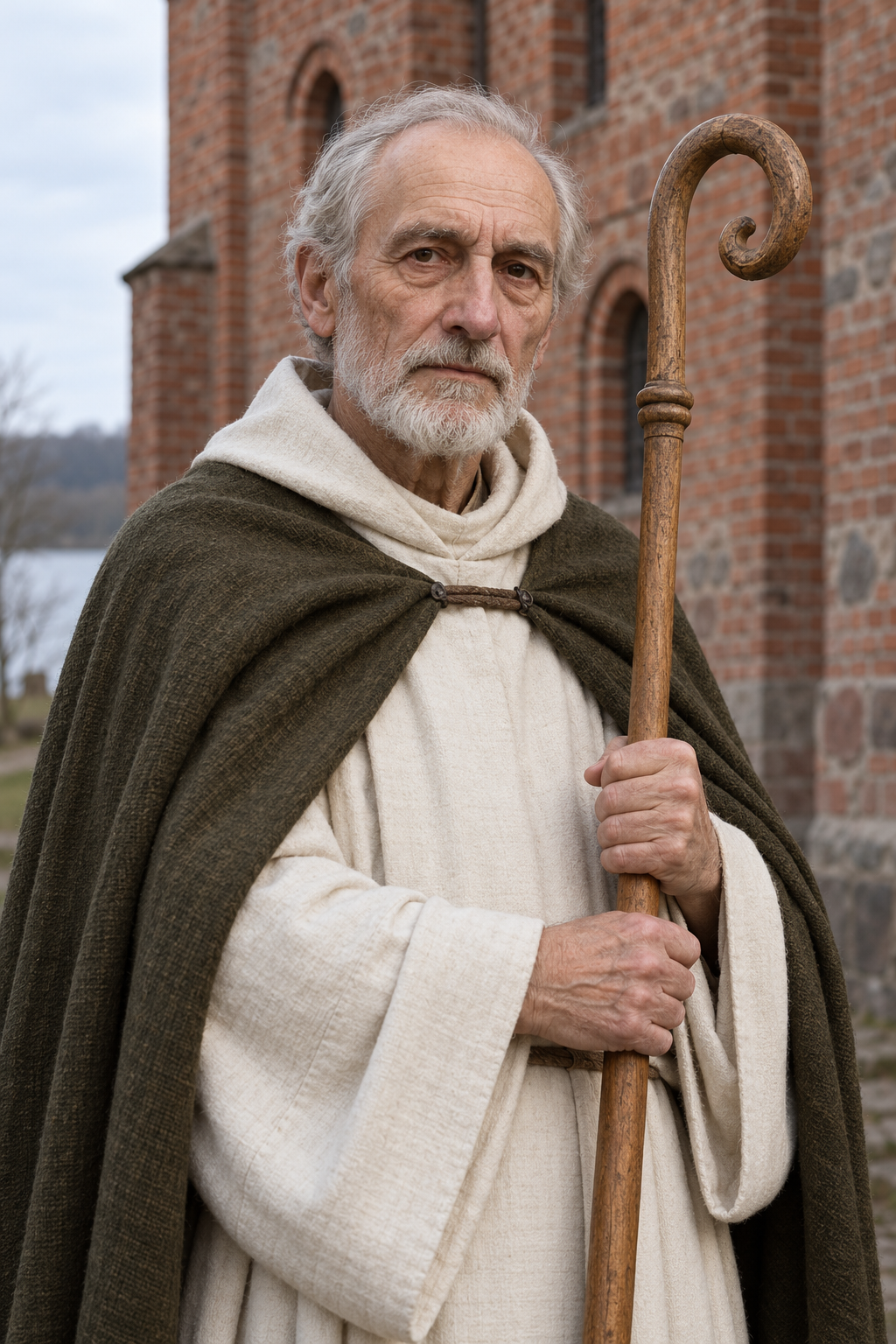
About Isfrid of Ratzeburg
Isfrid of Ratzeburg moved from the shared life of a Premonstratensian canon into the responsibilities of a bishop. He belonged to the community at Cappenberg before becoming provost of Jerichow in 1159. In 1180 he was consecrated bishop of Ratzeburg, where he worked to strengthen a recently established diocese. His activity formed part of the expansion of Christianity and German settlement into lands east of the Elbe.
His beginnings are much less clear. The Catholic Church in Norway places his birth around 1115 but says that nothing is known of his early years. Its account describes a disputed succession after Evermod died in 1178, followed by a vacancy lasting two years. Henry the Lion intervened, and Isfrid took office in 1180.
Modern scholarship also preserves the uncertainty in the chronology. Clemens Brodkorb gives the beginning of Isfrid’s episcopate as 1178/80, rather than assigning every stage of his appointment to one year. Among the men who served him was Philipp, a canon of the Ratzeburg cathedral community and his chaplain. Philipp later became his successor, although that election, too, divided the chapter.
Jerichow was already an established religious house when Isfrid became its provost. The parish chronology dates its foundation to 1144 and its move to the present site to 1148. Construction between 1149 and 1172 produced the three-aisled church and the eastern wing of the community’s buildings. Further work continued through later phases, including changes to the church and the development of the cloister.
A property settlement from 1194 gives a more concrete view of his episcopal administration. As the historian Ludwig Hellwig explains, Isfrid agreed to separate the cathedral chapter’s possessions from those assigned to the bishop. Sworn arbitrators determined the allocation, and both bishop and community accepted their decision. The chapter was to keep the lands and revenues assigned to it, together with future gains in its allotted territory. In return, it relinquished claims on later increases in the bishop’s income. Hellwig’s discussion identifies the charter as number 154 in the first volume of the Mecklenburgisches Urkundenbuch. His reconstruction of an earlier property register remains a scholarly inference, distinct from the surviving agreement.
Isfrid also remained close to Henry the Lion as his confessor and attended him at the end of his life. The New Catholic Encyclopedia remembers both this pastoral relationship and his influence beyond northern Germany, extending as far as Floreffe. Its account connects his reputation for holiness with patience and self-denial, while noting that miracles were attributed to him during his lifetime.
Norbertine tradition preserves a story about his fasting on Good Friday. While he was taking only bread and water, the water was said to turn into wine repeatedly. The account portrays him finally accepting what he understood as God’s gift. This is a devotional miracle story, not an independently established episode.
He died in 1204 and was buried in the cathedral at Ratzeburg beside Evermod. The Norwegian church account gives 15 June as the date and remembers his cult among the Premonstratensians. Its precise account of papal recognition includes a caveat about the absence of that act from a later official index.
The New Catholic Encyclopedia treats 15 June as his probable death day and dates approval of his cult only approximately.
His memory remains visible at Jerichow as well. The parish records the dedication of a sculpture of Isfried in December 2004, when the monastery foundation was established.
Wondering how to weigh the stories and sources? Learn how to read a saint biography.