Biography
Isidore Boucheir
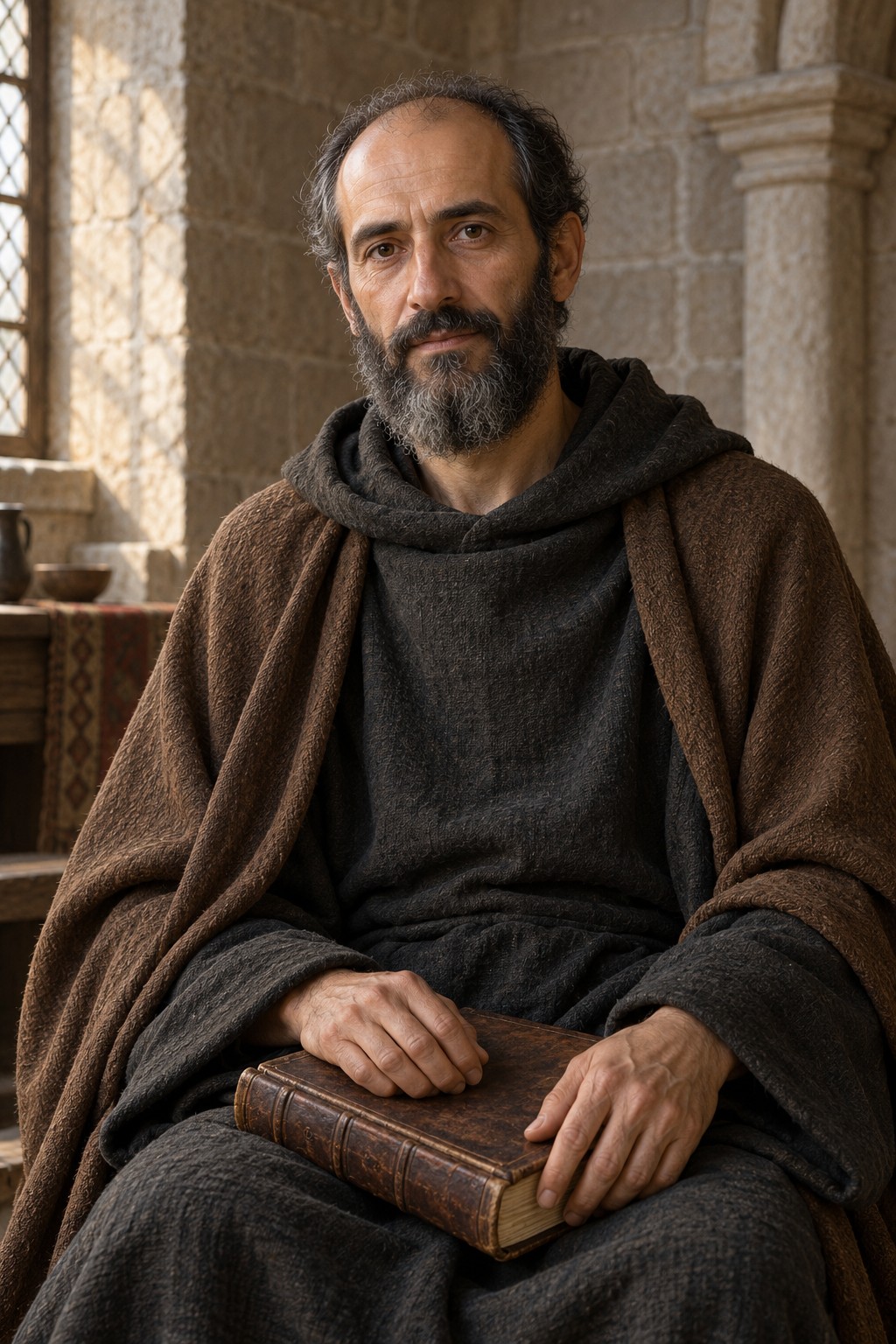
About Isidore Boucheir
Isidore Boucheir taught contemplative prayer in Thessalonike before becoming patriarch of Constantinople. Born in Thessalonike, he came from a large family. His early religious formation connected him with Gerasimos and Gregory of Sinai. Raids forced the Athonite community to leave in the 1320s, and Isidore returned to his native city.
For about a decade he remained a layman while leading a circle that included monks and laypeople. He later received monastic tonsure from Gregory Palamas. His association with Palamas brought him into the theological disputes of the 1340s. He accompanied him to the council of 1341 and was subsequently chosen for the metropolitan see of Monemvasia, although he was not consecrated to it.
His influence may have reached Nicholas Cabasilas, later an important writer on Christian worship and spiritual life. Marie-Hélène Congourdeau considers it probable that Isidore introduced Cabasilas to hesychast prayer and notes their enduring friendship. She also cautions against accepting hostile accusations at face value: allegations linking Isidore with the Bogomils appear to her to belong to the polemics of Gregory Akindynos.
In the Life written by Philotheos Kokkinos, Isidore’s concern for others appears during a threatened attack on a private house. His friend Nicholas of Monemvasia had left Constantinople to visit Kantakouzenos. Political opponents, unable to seize Nicholas himself, gathered a crowd against his home. According to the Life, Isidore appealed to the Mother of God and placed consecrated bread at the house as a sign of her protection. The crowd approached but then dispersed. Kokkinos attributes the outcome to divine intervention through Isidore’s prayers.
Niels Gaul reads this episode as evidence of the authority that Byzantine writers assigned to holy people amid civic conflict. Unlike a public healing performed before spectators, the story makes prayer effective without the crowd witnessing a miracle. Its religious message and its account of a divided city are closely intertwined.
His elevation to the patriarchate in 1347 also belonged to the political settlement after the civil war. Anastasiya Zykova argues that John VI Kantakouzenos benefited from having a patriarch sympathetic to his rule. Isidore crowned him on 21 May 1347. The historian interprets this cooperation as an exchange between imperial support for the hesychast movement and ecclesiastical support for the emperor.
Opposition to Isidore did not disappear with his election. Zykova notes that some bishops challenged the legality of his appointment, accusing secular power of determining it.
As patriarch, he consecrated bishops sympathetic to Palamas and helped establish the movement within the church’s hierarchy. Resistance led to further synodal action in August 1347. Opposing bishops were formally deposed, but the decision withheld removal of their clerical rank in the hope that they would return to obedience.
Isidore also wrote hymns. His poetry carried his theological commitments into worship, where they became another subject of controversy. Patapios of Kavsokalyvia describes hymns on the Trinity that Isidore directed congregations to sing in 1347. Opponents criticized them, while Gregory Palamas wrote in defense of an Isidorian hymn. The account of their destruction by imperial order remains disputed.
A different part of his legacy survives in a joyful canon honoring John the Baptist. Patapios published this work from two manuscripts kept at the skete of Kavsokalyvia on Mount Athos. One eighteenth-century copy places it beside other hymns to John; a later collection includes copying dated 1821 and 1896. The manuscript heading assigns the canon to Monday evening prayer, and its acrostic includes Isidore’s name. These later witnesses preserve the attribution and the continuing use of his hymnography; they are not manuscripts written in his own hand.
Another hymn may connect Isidore with the monastery of the Prodrome of Petra in Constantinople. Matthieu Cassin and Marie Cronier identified a canon attributed to a patriarch Isidore in a manuscript preserving the monastery’s liturgical tradition. They judge the author to be probably Isidore Boucheir. Its subject is John the Faster, the monastery’s medieval refounder, rather than John the Baptist. The attribution is a scholarly identification, not a securely dated autograph.
He died after February 1350 following a prolonged illness. His testament defended his theological position, and Philotheos Kokkinos later composed his Life.
The Holy Metropolis of Morphou explicitly honors Isidore as a saint in its account of Gregory Palamas.
His earlier life also shows that hesychast practice was not confined to isolated hermitages. In Mihail Mitrea’s reading of the saints’ Lives, Isidore’s prayer belongs chiefly to an urban, communal setting. Intensive prayer and ascetic discipline could be pursued by laypeople as well as monks, within a city as well as away from it.
Wondering how to weigh the stories and sources? Learn how to read a saint biography.