Biography
Jackson Kemper
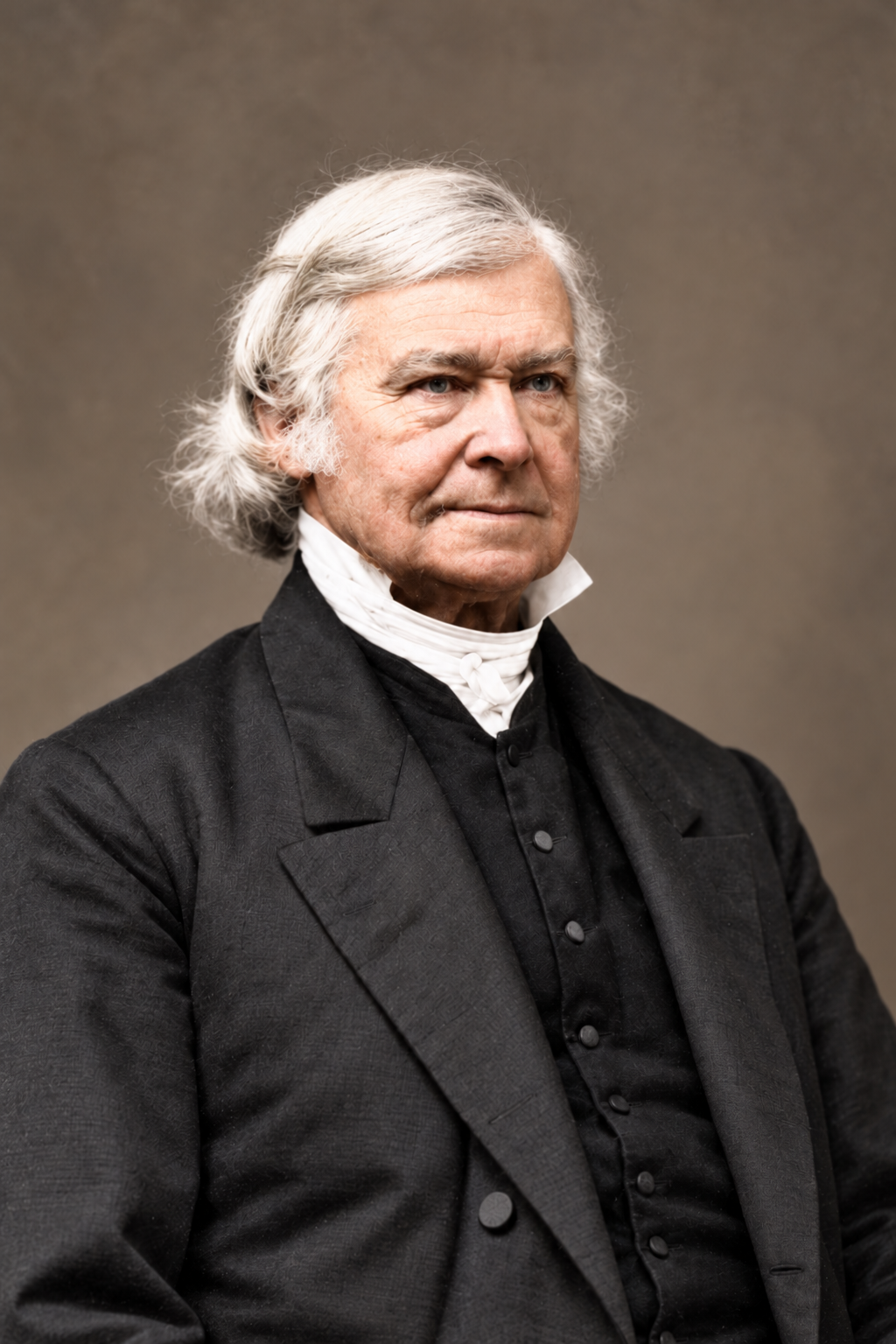
About Jackson Kemper
Jackson Kemper spent much of his ministry traveling between scattered Episcopal congregations. Born in Pleasant Valley, New York, on December 24, 1789, he graduated from Columbia College in 1809. He became a deacon in 1811 and served under Bishop William White in Philadelphia. White’s associated Philadelphia parishes included Christ Church, St. Peter’s, and St. James’; Kemper was assigned pastoral responsibility at St. James’. His early work included journeys into western Pennsylvania. After serving as rector of St. Paul’s in Norwalk, Connecticut, he was consecrated a missionary bishop in Philadelphia on September 25, 1835.
His initial charge was Missouri and Indiana. St. Louis became his base, though his work required extensive travel beyond it. The Diocese of Missouri’s account records six new congregations established over the next nine years and the organization of the diocese in 1840. Kemper continued to serve there until Cicero Stephens Hawks became its first diocesan bishop in 1844.
Building congregations required patient personal work. Diocesan historian John David Beatty describes Kemper arriving in a town, locating Episcopalians, meeting with them, and holding worship in a borrowed church or public building. Where interest seemed sufficient, he sought a missionary to continue the work. Distances, poor roads, limited funds, and difficulty recruiting clergy repeatedly constrained these efforts. Some promising congregations struggled when their ministers left or when building projects exceeded their resources.
Before becoming a bishop, Kemper had visited the Episcopal mission at Green Bay in 1834. His journal gives a less comfortable picture than later accounts of missionary achievement alone. He observed that pressure for economy had left the boarding school scarcely comfortable, with inadequate supplies and little fresh food. He also recorded conversations about boys’ testimony and punishment by mission staff. These are reports within his investigation, not evidence that he personally administered the punishment.
The same journal preserves traces of the children and communities affected by the mission. Kemper noted that a Menominee pupil, Makkemetas, had been given the name Jackson Kemper and had later left the school. He recorded Indigenous visitors’ criticism of white traders who sold alcohol to their people. The entries convey those concerns through the missionary’s own language and assumptions; they should not be read as an unfiltered account of Indigenous experience.
Kemper considered education essential to sustaining ministry. Difficulty persuading eastern clergy to move west led him to seek funds for a local training institution. Kemper College near St. Louis initially attracted students but accumulated debts and closed in 1845. Nashotah, founded in Wisconsin in 1842 as an associate mission, proved more durable. Its combination of preparation for ministry and practical mission work became an important part of the region’s Episcopal institutions.
His position on slavery reveals a serious limitation in his ministry. Beatty’s diocesan history describes him as personally opposed to slavery but unwilling to permit clergy to mix religion with matters he considered political. The historian criticizes that separation of slavery from the church’s moral responsibilities. Remembering Kemper’s institutional achievements therefore does not require presenting him as an abolitionist or ignoring the limits of his public witness.
Kemper first declined election as Wisconsin’s diocesan bishop, wishing to retain his wider missionary responsibility. He accepted a later election in 1854 while continuing that larger role. In 1859 he resigned the missionary jurisdiction and concentrated on Wisconsin. The distinction explains why both years appear in accounts of his episcopate.
His own annual address in 1867 shows the continuing practical demands of that work. He reported confirmations across the state, ordinations, vacancies, and frequent changes of clergy. He warned that abrupt departures could damage parishes and mission stations, and urged clergy and laypeople alike to sustain their shared responsibilities. His concern extended beyond founding churches to the ordinary work needed to keep them functioning.
The same address welcomed William Edmond Armitage as assistant bishop. Kemper gave up half his salary and asked congregations and schools to look principally to Armitage for advice and assistance. He intended to continue serving wherever his health and local needs allowed. This arrangement combined the transfer of responsibility with continued pastoral work rather than an immediate retirement from ministry.
Armitage also developed the cathedral work in Milwaukee with Kemper’s support. Morehouse’s history describes their cooperation as the diocese’s administrative life increasingly centered on the growing city. Kemper remained associated with Nashotah, while the emerging cathedral provided another center for the church’s work. Armitage took responsibility for a struggling congregation, renamed it All Saints, and developed it as a provisional cathedral, illustrating the practical institutional work behind that change.
Kemper died on May 24, 1870. In his funeral sermon, David Keene remembered a bishop still concerned with appointments and congregations during his final illness.
The Episcopal Church commemorates him on May 24 as its first missionary bishop, remembering the ministry through which he helped establish congregations and dioceses across the Midwest.
Wondering how to weigh the stories and sources? Learn how to read a saint biography.