Biography
James Miller
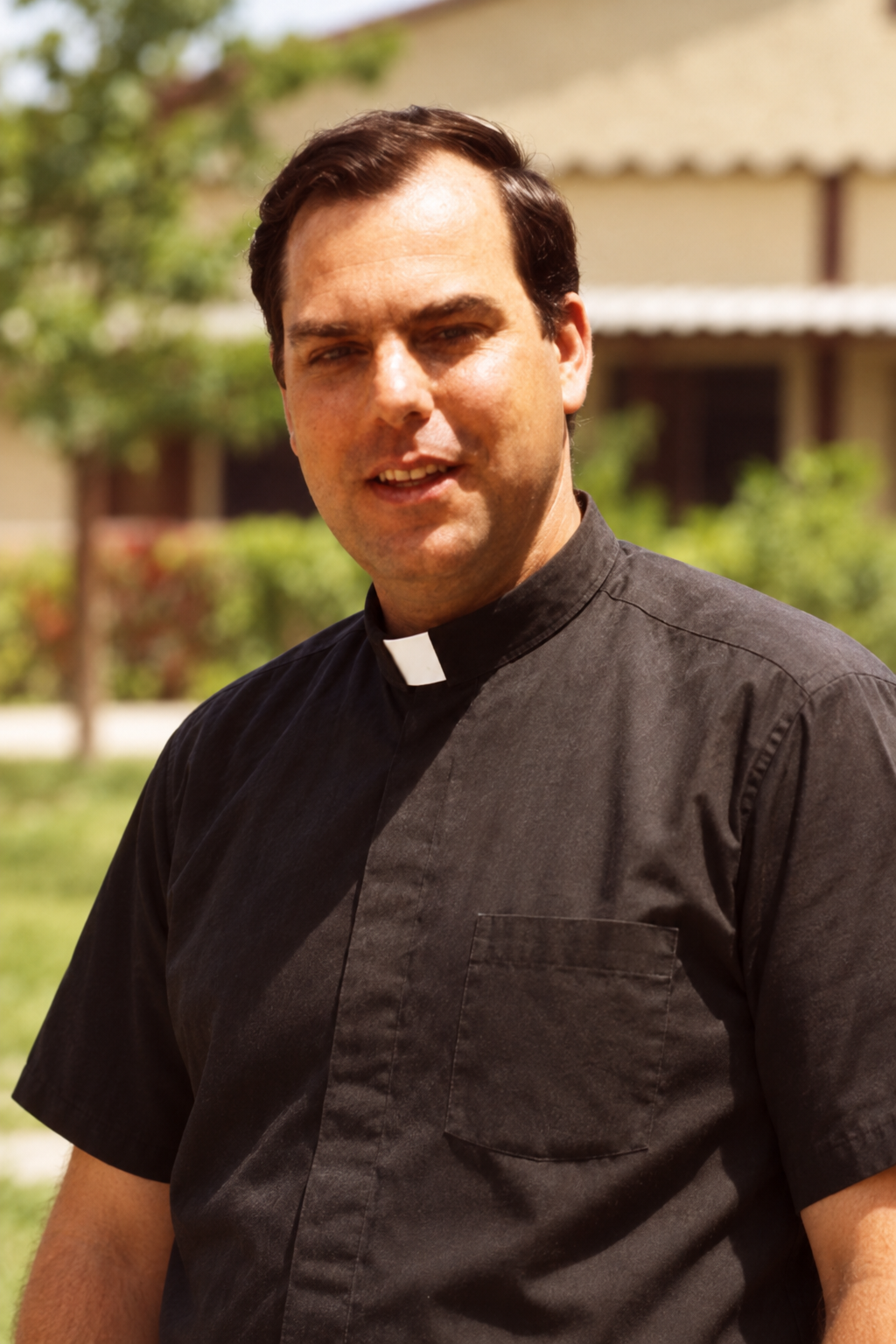
About James Miller
James Alfred Miller grew up in a Wisconsin farming family and met the Brothers of the Christian Schools while attending Pacelli High School. He entered their junior formation program in 1959 and began his novitiate in 1962, receiving the religious name Leo-William. Later he resumed using James. At Cretin High School in Saint Paul, Minnesota, he taught Spanish, English and religion and helped maintain the buildings.
Miller made his perpetual religious profession in 1969 and went to Nicaragua, where he taught at Bluefields before becoming a school director in Puerto Cabezas.
The Dicastery’s biography describes a period of expansion during his leadership in Puerto Cabezas. The school grew from 300 to 800 students, and he also supervised the construction of ten rural schools. His work thus extended beyond his own classroom to the buildings and organization needed to educate more children.
His superiors recalled him to the United States during the Sandinista revolution in 1979. At his beatification, Cardinal José Luis Lacunza explained that they feared his educational work might cause him to be mistaken for a supporter of the Somoza government. After returning to the United States, he taught again at Cretin in autumn 1979 and attended a renewal program at Sangre de Cristo in New Mexico in 1980.
In 1981 Miller began working in Huehuetenango, Guatemala, with young Indigenous people from rural communities. The Brothers provided both academic education and practical agricultural training.
In a December 1981 letter to relatives, Miller described what these responsibilities meant in daily practice. He had taught Guatemalan art history and English while also taking responsibility for student guidance at a school of 900 pupils. At the residence, he and two other brothers worked with 150 boys in secondary education. His duties included supervision, counseling, building maintenance and oversight of a small farm used for practical learning. The center also had a carpentry shop. He wrote that living closely with the students had deepened his respect for their Mayan heritage. Several Mayan languages were represented among them, with Spanish serving as their common language. The center aimed to prepare educated leaders for Indigenous communities, but received more applications than it could accept. Families were asked to contribute toward costs, although many could pay only part of the requested amount. Donations from religious communities, relatives and friends, together with food assistance, helped sustain the program.
His colleague Paul Joslin described two connected institutions: the Casa Indígena residence and the nearby Colegio De La Salle, where the boarders attended secondary school. Miller taught, helped with the farming program and maintained the residence, which had suffered earthquake damage. Joslin recalled a community meeting on February 10, 1982, after a warning that a death squad was looking for a sub-director. Three brothers held that title, and they did not know who was intended. The community discussed leaving, moving elsewhere or remaining together; they chose to stay.
Joslin’s account connects the alarm to his own repeated visits to a military base to seek a detained student’s release. The brothers initially thought Joslin might be the target. This was their interpretation of the warning, not an established identification of the intended victim.
Three days later, Miller was shot and killed while repairing an outside wall of the residence.
Joslin learned of the shooting from a student and hurried to the residence by bicycle. He arrived after Miller had died and helped arrange the response to the killing.
The individual assassins were never identified.
The Church’s investigation into his martyrdom began in Huehuetenango in 2009, with additional inquiries in Chicago and La Crosse. The 2018 decree records favorable judgments by theological advisers and by the cardinals and bishops considering the cause. Pope Francis authorized its publication on November 7 that year. The decree attributed the killing to government-linked instigators and military or death-squad perpetrators, while acknowledging that the state investigation had not established individual responsibility. Its recognition of martyrdom was an ecclesiastical judgment, distinct from a criminal conviction.
The Catholic Church beatified Miller in Huehuetenango on December 7, 2019. The following day, Pope Francis remembered his work as an educator and recognized his death as martyrdom during Guatemala’s civil war.
Lacunza’s beatification homily interpreted Miller’s service through the purpose of education. He argued that teaching involved more than transmitting knowledge: it also formed a person’s values and understanding of human dignity. In his account, Miller’s work helped Indigenous students recognize their rights and responsibilities and gain access to opportunities denied by poverty and exclusion. The cardinal placed this educational ministry within the Church’s commitment to poor people, while acknowledging its political implications. He urged listeners to remember Miller by continuing to defend freedom, justice and the dignity of others. This was the homily’s interpretation of his legacy, rather than new evidence identifying the men who killed him.
Wondering how to weigh the stories and sources? Learn how to read a saint biography.