Biography
James Won Si-bo
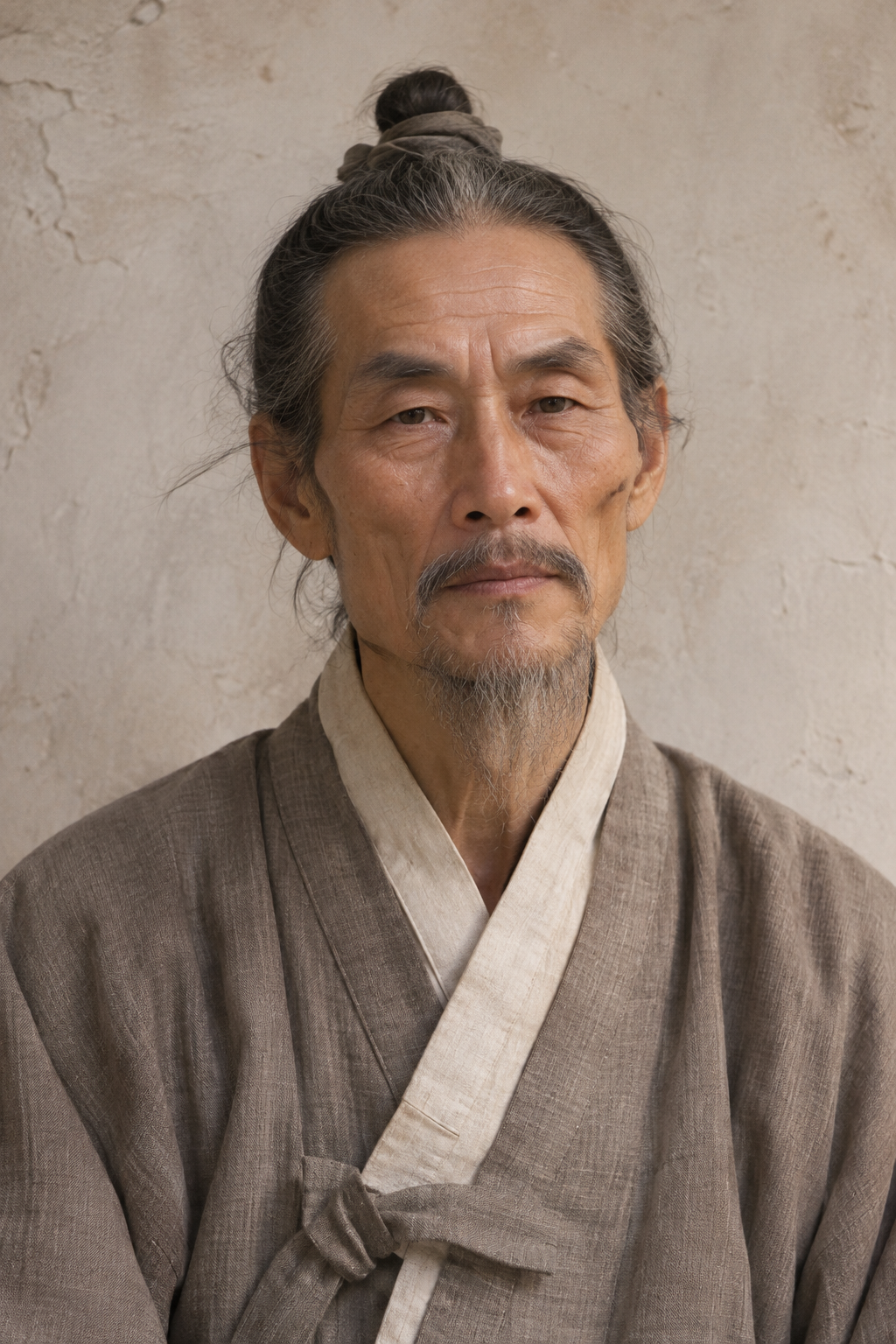
About James Won Si-bo
James Won Si-bo came from Eungjeong-ri in the Hongju district of Chungcheong-do. A commoner, he was approaching sixty when he began learning Catholic teaching with his younger cousin Peter Won Si-jang, around 1788–1789. Si-bo was his adult name. The official life remembers a gentle, honest and cheerful man committed to religious practice and helping people in need.
The identity of the person who first instructed the cousins is less certain. Historian Kim Seong-tae challenges an earlier suggestion that they brought Catholicism to nearby Shinri. Comparing genealogy, testimony and local geography, he considers it more likely that believers from Shinri introduced the cousins to the faith. His reconstruction identifies a possible local connection, rather than a securely named individual teacher.
James used his wealth to provide meals for neighbours on Sundays and feast days. These gatherings brought people together around food and gave him opportunities to explain his religion. His generosity towards guests stood alongside a stricter discipline for himself: he fasted every Friday as penance for what the narrative calls his former gluttony. He explained his custom to those who ate with him: for James, the point of giving was to thank God by sharing what he had received.
His care for the poor was not confined to these gatherings. He committed his resources to relieving their needs and travelled to different places to speak about Catholic teaching. He also developed a close friendship with Lawrence Pak Chwi-deuk. The two met repeatedly, encouraging each other in religious practice and sharing the hope of remaining faithful even if persecution brought death.
When authorities sought the cousins during the persecution that began in 1791, friends advised James to escape. He did so, while Peter was captured and eventually died after torture. Hearing of his cousin’s martyrdom, James regretted that he had not shared it and intensified his own religious observance. Dallet describes him praying publicly, even beside a main road.
Around 1795 James sought the sacraments from Father James Zhou Wen-mo. The priest refused because James had a concubine. Kim Jeong-suk’s historical account describes three days of weeping and fasting before the priest admitted him again and accepted his promise to end that relationship. James received the sacraments and returned home to dismiss the woman. Later, when she sent a messenger seeking a final meeting during his imprisonment, he refused her request. Kim places James’s separation within the Church’s insistence on monogamy and obligations for men and women, while drawing attention to the women left behind by Catholic men’s decisions.
He was arrested by officers from Deoksan in 1798. He waited over a month before questioning and asked for a hearing or release. Officials questioned and punished him at Deoksan, at Hongju and again at Deoksan. The beatings broke both his legs. In 1799 the governor ordered him sent onward to the provincial military headquarters at Cheongju.
During questioning, he was ordered to identify other Catholics. Yeo Jin-cheon’s account says that he named Lawrence Pak, Francis Bang and Peter Jeong San-pil, in accordance with a mutual agreement to face martyrdom together. Dallet nevertheless cautions that this did not amount to a definite denunciation.
His wife, children and friends followed him as he left Deoksan, weeping at the separation. James asked them to return home. He feared that their continued presence would weaken his resolve, and he urged them to endure their own suffering in the hope of reunion with God.
Bang Sang-geun notes that James and Francis Bae Gwan-gyeom were sent to Cheongju, where the military commander sat. He proposes that their prominence among Catholics may explain why the commander wanted to question them. This proposed motive is not established by a surviving order.
At Cheongju the authorities promised to spare James if he renounced his religion. He refused. Punishment continued over successive days, adding to the injuries already inflicted at Deoksan. He died under the beatings on April 17, 1799. The modern report records a tradition that he had received more than a thousand blows; this is a transmitted estimate, not an independently measured total.
Cha Gi-jin’s earlier feature preserves March 13 without specifying a calendar. The modern official account distinguishes April 17 from the thirteenth day of the third lunar month.
His memory remains associated with the former military headquarters, now Cheongju Central Park. A memorial stone erected in 2002 names him alongside Francis Bae and other local martyrs. Its inscriptions were written by Father Yeon Je-sik. Funds came from a performance held in Cheongju during the previous year’s commemoration of the 1801 persecution. Reporting in 2011, Oh Se-taek described local lay Catholics gathering there on the first Saturday of September and pilgrims stopping to pray. Seoundong parish then had responsibility for the memorial. The monument places James’s name in the public landscape of the city where his final imprisonment ended.
Wondering how to weigh the stories and sources? Learn how to read a saint biography.