Biography
James Yun Yu-o
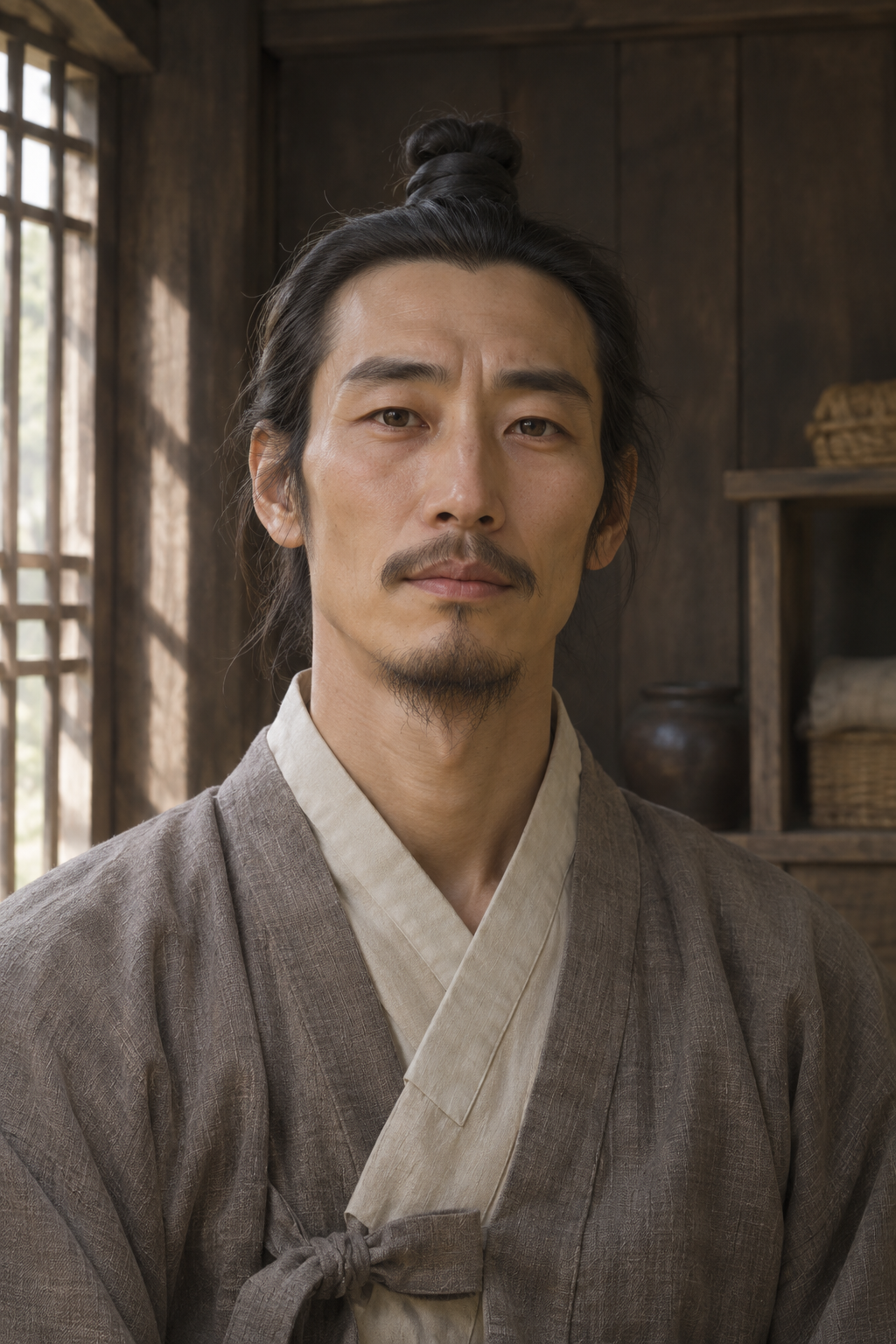
About James Yun Yu-o
James Yun Yu-o learned the Catholic faith from his older brother Paul. The Korean Catholic Encyclopedia identifies their father as Yun Jang and places James’s birth at Jeomdeul in Yeoju, now part of Geumsa-ri. It follows the family from there to a village in Yanggeun called Hangangae. While the places of his upbringing can be traced, the year in which he was born is unknown.
His family also knew him by the name Je-man, which appears in the history of Icheon as his genealogical name. That history locates his birth in Daeseok-ri, the place other accounts identify as his later home. It remembers James caring for his parents while Paul travelled to Beijing on Church business. The writer suggests that James joined the Church around the time of Paul’s return, about 1790, while acknowledging that the date is uncertain.
Christianity spread through several branches of the Yun family. James’s cousins Agatha Yun Jeom-hye and Lucy Yun Un-hye became Catholics. The consequences reached beyond the four younger relatives. Both James’s father, Yun Jang, and his uncle, Yun Hyeon, were sent into exile on account of their faith. Later family testimony described the loss of homes and the separation of relatives after the persecutions.
In 1795 James had the opportunity to meet the priest whose passage into Korea his brother had helped arrange. James Zhou Wen-mo came to Yanggeun while visiting Catholic communities outside the capital. James Yun received the sacraments from him.
The priest’s visit also took James beyond Yanggeun. When Zhou went to see Augustine Yu Hang-geom at his home in Jeonju, James accompanied him. His part in this journey was different from his brother’s earlier mission across the border. Paul had gone to seek a priest for the Korean Church. James travelled with that priest within Korea as he visited another Catholic household.
After Paul was killed in 1795, James continued meeting neighbors for prayer and the study of Catholic teaching. Two of them are known by name, Justin Jo Dong-seom and Sebastian Kwon Sang-mun. James also taught other people in the neighborhood. His brother’s death deprived him of his first teacher, but the group in Yanggeun continued its religious life together.
When officers arrested James in 1801, they took him before the authorities at Yanggeun. According to the account of his questioning, he explained his faith in terms of the Ten Commandments Paul had taught him. He understood them as obligations anyone should observe. He recalled studying religious books closely enough to know their contents by heart. Repeated questioning and punishment failed to draw a renunciation from him.
One of those held at Yanggeun was Yu Han-suk, a local Catholic with a connection of his own to the Yun family. He had helped a relative reach the community of unmarried women led by James’s cousin Agatha in Seoul. The account of Yu’s case records a report to the royal court and an order for immediate execution. It names James among the prisoners led with him to a public road where a crowd had gathered.
James was beheaded at Yanggeun on April 27, 1801. His burial place is identified at Eonong-ri in Icheon, some distance from the road where he died. It lay on land held by the Papyeong Yun family.
Nearly two centuries later, Yun Pil-yong, a sixth-generation descendant of James, told a reporter what the family remembered of the years after the persecution. Households had fled, leaving land and homes behind. Relatives buried some of their dead without raised mounds and hid the family genealogy in the ground. Pil-yong held the deed to the ancestral cemetery. After persuading other family members to consent, he presented the land to Bishop Kim Nam-su of Suwon at a gathering in June 1988.
The gift preserved a piece of land that Pil-yong said had belonged to the family for nine generations. He also described what it would take to open the cemetery to pilgrims. The committee still had to buy neighboring land and provide a road into the site. His interview captures the moment when a family burial ground was beginning to become a place others could visit.
The shrine that grew around James’s grave preserves a distinction that visitors can still see. The central mound marks his burial, while the sixteen surrounding graves commemorate other martyrs whose remains are elsewhere or lost. A Mass blessing the burial ground and a statue of Mary had taken place in 1987. A church was dedicated there in 2002, and in 2007 Eonong became a shrine for young people. Among the people remembered there, James is the one whose own grave made the gathering place possible.
Yanggeun also commemorates James where he had lived and taught. In August 2014 Pope Francis beatified him alongside his brother Paul, their cousins and Sebastian Kwon, one of the neighbors with whom he had prayed.
Wondering how to weigh the stories and sources? Learn how to read a saint biography.