Biography
Jeanne-Antide Thouret
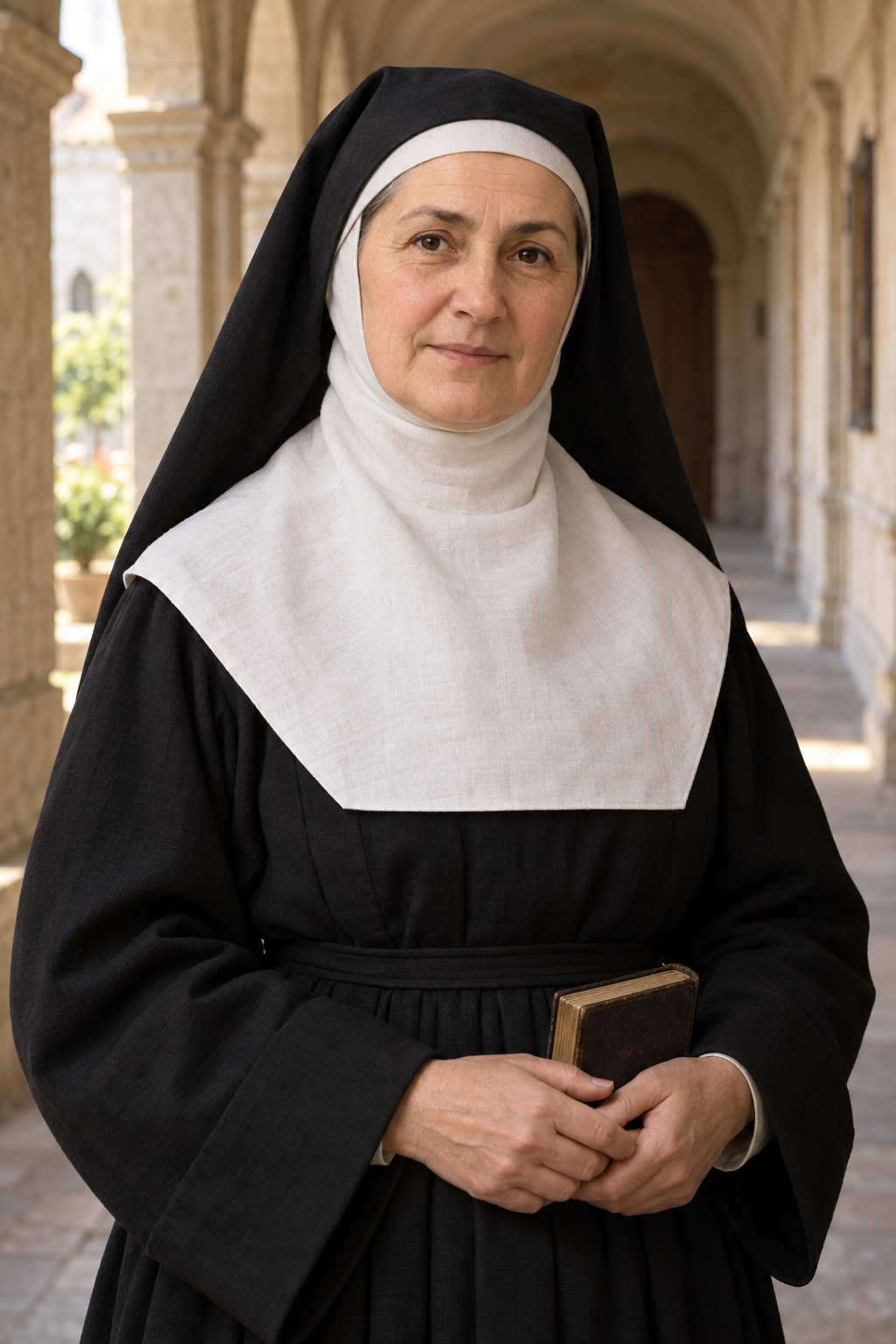
About Jeanne-Antide Thouret
Jeanne-Antide Thouret was born at Sancey-le-Long in France on November 27, 1765. After her mother died, she took responsibility for her younger siblings and the family household. Her father initially opposed her wish to enter religious life, believing that the family needed her at home. He eventually consented, and in 1787 she entered the Daughters of Charity in Paris. Her formation included work in schools and hospitals.
The French Revolution interrupted her religious life. Her congregation’s biography describes her return to Sancey, where she taught children, cared for sick people and assisted priests in hiding. She subsequently joined Father Receveur’s community of Solitaries, whose movements took her through Switzerland and Germany. She left that community in 1797 and travelled back towards Switzerland. At Landeron she taught children and cared for a priest; an invitation to return to Besançon eventually gave her a new direction.
On April 11, 1799, Jeanne-Antide and her companions opened a free school for girls in Besançon, while also providing food to poor people. These beginnings developed into the Sisters of Charity. She wrote a rule for the community in 1802. That year she also undertook work with prisoners at Bellevaux, arranging food, education and paid work. Schools and care for sick people remained central to the congregation’s expanding activity. In 1810 she travelled to Naples with eight sisters, taking responsibility for the Hospital for Incurables. A school and pharmacy followed, along with visits to people who were ill or poor.
Her correspondence and agreements show the practical demands of expanding this work. In 1818 Alessandro Mastroddi requested sisters for a girls’ school at Tagliacozzo. Jeanne-Antide replied with conditions, obtained governmental permission and accompanied the sisters on the journey. She and Mastroddi signed an agreement on November 14. The school served girls from different social backgrounds, with particular concern for those who were poor. A boarding school was also established. On a later visit, difficulties had emerged: she reported to the bishop that promised payments had not been made. Her letters to ecclesiastical and civil authorities combined concern for the sisters with attention to the commitments on which the school depended.
The Tagliacozzo records also preserve a more ordinary side of her leadership: preparing the materials a new community would need. Clerici describes an inventory written by Jeanne-Antide, including books for the sisters’ reading and prayer. The list names the community’s rule, the Imitation of Christ, lives of saints and Gospel meditations. The original inventory was later lost, but a transcription survived. Such records connect her religious aims with the daily arrangements needed to sustain the sisters’ work.
Papal approval brought another difficulty. The congregation’s account explains that the constitutions approved by Pius VII in 1819 were rejected by the new archbishop of Besançon, who opposed the changes to his authority over the community. He forbade the sisters there to receive their founder. Jeanne-Antide tried to prevent a division, but the separation persisted. She returned to Naples and did not see the two branches reunited during her lifetime. The congregation dates their eventual reunion to 1954.
She died at the Regina Coeli house in Naples on August 24, 1826. The canonization decree records her burial in the chapel dedicated to the Immaculate Conception. Her reputation for holiness continued after her death, eventually leading to beatification in 1926 and canonization by Pius XI on January 14, 1934.
Remembering the founder was not a simple, uninterrupted process. In an archival study, Sister Wandamaria Clerici describes the long separation of the two branches, the limited circulation of Jeanne-Antide’s writings and the reserve of early leaders in speaking about her. Her niece and secretary Rosalie preserved her memory, while witnesses later recalled how cautiously Rosalie spoke of her aunt’s holiness. Clerici’s account shows how personal recollection, institutional difficulties and the gradual recovery of documents all contributed to the later recognition of her life.
Clerici identifies another niece, Sister Febronie Thouret, as an important early biographer. Her account, printed in 1860, drew on the founder’s writings and sought to explain her life and the separation of the congregation’s branches to younger sisters. Its circulation was restricted. In the 1880s, Mother Marie Térèse Vignet renewed attention to the founder through circular letters and accounts shared at retreats. Rosalie’s manuscript, another significant witness to Jeanne-Antide’s life, was recovered only in 1927. The surviving record therefore reflects both the founder’s own writings and later efforts to preserve, recover and interpret them.
Sancey continues to honor her through the basilica near her birthplace and the parish bearing her name. The municipality identifies her as patron of the local valley. Its account records a May 23 celebration, while the original canonization decree names August 24 as her annual commemoration. These different observances preserve the memory of a woman whose work joined education, care for sick people and the demands of leading a religious community.
Wondering how to weigh the stories and sources? Learn how to read a saint biography.