Biography
Jirjis al-Muzahim
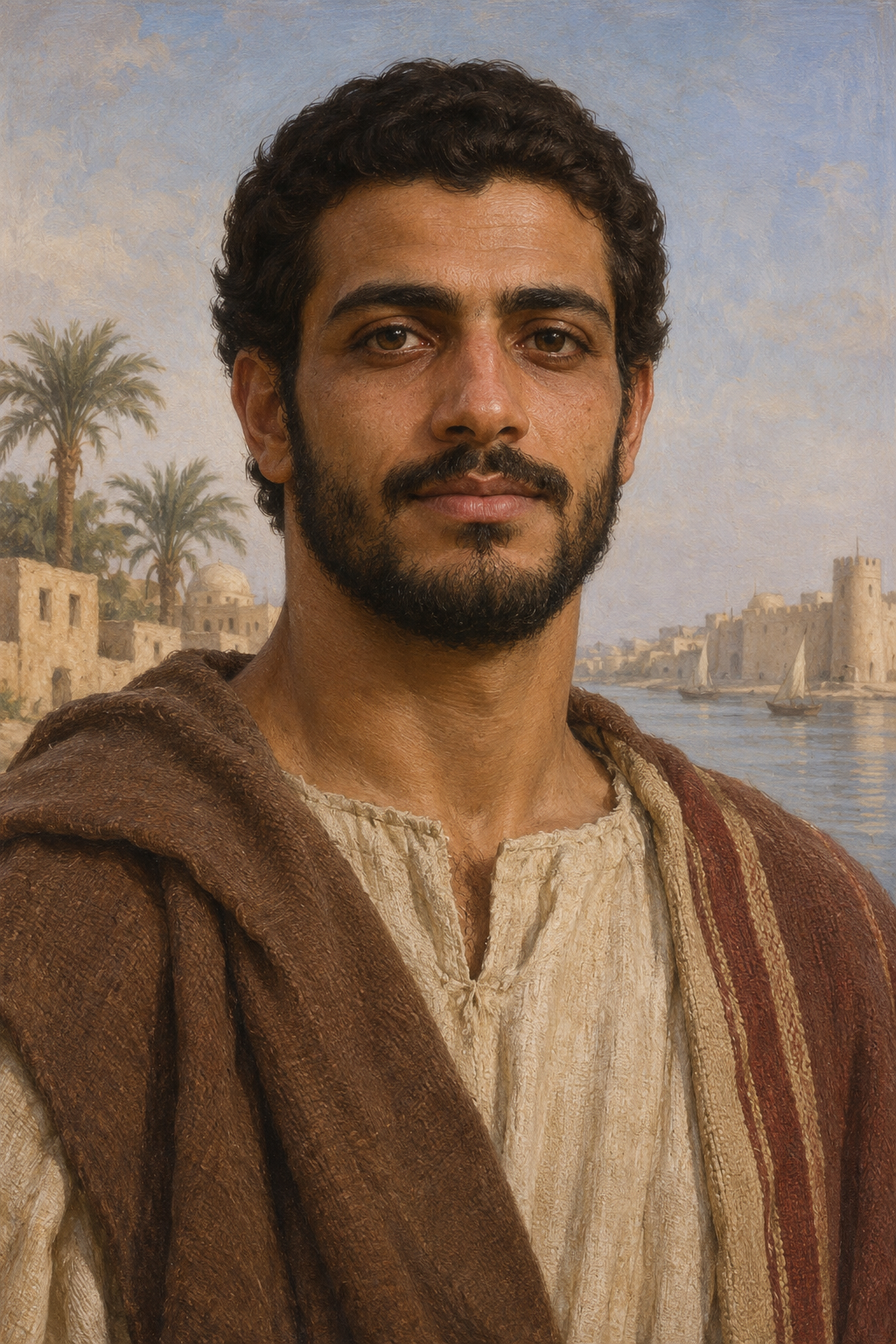
About Jirjis al-Muzahim
Jirjis al-Muzahim is called a “new martyr” in the Coptic tradition. The Coptic Encyclopedia’s account derives from a later Synaxarion narrative, which gives his first name as Muzahim and says he was born in Damirah in the Nile Delta. His father was Muslim and his mother Christian. The story describes him accompanying his mother to church and becoming drawn to Christian worship. When he wanted to receive the Eucharist, she told him that baptism was required; she gave him a small piece of bread, which the narrative says tasted like honey. This episode explains the story’s account of his desire for baptism, but it is not a contemporary record of his childhood.
As an adult, Muzahim married a Christian woman and told her that he wished to become Christian. The local priests feared the consequences of baptizing him, so he traveled to Damietta, where he was baptized and took the name Jirjis. The story says that Muslims seized and beat him after learning of the baptism, but he escaped and lived for a time in Saft Abu Turab. He later moved to Qutur, where he served at the church of Saint George. These episodes place his remembered life among villages and churches of the Delta rather than in a single pilgrimage setting.
Jirjis eventually returned to Damirah. According to the Synaxarion story, residents who remembered him brought him before the governor as an apostate from Islam. A Christian woman in the governor’s household interceded, and the governor imprisoned him rather than acting immediately. A mob then broke into the prison and attacked him. When Christians came to bury him the next morning, they found him alive, the story says. He remained firm in his Christian confession even after renewed threats and torture.
The narrative says that Jirjis was tied to a mast and tortured, then strengthened by an angelic vision. It gives his execution date as 19 Ba’unah in Coptic year 675, corresponding to 959. The governor is portrayed as handing him over to the crowd, which beheaded him before the church of Saint Michael. The story continues with an attempt to burn his body, its recovery from the river by his mother, and burial by the Christians. These details belong to the received hagiographic account; the heading’s eighth-century label conflicts with its explicit 959 date, and neither chronology is independently established.
The account remembers Jirjis through the choices attached to his name: he sought baptism despite local hesitation, served in churches after leaving his village, and returned to the place where his conversion had made him vulnerable. The Coptic Encyclopedia traces his body to a church built over his tomb at Tanabura. That burial tradition and feast day preserve his place in Coptic devotional memory, while the late narrative’s dramatic scenes and conflicting dates require caution. No independent contemporary documentation is identified by the source.
Wondering how to weigh the stories and sources? Learn how to read a saint biography.