Biography
Joan of France
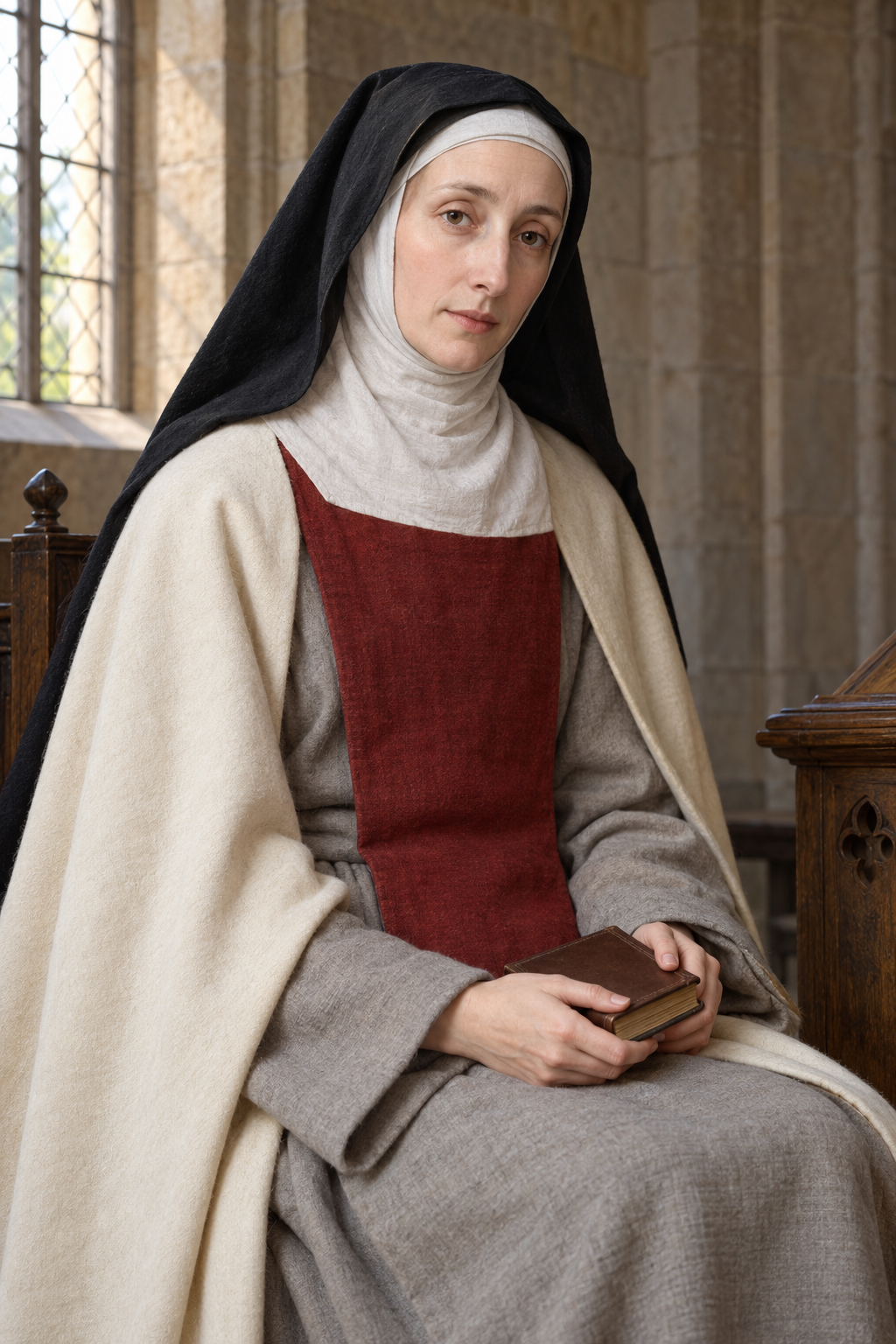
About Joan of France
Joan of France was born at Nogent-le-Roi on April 23, 1464, the daughter of Louis XI and Charlotte of Savoy. Known in French as Jeanne de France or Jeanne de Valois, she grew up away from court at Lignières, in the care of François de Beaujeu and Anne de Culan. Her father arranged her marriage to Louis, Duke of Orléans. They married at Montrichard on September 8, 1476. When Louis was imprisoned in 1488, Joan took responsibility for his property, including his Italian possessions.
Their marriage was troubled. Historians Elizabeth Brown and Mary Beth Winn describe Louis’s hostility and Joan’s efforts to intercede for him during his imprisonment. After becoming Louis XII in 1498, he sought an annulment so that he could marry Anne of Brittany. Joan contested his account. She maintained that the marriage had been consummated; Louis denied this and said he had married under compulsion. The marriage was nevertheless declared null on December 17, 1498. Joan received the duchy of Berry and made Bourges her home.
The annulment did not end her public responsibilities. As duchess, she supported education and care for people in need. The Diocese of Bourges records that she provided scholarships for poor students, renewed the resources of the Collège Sainte-Marie and enlarged the Hôtel-Dieu. These undertakings joined the exercise of her authority with practical assistance. The college, in particular, connected her concern for young people with a lasting institution rather than occasional gifts alone.
Surviving accounts bring some of that help into closer view. A study published by the Annonciade identifies her household account book for 1499–1500, preserved as manuscript 895 in the municipal library at Bourges. It records assistance with a servant’s wedding clothes, money for a young woman without family, help for a widow in debt, school fees for three poor children, and shoes and cloth for the first sisters. The same accounts include ordinary expenditure on her own care, such as visits from a physician and work to keep her room warmer in winter.
The study also distinguishes Joan’s contribution to the Collège Sainte-Marie from its original foundation. François Rogier had begun the college but lacked sufficient resources to maintain it. Joan accepted responsibility for it and established ten scholarships for students unable to afford their studies. Her testament, dated January 10, 1505, remembered a wide range of beneficiaries, including widows, orphans, people with leprosy, agricultural workers, hospitals and members of her household.
Her principal religious foundation was the Annonciade, the Order of the Virgin Mary. She worked with her Franciscan confessor Gabriel-Maria, also known as Gilbert Nicolas, to give the community its form of life. The order’s history of its rule explains that Joan supplied the guiding intention and asked Gabriel-Maria to prepare the text. Its model was Mary as she appears in the Gospels. The rule organized the sisters’ life around ten virtues, including humility, faith, prayer, poverty, patience, charity and compassion. Each chapter connected an evangelical example with personal conduct and community life.
The first eleven postulants arrived at Bourges in May 1500. Pope Alexander VI approved the rule on February 12, 1502, and construction of the monastery began the following year. At Pentecost in 1504, Joan privately promised to follow the rule herself. In November she endowed the convent by a notarized act. She made her last visit to the community in January 1505, shortly before her final illness.
Joan died at Bourges on February 4, 1505. Brown and Winn describe the royal funeral ordered by Louis XII and her burial in the Annonciade chapel. They also identify the sisters’ chronicle, compiled by Françoise Guyard in 1556, as a major source for her life. Its accounts of conversations and devotion therefore belong to a religious community preserving its founder’s memory after her death.
The order’s rule continued to develop after Joan’s lifetime. Gabriel-Maria prepared further versions in 1515 and 1517, the latter becoming its definitive form. It would be misleading to attribute that later text directly to Joan: it carried forward the inspiration of the community she had founded.
Recognition of her sanctity took centuries. She was beatified in 1742, but the French Revolution interrupted the progress of her cause. Brown and Winn describe a later investigation, including a healing attributed to her intercession, before the twentieth-century canonization.
Pius XII canonized her on May 28, 1950.
In his address to French pilgrims, he emphasized her devotion to Mary, union with Christ and message of peace. Speaking on May 29 to pilgrims from many French dioceses, he connected her canonization with the responsibilities of Christian women and the country’s need for reconciliation.
The Diocese of Bourges honors her among its patrons and keeps her feast on February 4. Its account also records a chapel dedicated to her in Bourges cathedral and her grave slab at the city’s church of Notre-Dame.
Wondering how to weigh the stories and sources? Learn how to read a saint biography.