Biography
João Lostau Navarro
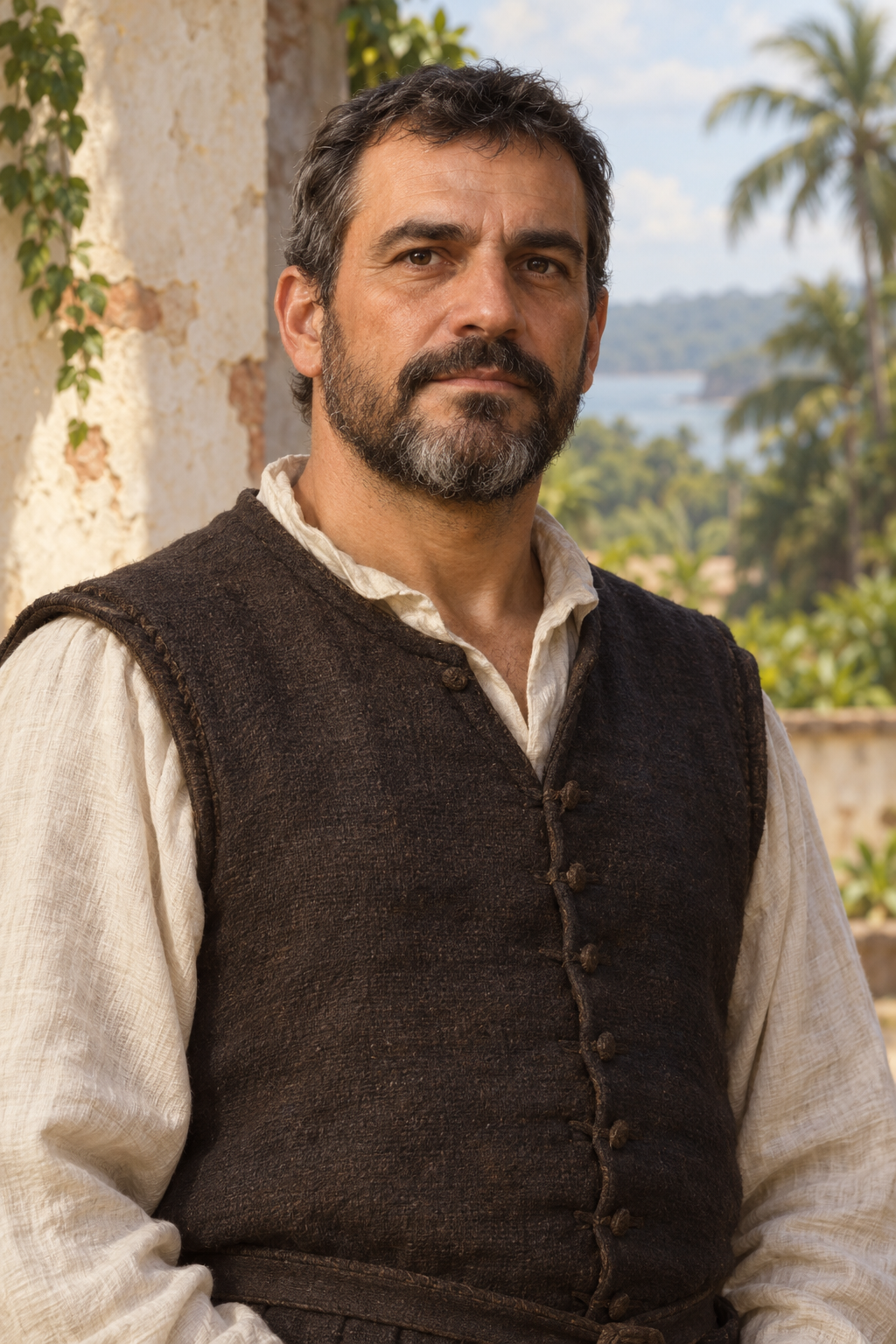
About João Lostau Navarro
João Lostau Navarro is named among the Catholic lay martyrs killed at Uruaçu on October 3, 1645.
Fragments of João’s earlier life survive in land and family records. The researcher João Felipe da Trindade records his receipt of a land grant in 1601 and describes a dowry made in 1626 for his daughter Maria Lostau Casa Maior, who was to marry Manoel Rodrigues Pimentel. A later petition by Francisco Lopes sought confirmation of lands inherited through João’s granddaughter. That document recalled João’s imprisonment and killing and explained that property papers had been lost. Trindade also warns that the often-repeated claim that João was the father-in-law of the Dutch commander Joris Garstman was not securely demonstrated by the documents he examined. These fragments establish a family and a place in the colony’s property history, while leaving major parts of his life unrecorded.
Archaeological scholarship likewise associates him with the history of fortified houses in Rio Grande do Norte. Roberto Airon Silva discusses older accounts of people taking refuge at a property attributed to João and notes the proposed connection with the ruins at Pium. His discussion reports earlier historical identifications; it does not make every surviving wall a proven part of João’s own house.
Natal’s Catholics sought refuge after the attack at Cunhaú, but were captured with their priest, Ambrósio Francisco Ferro. The martyrs were canonized in 2017 and are commemorated on October 3.
A modern historical study places the surviving account within the colonial conflict and cautions that its hostile portrayals of Indigenous people and Dutch opponents reflect the narrator’s religious and political purposes.
Wondering how to weigh the stories and sources? Learn how to read a saint biography.