Biography
John Baptist Chon Chang-un
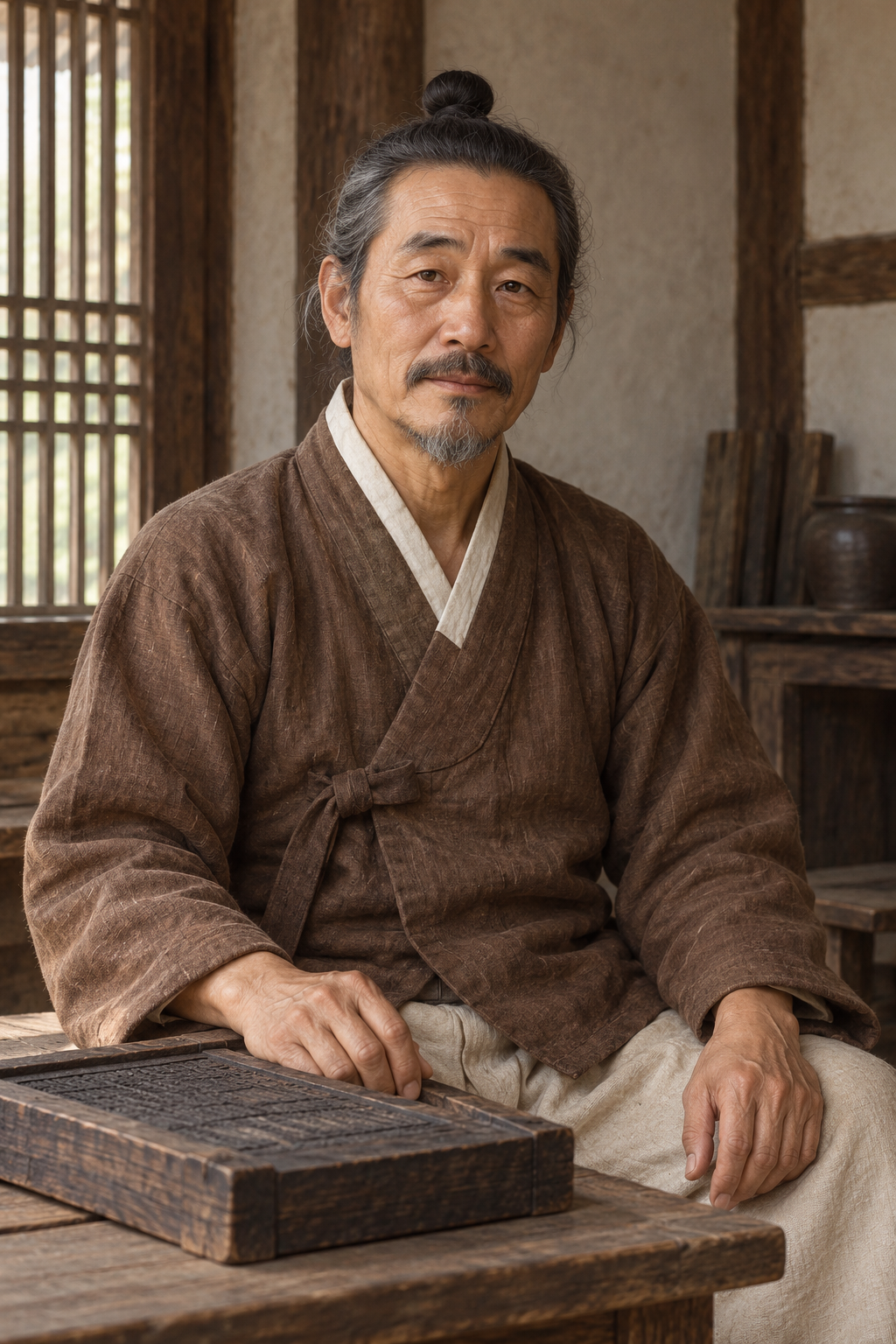
About John Baptist Chon Chang-un
John Baptist Chon Chang-un was born in Seoul and grew up in a Catholic household. His father died while he was young, and he helped support the family through farming and making leather bags. He later married and had three children.
The Korean Catholic Encyclopedia identifies an earlier teacher as a Catholic named Peter Hwang in Ahyeon. Chon received religious instruction from him while still young.
During the persecution of 1839, Chon abandoned his religion under torture. His mother encouraged him to return to Catholic practice. After Andrew Kim Tae-gon returned to Korea, Chon made a confession and resumed his religious life.
Bishop Berneux authorized Chon to baptize and entrusted him with publishing Catholic books alongside Peter Choe Hyong. Their work made religious texts available to other Catholics.
Chon met Berneux at the home of catechist Mark Chong Ui-bae. The encyclopedia dates his entry into the publishing work to the beginning of 1866. He worked with Choe Hyong and Joseph Im Chi-hwa in carving wooden printing blocks.
The workshops formed part of a change in the way Catholic books circulated in Korea. Earlier texts had been copied by hand. Berneux established a woodblock press in Seoul in 1859, and by 1864 the operation had expanded to two houses, those of Choe Hyong and Im Chi-hwa. Chon subsequently acquired Im’s house and press. The workshops issued books for religious instruction, prayer and worship in Korean. The publishing history names Chon and Choe among those involved in translation and publication. This wider history places Chon’s brief period of work within the circulation of religious teaching through the Korean script.
Chon bought Joseph Im’s house and printing operation shortly before the persecution. Officials found him there and arrested him. He refused to identify other Catholics despite repeated questioning and punishment.
The court record identifies the printing of Catholic books as a central charge against both men. In its request for their execution, the Ministry of Crimes accused them of associating with foreigners and distributing prohibited religious writings. It stated that they had maintained their religious commitments despite torture. The king ordered the prescribed punishment to proceed. The record establishes how officials treated their publishing work; its description of Catholic teaching as harmful represents the prosecution’s position.
The bishops’ conference account remembers Chon remaining at the printing house in an effort to protect its wooden printing blocks. Police seized the blocks when they arrested him. He was subsequently beheaded outside Seoul’s Small West Gate in March 1866.
His wife later recovered his body and arranged burial at Nogosan.
Wondering how to weigh the stories and sources? Learn how to read a saint biography.