Biography
John Charles Roper
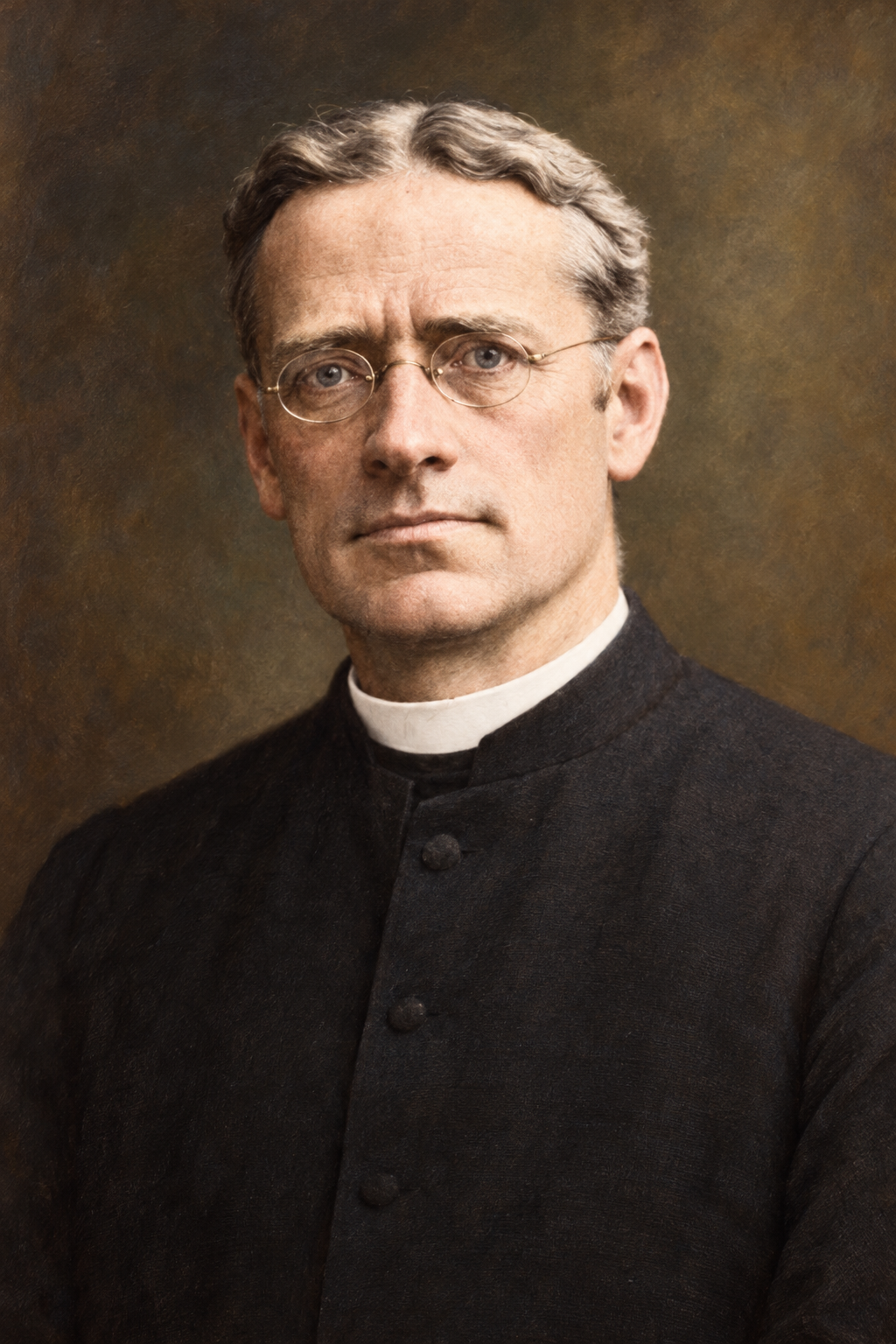
About John Charles Roper
John Charles Roper combined teaching with parish ministry before becoming an Anglican bishop in Canada. A contemporary newspaper account places his birth at Court Lodge in Frant, Sussex, on November 8, 1858. He attended Tonbridge School and studied at Oxford. Ordained deacon in 1882 and priest the following year, he began his ministry in Sussex before moving into theological teaching.
In Toronto, Roper taught at Trinity College and became closely involved with the Sisterhood of St. John the Divine. Brian Freeland’s parish history describes a disagreement over whether his teaching duties could be combined with serving as the sisters’ chaplain. Roper chose the chaplaincy and ministry at St. Thomas’s Church. The sisters also worked in the parish, helping with the altar guild and teaching children. This relationship connected the church’s public worship with the daily work of a religious community. Freeland records that Roper later presided at the burial of the community’s founder, Hannah Grier Coome, in 1921.
Freeland also preserves Roper’s reminiscence after Coome’s funeral. Speaking to the sisters, he recalled Christmas and Easter worship in their first chapel and in successive parish churches. His memories centered on repeated acts of worship shared over years, rather than only on the offices he had held.
Roper moved to the General Theological Seminary in New York in 1897 to teach dogmatic theology. When he was elected bishop of British Columbia in November 1911, The Living Church identified him as the successor to G. H. S. Walpole in that teaching position. His career therefore crossed the Canadian and American churches well before he became a bishop.
The election report also explained the boundaries of his new diocese. Although originally covering all British Columbia, it had been reduced by the creation of other dioceses. By his election it comprised Vancouver Island and nearby islands, with Victoria as its cathedral city. The provincial name therefore described a more limited ecclesiastical territory.
The Victoria Daily Times reported his consecration on February 24, 1912. The service took place in the cathedral, with the archbishop of Rupert’s Land and assisting bishops. A photograph printed beside the report identifies Roper in clerical dress. The article describes his presentation, the questions put to him, and the celebration of Holy Communion. His new office carried responsibility for a diocese whose institutions included a residential school at Alert Bay.
The Diocese of British Columbia’s account of its residential-school history identifies a June 8, 1912 agreement between Roper and the Crown, through the Department of Indian Affairs, for managing and operating the Alert Bay Indian Residential School. His institutional responsibility belongs in an account of his ministry. The diocese also describes the wider history of family separation, restrictions on Indigenous languages, hunger, and abuse associated with residential schooling. Its accounts of the later St. Michael’s institution include events after Roper’s lifetime; those incidents should not be assigned to his personal administration.
Roper became bishop of Ottawa in 1915 and remained there until retirement in 1939. During the last six years of that ministry, he also served as metropolitan of Ontario. A cope associated with him remained at St. Thomas’s Church in Toronto, where he gave it on retirement. Its later restoration became a reminder of the parish connection that preceded his episcopal career. The surviving account is less certain about when the sisters first presented the garment to him.
Restoration began with parish needleworkers and later passed to a diocesan committee. Their work retained embroidery where repair was possible and renewed other elements. The resulting garment combined surviving material with new workmanship; it was not an untouched example of what Roper had worn.
His own writing gives a clearer view of his theological priorities. In the 1922 collection Some Essentials of Religion, Roper chaired the editorial council and contributed the opening chapter, God Our Father. He connected belief in God’s fatherhood with human responsibility and the freedom to respond to divine love. He treated prayer as a relationship and presented Jesus Christ as the fullest revelation of God. Although he acknowledged truth in other religions, his account gave Christianity a decisive priority. These were his theological convictions, expressed for readers seeking an introduction to Christian belief.
The chapter began with a statement by British and Dominion premiers linking public welfare with religious belief. Roper used it to argue that theology concerned social relationships as well as private devotion. In his account, recognizing people as persons was essential to peace. He described divine rule through persuasion and patience, while acknowledging the suffering that human freedom could permit. His foreword invited deliberate study rather than hurried reading, presenting the collection as instruction for church members.
Roper died in Toronto on January 26, 1940. A contemporary obituary in The Witness remembered his teaching at Trinity College and the General Theological Seminary alongside his episcopal offices.
The Anglican Church of Canada commemorates him on May 27.
Wondering how to weigh the stories and sources? Learn how to read a saint biography.