Biography
John Choe Chang-hyeon
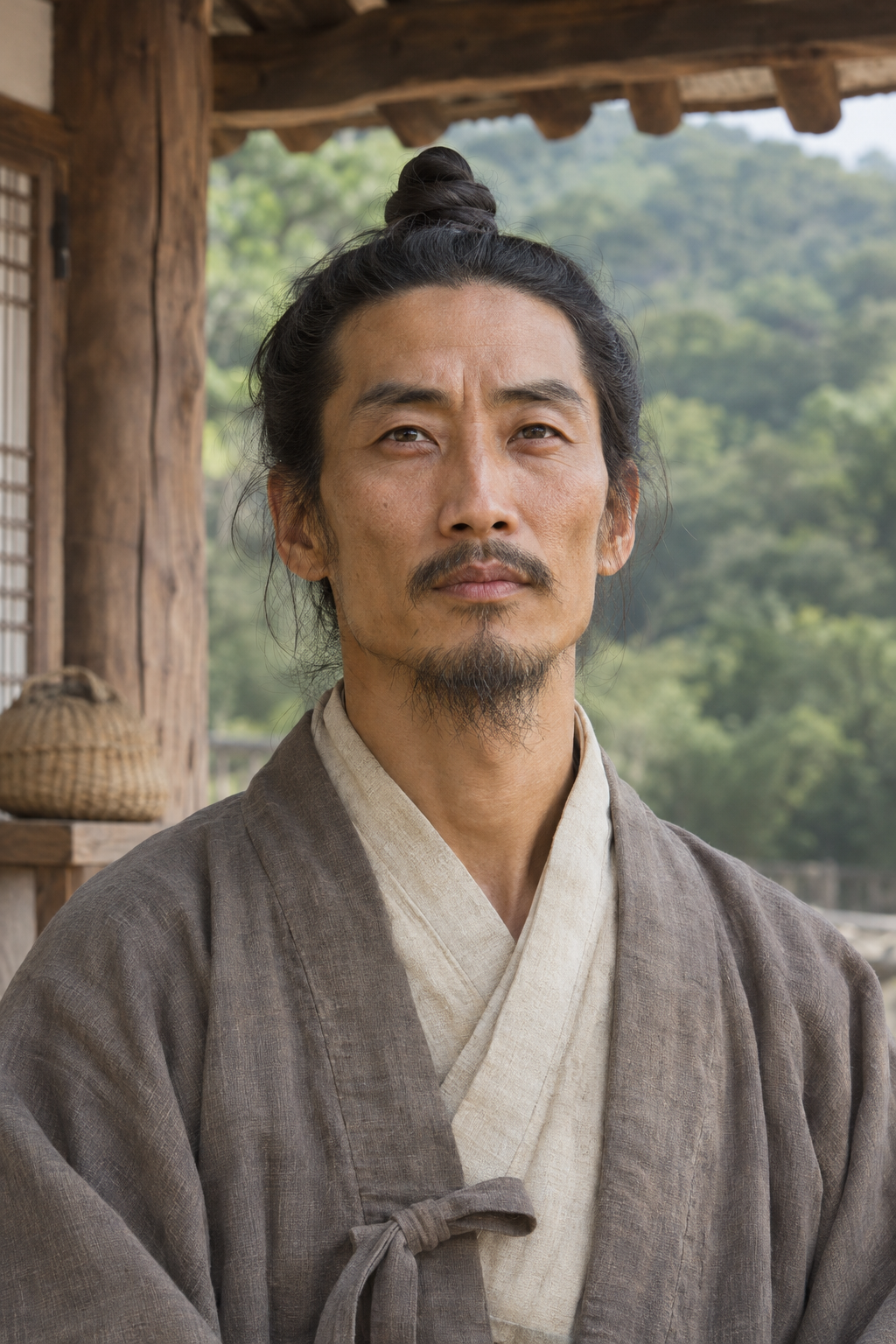
About John Choe Chang-hyeon
John Choe Chang-hyeon grew up in a family of interpreters and became one of the people who gave Korea’s young Catholic community books, teachers, and places to gather. Born in 1759, he was drawn to learning and came into contact with scholars including Yi Byeok and Peter Yi Seung-hun. Through those connections he encountered Catholic writings. He accepted the faith in the winter of 1784, at the beginning of a community whose members were learning their religion through books and one another.
His work also belonged to the practical world of the city. The historian Bang Sang-geun identifies his father as Choe Yong-un, a pharmacy owner whom John helped in the business. Bang’s study places John’s baptism in Yi Byeok’s house, with Jeong Yak-jeon as godfather and Yi Seung-hun administering the rite. The combination of a working household and an interest in religious study continued to shape his activities: the records describe someone who copied books and arranged meetings as well as discussing doctrine.
At first there was no ordained priest in Korea. John took part in the attempt by lay believers to provide the religious ministry they lacked. These appointments did not make the men ordained clergy, and the community stopped the practice after learning that it conflicted with Catholic requirements. During this early period John rented a house where believers could assemble. He received the lay ministers, prepared the participants, and attended to the practical arrangements. His service therefore included the ordinary work of keeping a meeting place available and helping people use it.
The persecution of 1791 brought a further crisis. The prohibition of ancestral rites divided Catholic families, and some prominent believers withdrew from the Church. John remained involved. With his companions he discussed how to obtain an ordained priest and worked toward that goal. His later circle included Augustine Jeong Yak-jong, Philip Hong Pil-ju, and other active believers. Their connections allowed teaching and religious practice to continue across different households while the community sought the ministry it could not supply for itself.
James Zhou Wen-mo reached Korea at the end of 1794. John subsequently served as chief catechist, a lay responsibility that linked him closely with the priest’s work. He attended Mass, received the sacraments, and prepared the things needed for worship. He also continued studying Catholic teaching with fellow believers and explaining it to others. These were connected parts of his service: the arrival of a priest did not end the need for lay teachers or for people who could organize the gatherings in which the priest ministered.
John’s translation work addressed another practical need. Much of the religious material available to the first believers was written in literary Chinese. He helped bring it into Korean, so that people without that education could read it. The work associated with him, usually called Seonggyeong jikhae, selected Gospel passages for Sundays and feast days. It was not a translation of the entire Bible. Its arrangement followed the worshipping year, allowing a household to return to particular readings as the different celebrations came round.
The Korean book combined material from two Chinese Catholic works. Alongside the biblical passages, it offered explanations and prompts for meditation. It also included virtues to practise and matters for prayer. A reader thus encountered a passage together with guidance for understanding it and carrying its teaching into daily conduct. The collection covered 86 Sundays and feasts. Its form brought reading, reflection, and prayer together in one resource, rather than leaving an isolated scriptural passage without explanation.
Alexius Hwang Sa-yeong’s account remembers John as a clear, unshowy teacher. People troubled by doubts or difficulties came to him, and his explanations helped them regain confidence. Hwang especially emphasized the plainness of his speech and the trust he inspired. This is a fellow Catholic’s appreciative portrait, rather than a neutral judgment of his character, but it preserves an important aspect of his place in the community: people sought his counsel as well as his books.
In 1801, John briefly sought refuge in another believer’s home as arrests increased. Illness forced him to return to his own house, where an informer led the police to him. Under interrogation he initially faltered. He later withdrew his denial, expressed sorrow for it, and reaffirmed his faith without naming people for the authorities. He was condemned and beheaded outside Seoul’s Small West Gate on April 8. His death ended his own teaching, but not the life of the texts connected with it.
The manuscript tradition continued through later decades of persecution. The Academy of Korean Studies identifies surviving copies of the combined Gospel commentary and explains that successive church leaders revised and transmitted the text associated with John. In the 1890s it appeared in a nine-volume printed edition under Bishop Mutel. The later book had passed through other hands and revisions; it was not simply an unchanged manuscript of his. Even with that distinction, its long transmission records the lasting place of his work in Korean Catholic reading and worship.
Wondering how to weigh the stories and sources? Learn how to read a saint biography.