Biography
John Choe Hae-seong
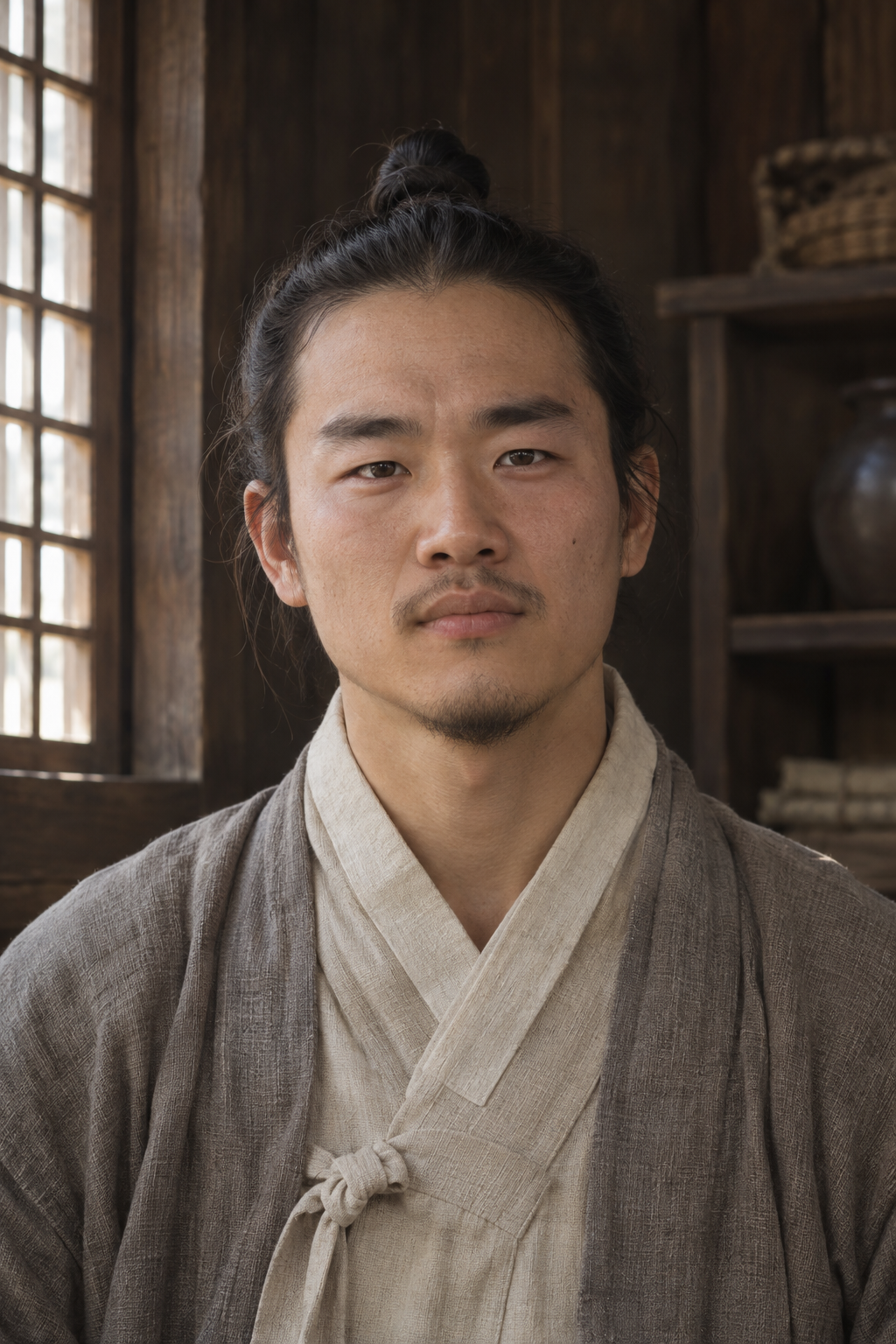
About John Choe Hae-seong
John Choe Hae-seong was born in 1811, in the place to which his grandfather had been exiled for being a Catholic. His family originally came from Darakgol in Hongju, Chungcheong-do. After the grandfather’s arrest in 1801, the household had followed him into exile. John grew up learning Catholic teaching within this displaced family. Later, seeking greater freedom to practice their religion, he moved with his family to Seoji near Wonju. The small Catholic settlement there became the centre of his work as a lay leader.
The priest Thomas Choe Yang-eop’s account remembers John teaching his neighbours, encouraging other believers and giving alms despite his own poverty. His work took place in a community whose households had gathered in the mountains to practice their faith. When a missionary visited, he received the sacraments. The priest appointed him catechist, placing responsibility for the settlement’s religious life in his hands.
Yeo Jin-cheon suggests that relatives may have drawn the family to Seoji. The earlier exile destination remains unidentified: surviving lists contain several men named Choe, but do not establish which was John’s grandfather.
The persecution of 1839 reached the village through denunciation. John’s family and fellow believers sought refuge away from Seoji. The official account says that he was arrested while returning for religious books after taking his household to safety. Reporter Ri Gil-jae notes that the accounts differ on the household’s escape. The authorities seized John and pressed him to reveal other Catholics’ hiding places. Ri describes officers prepared for a physically strong man, but says John submitted without resistance. The officers who seized him carried iron flails and beat him.
Wonju was the seat of Gangwon’s provincial government. The governor’s office there handled judicial affairs as well as administration; the prison belonged to this governmental setting, not to the village John had left.
Taken to the officials at Wonju, John refused to name the people who had gone into hiding. In the priest’s later letter, his answer links that refusal to the Christian prohibition against harming a neighbour. Offers of reward did not change his position. When an official suggested that he wanted to die, he answered that he was human and naturally wished to preserve his life, but would not abandon what he believed was right.
Interrogations and punishments continued after he was returned to prison. Ri’s account describes repeated questioning before the provincial authorities and further beatings in custody. Pressure was directed both at his religion and at his knowledge of other believers. He was ordered to recant and to identify them. He continued to profess Catholicism instead. His confinement extended over months, with intervals between the sessions in which officials tried to obtain a different answer.
The legal proceedings reached the royal government. A record preserved in the Seungjeongwon Diary applies the law against writings and statements judged to mislead the public to John’s Catholic teaching. The Ministry of Justice asked that he be beheaded under that provision, and the royal response approved proceeding according to the law. Approval did not record the execution itself. The order called for beheading without waiting for the customary execution season; it was not a sentence of exile.
Yeo also remembers a guard helping John after he had been suspended in restraints. The guard released him and gave him food when he had lost consciousness.
Before he was taken out to be killed, John invited friends and even his executioners to share a meal. Choe Yang-eop’s letter says that people who had previously insulted him expressed sympathy as he went to the place of punishment. The Korean bishops place his beheading at Wonju on September 6, 1839.
His aunt Brigid had come to the prison hoping to see him. Instead, officials questioned her about her own religion and detained her when she acknowledged being Catholic. She remained in custody and was later killed there. The two relatives’ lives were remembered together at Seoji, although their arrests and deaths were separate events.
John’s history became known more widely through work done after his death. Historian Kim Gyu-seong identifies Choe Yang-eop’s 1856 letter as one of the records Daveluy could use when compiling his history. Daveluy’s account contains more detail than the published letter. Kim suggests that further collected testimony may explain that difference, while acknowledging the difficulty of identifying the underlying records. A fire destroyed Daveluy’s box of manuscripts in 1863. The resulting histories preserve material from those collections, but cannot always show which witness supplied each detail. The variations between their accounts therefore remain important to interpreting John’s life.
After the beatification of John and Brigid in 2014, a local parishioner donated a house and land for their commemoration. The priest responsible for the Seoji project described that gift as the beginning of the memorial development. A church and memorial hall were built in 2025. They commemorate the two relatives within the wider community of Catholics who had lived in the village under persecution.
Wondering how to weigh the stories and sources? Learn how to read a saint biography.