Biography
John Henry Hobart
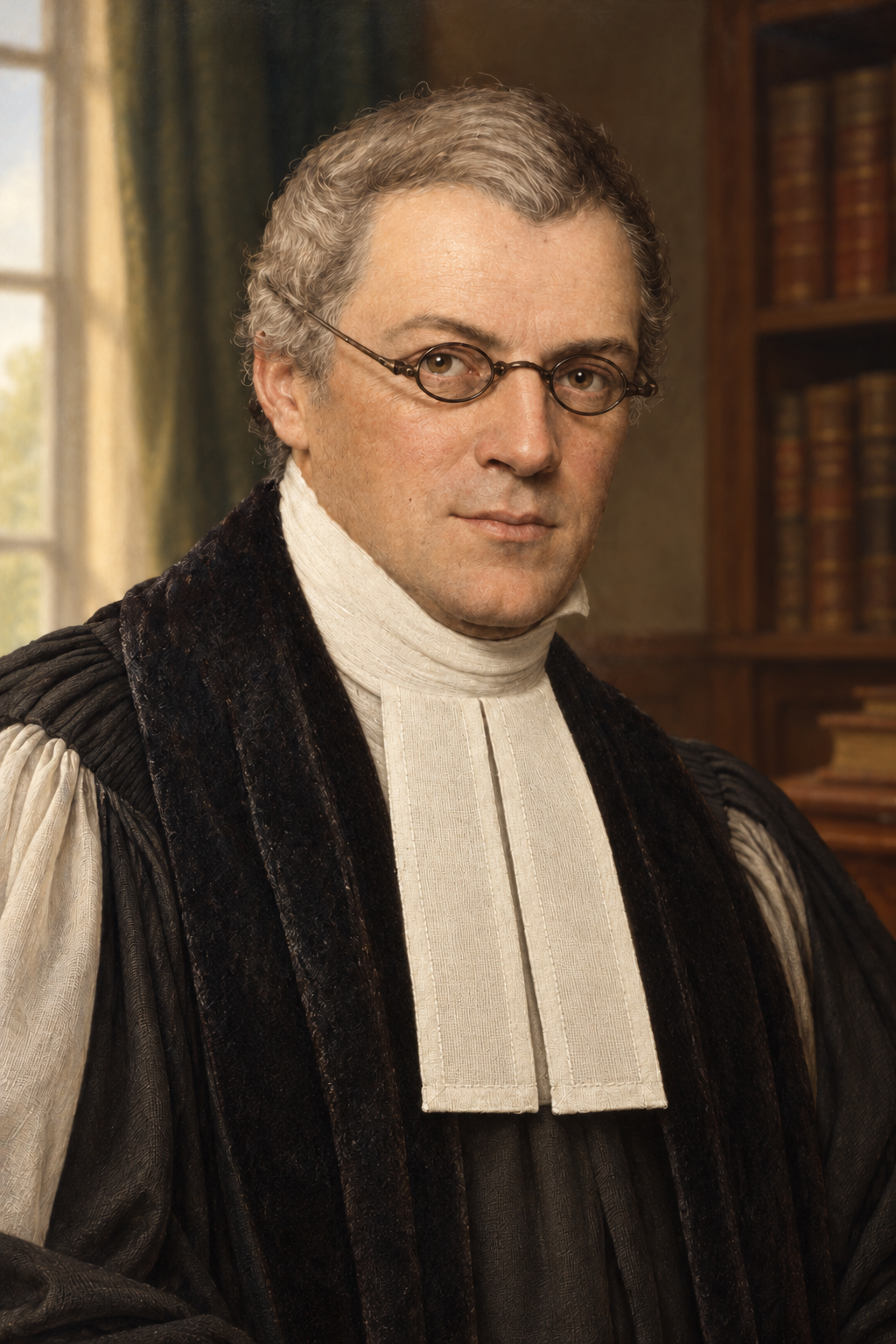
About John Henry Hobart
John Henry Hobart helped build the Episcopal Church in New York through parish visits, the preparation of clergy, and the establishment of schools. His responsibilities reached well beyond his congregation in New York City. He traveled across the state to confirm worshippers and support ministers, and for periods also provided episcopal oversight in Connecticut and New Jersey. Personal attention to clergy and candidates for ordination was a notable part of his work.
Born in Philadelphia on September 14, 1775, he graduated from the College of New Jersey, now Princeton, in 1793. He became a priest in 1801 and served at Trinity Church in New York. Elected assistant bishop in 1811 during Bishop Benjamin Moore’s declining health, he succeeded Moore as diocesan bishop and rector of Trinity in 1816. The combination of parish and diocesan duties shaped the remainder of his ministry.
Hobart believed that the church’s authority rested on its continuity with the earliest Christian community, including bishops in succession from the apostles. His publications brought that understanding to clergy and lay readers. A Companion for the Altar appeared in 1804, followed by The Clergyman’s Companion and An Apology for Apostolic Order and its Advocates. He also helped establish the Bible and Common Prayer Book Society of New York. For him, Christian formation involved worship, study, and the church’s shared order.
Education required more than appeals to diligence. In an 1820 pastoral letter, Hobart argued that candidates needed organized teaching and that poverty should not prevent capable young men from entering ministry. He urged support for students without adequate means. He proposed instruction in New York City alongside a less expensive school elsewhere in the state, recognizing that candidates had different circumstances and would serve in different settings. He envisioned graduates serving remote settlements, where a minister needed both learning and the willingness to work with limited resources far from established institutions.
The same letter defended a diocese’s right to make its own arrangements for theological education. The General Seminary’s removal to New Haven had raised questions about local resources and control. Hobart feared that New York might contribute elsewhere while losing the means to prepare its own clergy. His argument combined a concern for learning with a strong commitment to diocesan responsibility.
By 1822 he could report a compromise: the General Seminary was operating in New York, with a branch at Geneva. In his convention address he welcomed the agreement and urged continued financial support. He also celebrated the new college at Geneva. He regarded institutions under Episcopal direction as essential to the church’s future, arguing that religion and learning influenced one another.
The college was also a local undertaking. Hobart met Geneva residents to discuss plans in 1818, and public subscriptions helped raise funds. A provisional state charter followed in April 1822; instruction began that August in Geneva Hall. The permanent charter came in 1825. The college’s later name, Hobart, commemorated his role, but its early history also records the work and contributions of the town’s residents.
His ministry among Black New Yorkers involved a congregation that had pressed its own claims for recognition. Members of the African Catechetical Institution requested an ordained Black leader in 1809. Peter Williams Jr. renewed the petition in 1813. The community built St. Philip’s Church, which Hobart consecrated in 1819. He later ordained Williams priest in 1826. These events belong to the history of Black Episcopalians organizing and advocating for their own ministry, as well as to Hobart’s episcopate.
After a fire destroyed St. Philip’s wooden building, Hobart’s 1822 address described its reconstruction in brick. He commended Williams’s ministry and appealed to public generosity because the congregation had limited means. His account welcomed the congregation’s growth while accepting a separate racial organization within the church.
A later diocesan assessment identifies limits to his vision of inclusion. Although Hobart supported Black and Indigenous Christian congregations, he did not value Native institutions on their own terms. He also avoided the debate over abolishing slavery, fearing division among Episcopalians. His support for access to church life did not extend to a comparable challenge to the wider structures of inequality.
Oneida memory preserves another perspective. Tribal historian Loretta Metoxen describes Hobart’s recognition of Eleazar Williams as a catechist and lay reader. After Oneida families moved to Wisconsin, they built churches and remembered the bishop by naming a later building Hobart Church. Some families also gave children his name. This remembrance reflects the importance that particular Oneida Christians attached to their relationship with him.
Hobart died at Auburn on September 12, 1830, while traveling on episcopal duties.
At his funeral, Benjamin Onderdonk recalled the care given to him in his final illness and described his prayers for mercy, resignation, and gratitude. The sermon presents a pastor whose last days remained centered on Christian worship.
The Episcopal Church commemorates him on September 12.
Wondering how to weigh the stories and sources? Learn how to read a saint biography.