Biography
John Horden
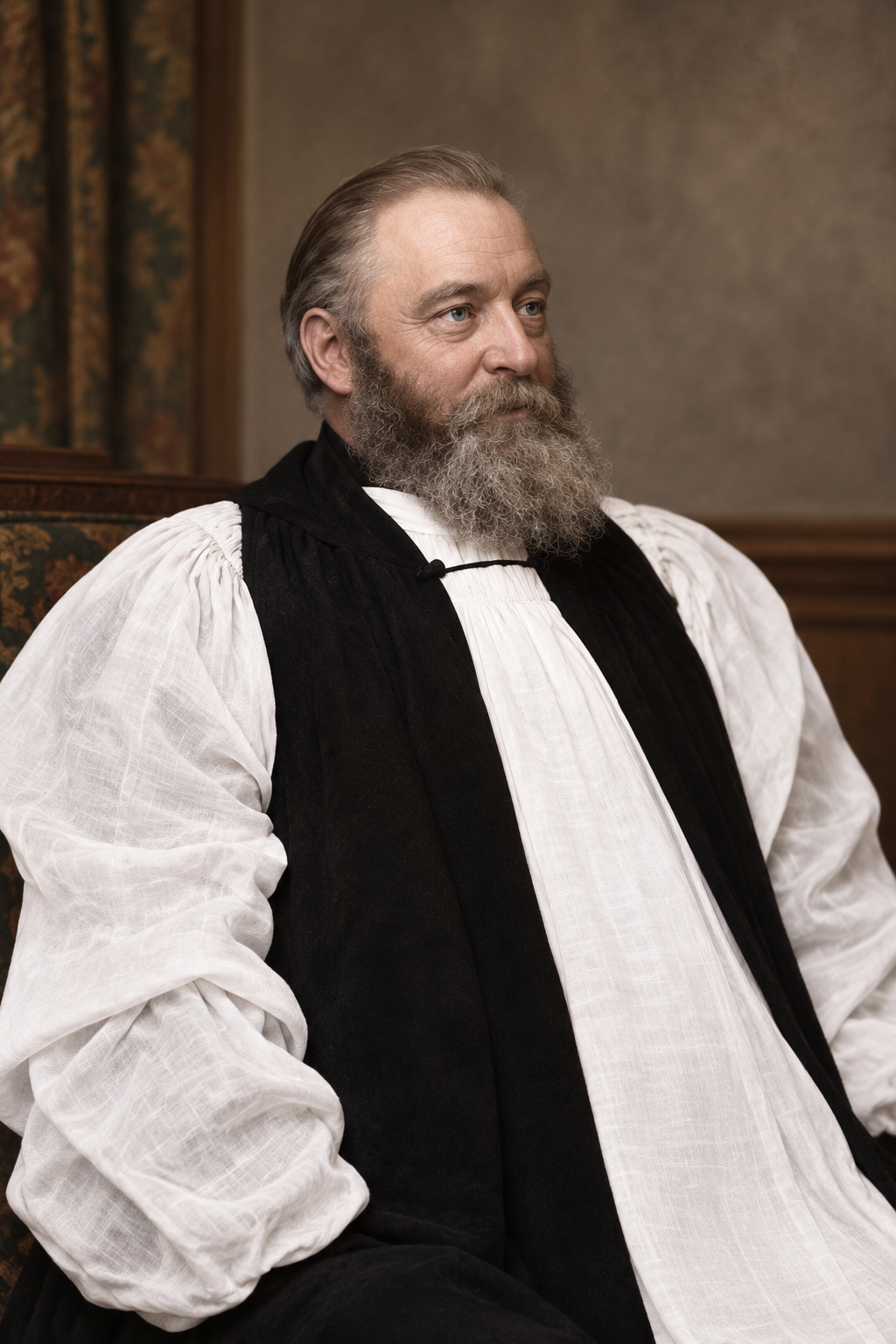
About John Horden
John Horden was born in Exeter, England, on January 20, 1828. After working as a blacksmith’s apprentice and teacher, he offered himself to the Church Missionary Society. He and his wife, Elizabeth, arrived at Moose Factory in 1851. Bishop David Anderson ordained him priest the following year. Horden later became the first bishop of Moosonee, receiving consecration at Westminster Abbey on December 15, 1872.
His former pupil, Archdeacon Faries, remembered a teacher who had continued his own education while working at the forge. At Moose Factory, Horden learned from conversations with Cree speakers and adopted the syllabic writing already used there. Faries described the arrival of a printing press in place of the books Horden had expected from England. Horden and his students learned to print and bind their own publications. Elizabeth Horden assisted in educational and community work. The memoir also recalls evening instruction for working men and the training of local candidates for ministry. These recollections preserve the affection of a pupil, but their language of civilizing a supposedly unenlightened population reflects the missionary assumptions of the period.
Faries also names people whose work made travel and ministry possible. Joseph Kechekesik guided Horden between York Factory and Churchill and later served as a catechist. William Dick accompanied him on a subsequent canoe journey and worked as an interpreter before becoming a catechist and, eventually, an ordained minister.
Horden explained his approach to language learning in the preface to his Cree grammar, published in 1881. He intended it chiefly as a practical aid for young missionaries, with examples they could use while learning to speak. He acknowledged earlier scholarship rather than claiming to have produced the first grammar. More importantly, he urged students to learn from living speakers. They should write down accounts of everyday life, work with interpreters on translations, and return repeatedly to those texts. Listening to conversation and trying out newly learned expressions were essential parts of his advice. The preface makes clear that books alone could not supply the knowledge his work required. Its purpose remained missionary: language learning was directed toward communicating Christian teaching.
His commitment to training local clergy did not remove racial barriers to authority. Historian John Long documents how Horden judged Thomas Vincent, an experienced colleague of mixed Indigenous and European ancestry, unsuitable to succeed him. European expectations and access to English donors influenced the choice. Long’s account shows that personal respect and dependence on a colleague’s work could coexist with prejudice that restricted his advancement.
Near the end of his life, Horden continued revising translations with an Indigenous assistant. In an unfinished letter reproduced by A. R. Buckland, he described mornings spent on the Cree New Testament and afternoons reviewing other biblical books with that colleague. Illness interrupted the work in November 1892. The letter dwells on the pain and frustration of being unable to continue, but also expresses gratitude for care and trust in God. His daughter added a postscript reporting his death on January 12. Buckland’s chapter also preserves an account of the funeral by a young person whom Horden had taught. These voices show relationships of teaching, collaboration, and remembrance around him, while the biographer’s sweeping praise should not substitute for the fuller history.
Schooling during Horden’s lifetime included boarding children, not only daily lessons. In her 1893 account, Beatrice Batty reports that a small boarding school began in 1855 with two children supported through the Coral Missionary Fund. She describes its growth and Horden’s construction of a schoolhouse once support for food and clothing had been secured. Her account also records distress: one girl returned to her widowed father after becoming ill with a longing for home. Batty’s description treats that longing through a colonial view of Indigenous life. The episode should not be reduced to the reassuring story of educational progress that surrounds it.
The Anglican Church of Canada’s archival list traces the school associated with Horden’s name from 1855 to 1969. It includes several names used at Moose Factory. This chronology places the beginnings within his ministry and prevents treating the residential-school history as wholly separate from his educational work.
The National Centre for Truth and Reconciliation lists Bishop Horden Hall with the later dates 1906–1976 and identifies its Anglican affiliation. That date range must be distinguished from the earlier school history. Horden did not personally administer the institution after his death, but the later dates do not erase the boarding school described during his lifetime.
The school’s history remains a matter of living memory for survivors and families. In 2025, Moose Cree First Nation published an invitation to memorial and healing activities at the former school sites. It emphasized support, connection, and participation by survivors and their descendants. That community-led remembrance belongs alongside church accounts when considering what the name Horden means today.
The Anglican Church of Canada commemorates John Horden on January 12 as bishop of Moosonee and missionary.
Wondering how to weigh the stories and sources? Learn how to read a saint biography.