Biography
John Maximovitch
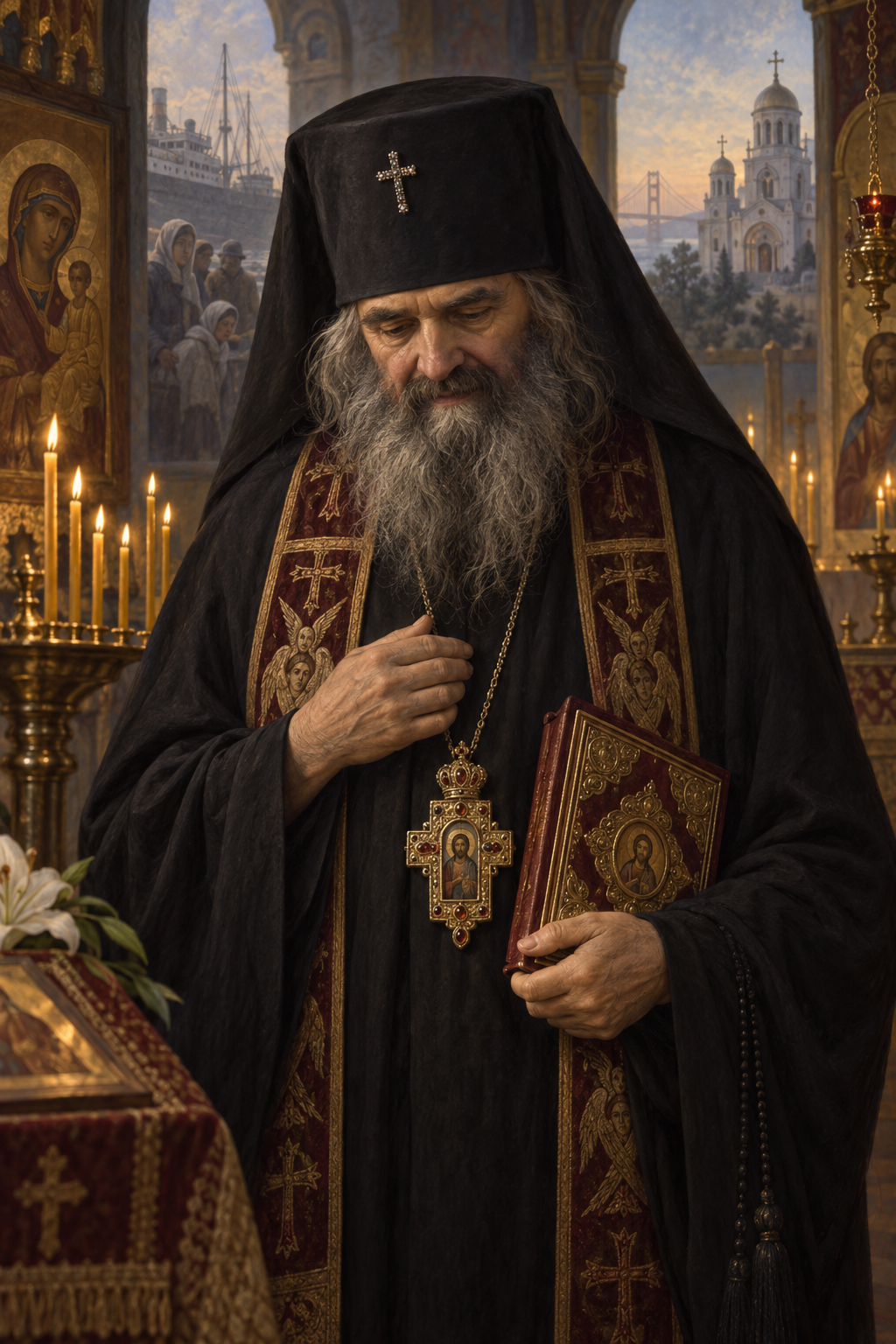
About John Maximovitch
John Maximovitch was born on June 4, 1896, in Adamovka in Kharkiv province, according to the and OCA life. The OCA life says he was born Michael Maximovitch to Boris and Glafira Maximovitch and was named for the Archangel Michael. His early education moved through military, legal, and theological settings: Poltava Military School, Kharkiv Imperial University, and later the University of Belgrade.
The movement from Kharkiv to Belgrade belongs in the biography because it connects John's vocation with exile. OCA sources say his family fled as Bolshevik revolutionaries descended on the country and emigrated to Yugoslavia. There he entered theological study, was tonsured a monk in 1926 by Metropolitan Anthony Khrapovitsky, and was ordained hierodeacon and then hieromonk the same year. The profile should describe this as refugee formation, not as a seamless career ladder.
After ordination, John taught in a Serbian high school and served local Greeks and Macedonians in the Greek language. This quieter period helps explain why he is remembered as both monk and bishop. His ministry before episcopal office already included teaching, language crossing, and pastoral adaptation. A public profile should include that pattern because it continues in Shanghai, Western Europe, and San Francisco.
John was consecrated bishop on May 28, 1934, and assigned to Shanghai. OCA's life says that he worked to restore unity among Orthodox nationalities and helped build a cathedral dedicated to the Surety of Sinners icon of the Mother of God, with a bell tower and parish house. It also names churches, hospitals, and orphanages among the activities he inspired. These details should be kept concrete: his holiness was remembered through worship, care, administration, and practical institutions.
OCA sources also emphasize his ascetical life and pastoral visiting. They say he served the daily cycle of services, visited the sick with the Holy Gifts, and was known for severe personal discipline. The final profile can mention this spiritual reputation, but it should avoid turning ascetic detail into spectacle. Miracle stories, incorruption claims, and reported healings should remain for a separate devotional or quotation review unless supported by a distinct source budget.
The end of World War II and the communist victory in China created a new crisis for John's flock. OCA sources say he led the exodus of his Shanghai community in 1949, helped some 5,000 refugees to a camp on Tubabao in the Philippines, and went to Washington, D.C., to seek a legal path for refugees to enter the United States. This event is one of the strongest for the public profile because it shows episcopal care under political displacement without reducing refugees to anonymous scenery. It also connects the Asian and American chapters of his life: the move to the United States was not merely a personal transfer, but part of a larger pastoral response to people who had lost homes, churches, schools, and legal security.
In 1951 John was assigned to Western Europe, with his cathedra in Paris. OCA sources describe his service as archpastor of the Orthodox Church of France, his study and celebration of the restored Gallican liturgy, and his role in consecrating or ordaining clergy for that work. The public profile can summarize this period as Western European pastoral service and liturgical engagement, leaving specialized liturgical claims for a later detailed note.
In 1962 John was assigned to San Francisco. The OCA life says this period was sorrowful because he sought to heal deep community division, but that peace came and the cathedral dedicated to the Joy of All Who Sorrow icon was completed. The final record should not make the conflict sensational. Its purpose in the biography is to show that his episcopal service included reconciliation as well as visible building projects. The San Francisco period also explains why his memory is so strongly attached to the city even though his earlier service in Shanghai and Western Europe was extensive.
John died on July 2, 1966, during a visit to Seattle while accompanying the Kursk-Root Icon of the Mother of God. The OCA life says he was laid to rest in a crypt chapel under the main altar of the new cathedral. The OCA profile gives July 2, 1994, as his glorification date, and the OCA life adds that the Patriarchate of Moscow later recognized him for universal veneration on July 2, 2008.
The final profile should present John as a bishop, monk, teacher, refugee pastor, and reconciler whose ministry moved with displaced Orthodox communities. It should preserve the global route of his service without implying that every place or community existed only as a backdrop to him. It should leave patronage, coordinates, quotations, and miracle-specific claims empty until separately reviewed. This restraint is especially important because much of his popular devotion centers on wonders and personal austerity; the base catalog record should first give readers a clear, sourced account of the life.
Wondering how to weigh the stories and sources? Learn how to read a saint biography.