Biography
John of Kathara
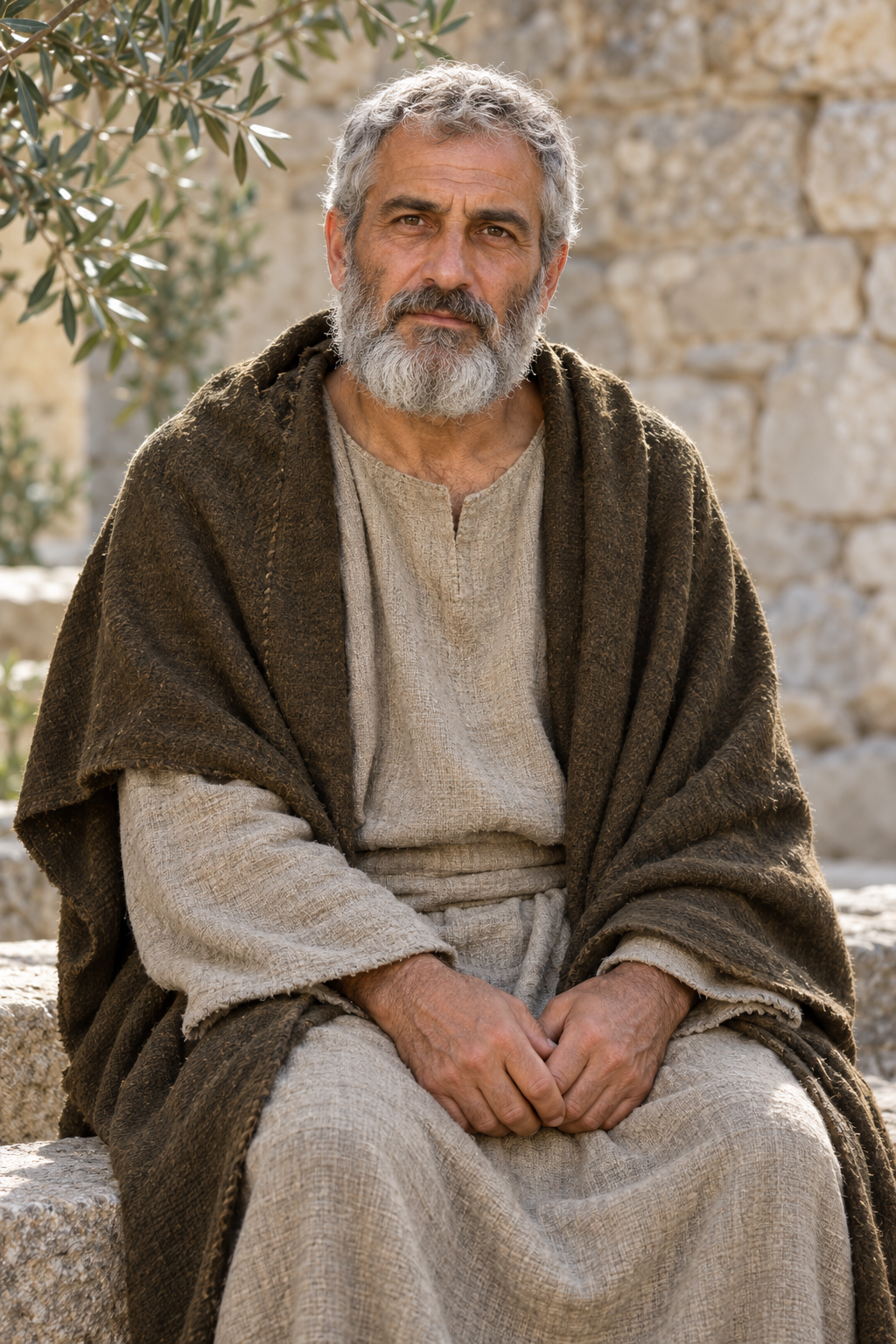
About John of Kathara
John of Kathara was a Byzantine monk and priest whose leadership was repeatedly interrupted by imprisonment and exile. Born at Eirenopolis in Isauria around 770, he became associated with the Dalmatian monastery in Constantinople before taking charge of Kathara. The scholarly Prosopographie der mittelbyzantinischen Zeit places his appointment in the early ninth century, while acknowledging uncertainty about its date and the authority responsible.
The Finnish Orthodox Church’s account remembers John entering a monastery as a child. It describes him accompanying his spiritual teacher to the council at Nicaea and then to Constantinople. That account presents his education through a relationship with an older monk, followed by ordination and responsibility for a community of his own. These early episodes come through the received religious biography.
The sources require careful handling. Daniel Stiernon’s study distinguishes the fuller Greek commemorative account from an altered version used for an older Latin translation. He also identifies John’s birthplace with the Isaurian Eirenopolis, rather than a Syrian city. These distinctions matter because similar names and later retellings can give an apparently precise but misleading account of a person’s origins.
Stiernon also challenges the placement of Kathara inside Constantinople. He points out that the arrest narrative describes John being brought from the monastery to the capital. His study distinguishes the Bithynian community from a supposed urban establishment for which he found no adequate evidence. John’s earlier residence in Constantinople should therefore not determine the location of his later monastery.
Under Leo V, John’s support for the veneration of icons brought him into conflict with imperial policy. The Orthodox Encyclopedia recounts his arrest, transfer to Constantinople and confinement in successive places of detention. More securely than the dramatic speeches preserved in his religious Life, letters associated with Theodore the Studite place him among the opponents of iconoclasm. He was named among the abbots appealing to the pope.
The appeals to Rome place John within a wider circle of imprisoned and exiled churchmen. The Prosopography of the Byzantine Empire identifies him among the signatories of two letters addressed to Pope Paschal on behalf of those defending icons. The signature names him as a priest and abbot of Kathara. It therefore connects the monastery’s leader with a collective effort to seek support beyond the empire, rather than recording only an isolated encounter between an abbot and an emperor.
The Finnish account describes a community dispersed by soldiers and an abbot brought before the emperor in chains. It then follows John through imprisonment, hunger and renewed questioning. This is the Church’s narrative of his suffering as a confessor; it should not be read as a transcript of his confrontations with officials.
John’s relationship with other opponents of iconoclasm may not have been straightforward. Theodore’s teachings criticize an unnamed abbot of Kathara for compromise. The prosopographical study identifies this figure with John, but acknowledges difficulty dating the episode. That evidence prevents a simple claim that every stage of his resistance was uncontested.
The identification itself remains disputed. The Orthodox Encyclopedia records an alternative interpretation that associates the criticized abbot with Joseph, an earlier leader of Kathara. It also notes disagreement about whether John resumed control of the monastery after his release. The uncertainty belongs in his story rather than being resolved by silently choosing the most flattering account.
In a study published in 2014, historian Tatiana Senina revisited this question by examining Theodore’s language about an abbot who turned again toward those in power. She argues that the wording implies an earlier accommodation under Leo V, followed by repentance, before the later return to monastic property. In her reconstruction, John may have yielded briefly after being subjected to pressure by John the Grammarian. She compares the possibility with the better recorded repentance of Nicetas of Medikion. This is an argument from Theodore’s criticism and the sequence of events, not a surviving confession by John himself.
Senina also considers why the commemorative account might omit such an episode. She suggests that its source was a lost Life composed some time after John’s death. The mistaken presentation of John the Grammarian as patriarch during Leo’s reign is one reason for caution. A temporary compromise could have been absent from the Life or removed when it was shortened. Neither possibility can be established by comparing the Synaxarion with a complete Life, since that longer text has not survived.
His last exile took him to Aphousia, where he died. The year is uncertain: the prosopographical study proposes 835.
Stiernon examined both 835 and 839 as possible results of competing chronologies. His concluding reconstruction allows a death in 835, while explaining why the sequence of persecution and exile is difficult to establish. An approximate year is therefore more responsible than an exact date.
The Finnish Orthodox calendar commemorates John on April 27 as a confessor and leader of the monastery.
Wondering how to weigh the stories and sources? Learn how to read a saint biography.