Biography
John of Trogir
About John of Trogir
John of Trogir was a medieval bishop whose memory became part of the life of his city. The historian Zrinka Novak describes how devotion to John linked the cathedral, civic government and surrounding communities, giving his feast a place in both religious observance and public life.
Milan Ivanišević identifies him as a Benedictine associated with the monastery of Saint Peter at Osor and probably of Italian origin. The often-given birth year, about 1034, is calculated from the minimum age for becoming a bishop, rather than established by a birth record. A supposed connection with the Orsini family is also unproved.
John appears in documents from 1064 onward. Later records place him among witnesses to royal grants and participants in ecclesiastical disputes and councils. His episcopate therefore belongs to the history of church reform and changing political authority in the eastern Adriatic. He is last mentioned in records from 1111 and probably died shortly afterward.
The medieval account of his life presents him as a mediator during King Coloman’s advance into Dalmatia. It also relates miracles. Novak treats this work as hagiography, written to promote his sanctity, while recognizing that it preserves information about the setting in which he worked. Its devotional purpose calls for care in distinguishing the bishop’s historical activity from the stories that grew around him.
The record of his recognition as a saint is incomplete. The documents collected for a canonization process and a papal declaration have not survived. Ivanišević connects a possible procedure with the presence of a papal legate in Trogir in 1192. That reconstruction does not provide a secure formal canonization date.
John’s feast became woven into the city’s laws. Novak notes that the communal statute invoked both John and Lawrence as protectors. Civic officers brought candles to the cathedral on their feast days. A later provision allowed some debtors to enter the city for the celebrations without fear of punishment, though the protection had explicit exclusions.
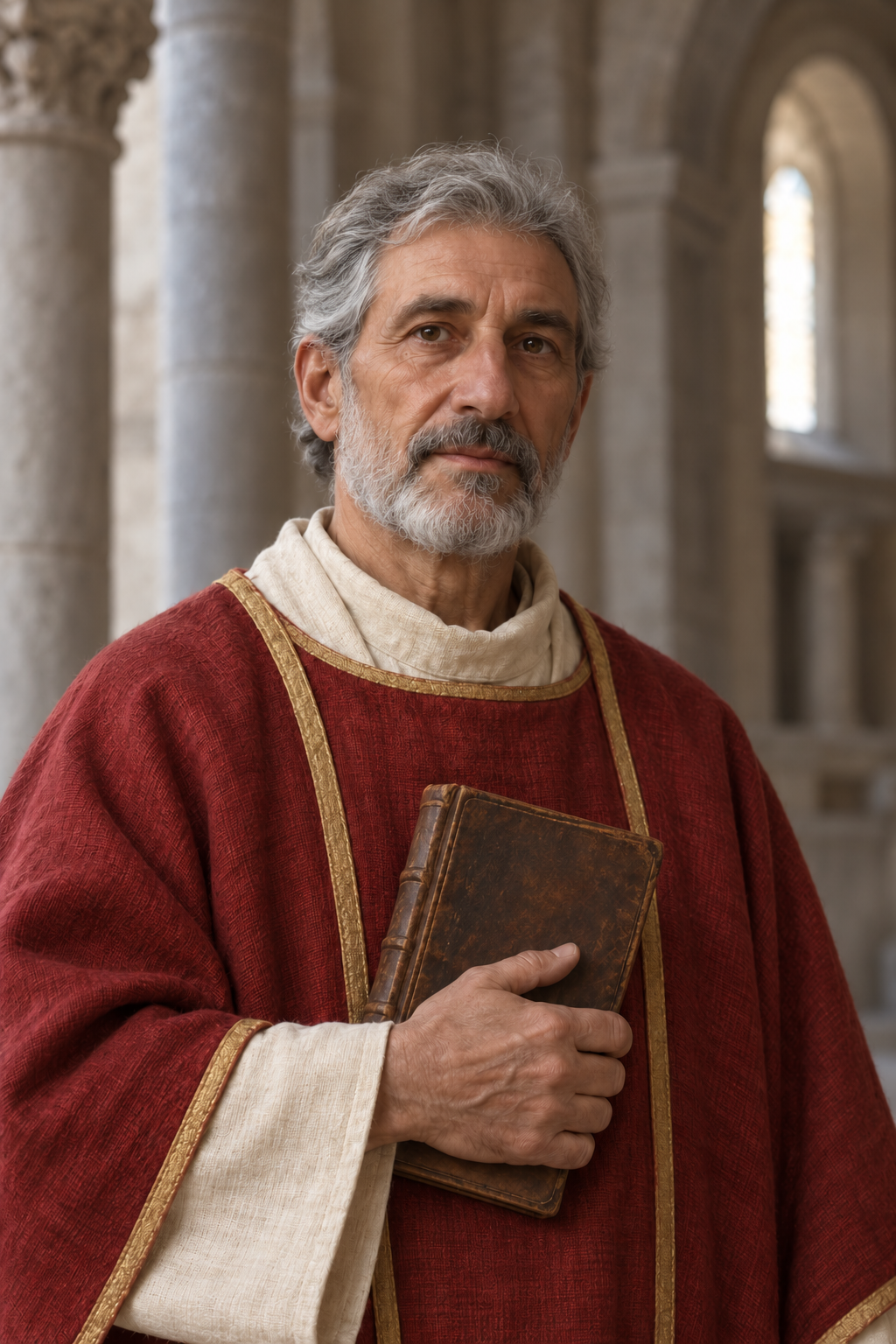
Art gave the bishop a recognizable presence. Milan Ivanišević’s iconographic study describes representations in episcopal vestments, carrying a staff or book, sometimes with a model of the city or church. Other pictures show episodes from the miracle tradition. A fourteenth-century sarcophagus and later paintings preserve different stages of this remembrance. These images express the community’s devotion; they do not establish an authenticated likeness of John.
His remembrance also inspired literature. In a study of seventeenth-century Trogir, Sanja Cvetnić traces the role of Dominik Andreis in promoting the cult. He composed a Croatian litany in 1632, encouraged Giovanni Francesco Loredan’s Italian biography, and sponsored a drama by Girolamo Brusoni. The drama was performed in Trogir in 1657, with musical intermezzos published the following year. Cvetnić shows how these works joined local devotion with the literary and theatrical culture of the period.
The celebration continues in the local Church. A Catholic news report records the November 14 feast in Trogir’s cathedral in 2012, observed together with the city’s civic day. The homily presented John as a model of prayer, charity and integrity in public responsibility. This documented observance supports his place as a locally venerated saint, while the uncertainties surrounding his early life and formal recognition remain.
Wondering how to weigh the stories and sources? Learn how to read a saint biography.