Biography
John of Valence
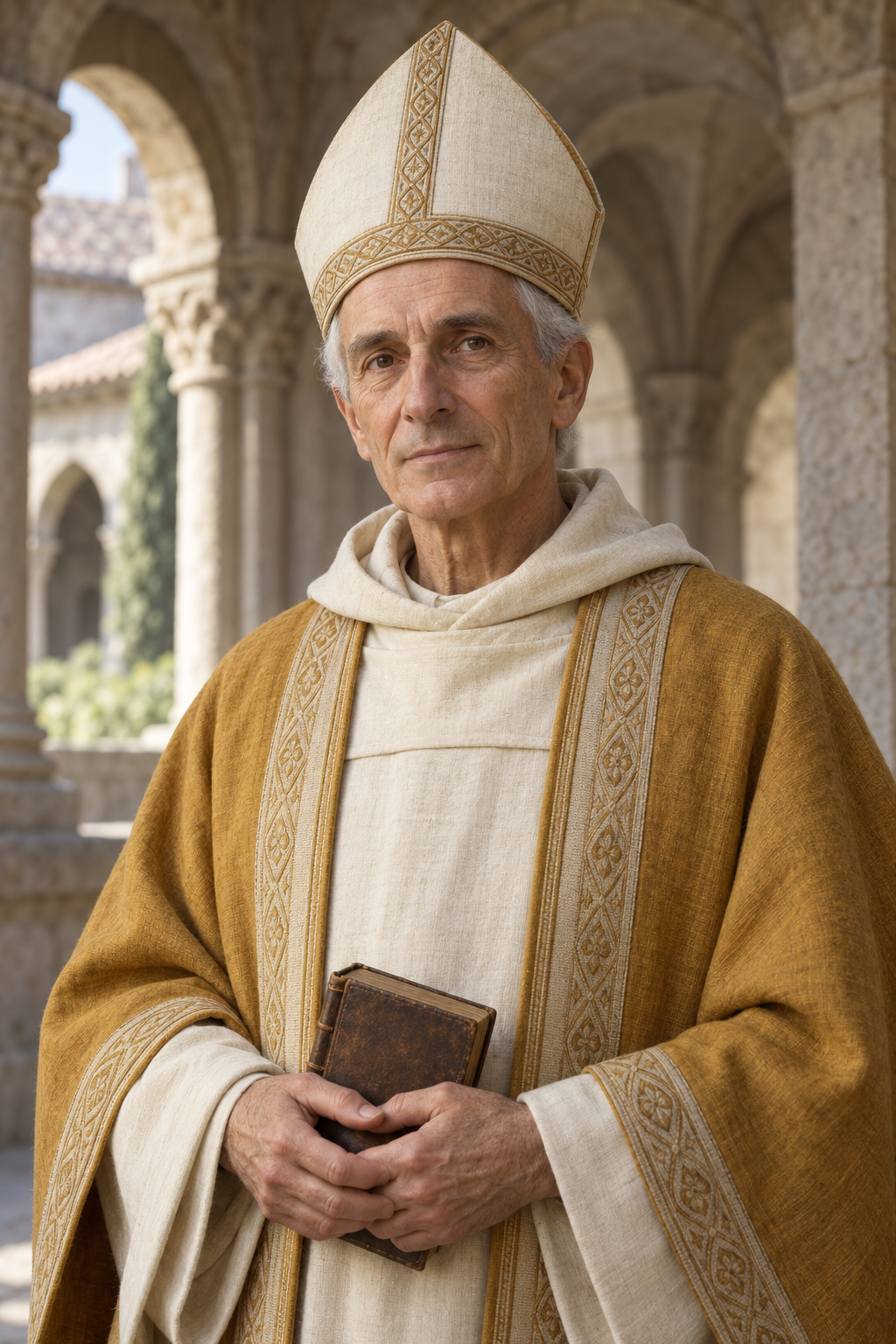
About John of Valence
John of Valence began his religious life among the cathedral clergy of Lyon before becoming a Cistercian monk. His contemporary biographer, Giraudus, places his decision to enter Cîteaux at about forty years of age. In 1117 he became the first abbot of Bonnevaux. During his abbacy, the community established four daughter houses: Mazan, Montpeyroux, Tamié, and Léoncel.
A story about his vocation remembers hesitation before that decision. According to the later account collected by Per Einar Odden, John had promised to enter Cîteaux but feared its demanding way of life. He considered a pilgrimage to Santiago de Compostela instead. A dream or vision was said to have recalled him to his promise. This belongs to the religious tradition surrounding his conversion, rather than to independently established evidence about what he experienced.
At Bonnevaux, John received Amadeus of Clermont, lord of Hauterives, together with his son and sixteen vassals. The son would later become Amadeus, bishop of Lausanne. The Diocese of Valence remembers this household among those who entered the growing monastic community. Its account also connects John with the foundation of Léoncel in 1137.
In 1141 John was elected bishop of Valence after the expulsion of Bishop Eustace. The abbot’s move brought him into the care of a troubled local church. Giraudus’s account, as summarized by Johannes Luther, especially presents him as a benefactor of poor people.
The contemporary Life gives concrete form to that reputation. It describes John visiting towns and villages, helping widows and orphans, and buying oxen for farmers. People who had lost their former means received assistance discreetly. Giraudus also portrays a bishop willing to forgive offenders despite complaints from officials who expected revenues from penalties.
Odden’s account likewise recalls criticism that John treated sinners too gently. His reported response asked those who judged others to remember their own vulnerability to temptation.
The chronology of his last years remains disputed. Luther gives his death as 21 March 1146 and records his burial in the cathedral of Saint-Apollinaire at Valence.
The diocesan account instead places his death in 1145, on the feast of Saint Benedict. It commemorates him on 26 April, identifying that date with his episcopal ordination.
His Life already invokes John alongside Apollinaris as a protector of Valence. Its praise of the two saints as patrons records a local devotional tradition, rather than a modern decree of patronage. The narrative continues with reports of healing at John’s tomb.
Wondering how to weigh the stories and sources? Learn how to read a saint biography.