Biography
John Rigby
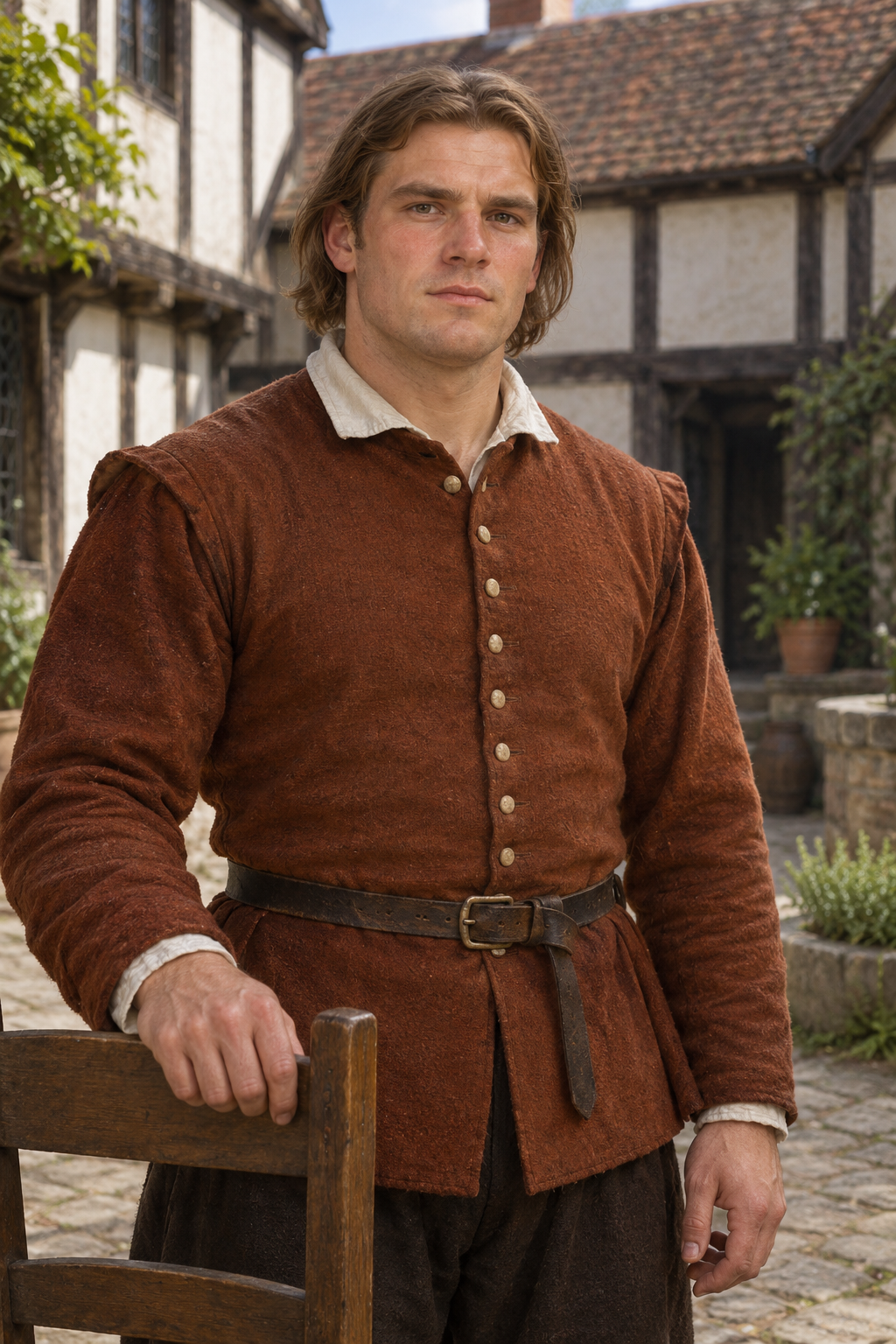
About John Rigby
John Rigby was a Lancashire layman whose service in a Catholic household brought him before the London courts. He came from Harrock Hall, near Wigan, and his family had become poor. He first worked in a Protestant household, then entered the service of the Huddlestons at Sawston in Cambridgeshire. His story belongs to the lives of people who supported a household through ordinary work, rather than to the clergy whose ministry they sometimes made possible. His own religious choices eventually became the subject of a capital prosecution.
The scholarly accounts place his birth around 1570. He was one of the younger sons of Nicholas Rigby and Mary Breres. He had sometimes attended Protestant worship, but later sought reconciliation with the Catholic Church. Wainewright identifies the priest who reconciled him as John Jones, a Franciscan imprisoned in the Clink. The later trial made that return to Catholic practice a central issue. It treated an act that Rigby understood as repentance and reconciliation as an offense against the queen’s authority.
Other accounts preserve a connection with the Jesuit John Gerard. Fitzherbert describes Gerard’s influence and the Catholic household’s example, while leaving open whether Gerard or Jones performed the reconciliation. He also records Rigby’s wish to become a Jesuit lay brother, without evidence that he formally entered the order. That distinction matters to his life: he remained a layman. Religious aspiration and friendship with priests did not make him a priest or a professed member of their communities. Nicholas Owen, who built a hiding place at Sawston, also belonged to the household’s Catholic connections.
Gerard’s autobiographical account names Rigby among people who returned to Catholic practice and devoted themselves to good works in England. He places that recollection within his description of ministry while imprisoned in the Clink. A degree of freedom allowed him to hear confessions and receive trusted visitors. The passage recalls the contact between a confined priest and people outside the prison. His trial account names Buckley, the alias of John Jones, as the priest who reconciled him.
The crisis began when Mrs. Fortescue, his employer’s widowed daughter, was too ill to answer a summons for recusancy. Rigby went to court to explain her absence. Instead, the officials questioned him about his own religious practice. Fitzherbert records his direct admission that he had been reconciled to Catholicism. An errand on behalf of another person had become an inquiry into his conscience. He was sent to Newgate and offered the prospect of release if he would attend the established church. He refused.
His published examination gives his own explanation. He denied being a priest or friar and described himself as a Catholic layman. He maintained that his allegiance to the queen continued, and distinguished absolution for sins from withdrawal of civil obedience. When charged with having been reconciled, he accepted that he had sought reconciliation with God. He asked the judges to explain to the jury whether the law truly made such repentance treason. His argument joined a religious defense to a challenge about the meaning of the statute.
Rigby was transferred from Newgate to the White Lion prison in Southwark. The proceedings continued through the spring, with opportunities to change his answer. A sentence in March was followed by a reprieve until another session. In June he again refused to conform and was told that the sentence would be carried out. Wainewright notes a small error in the date within Rigby’s own account; the larger sequence remains one of repeated questioning, a delayed execution and continued refusal to abandon his Catholic profession.
The execution account remembers another appeal on the journey to St. Thomas Waterings. A captain urged him to conform and asked whether he was married. Rigby replied that he was unmarried and had lived chastely. At the place of execution he gave the executioner a coin as a sign of forgiveness, including forgiveness toward those responsible for his death. He was killed on June 21, 1600. The account preserves a prayer for forgiveness and an appeal to Jesus amid the cruelty of the execution.
Rigby was beatified in 1929 and canonized in 1970 among the Forty Martyrs of England and Wales. The Norwegian church notice lists their common commemoration on October 25. His memory joins those of ordained ministers and other lay Catholics, while retaining the particular circumstances of a servant questioned after appearing for a sick woman.
A Catholic sixth form college in the Wigan area now bears his name. It describes itself as the country’s first Catholic sixth form college. Its own anniversary history traces its beginning to 1972 and describes the community it serves across Wigan, Merseyside and West Lancashire. The educational setting carries his name into the everyday work of study and service, far from the prisons and courts through which the record of his final months survives.
Wondering how to weigh the stories and sources? Learn how to read a saint biography.