Biography
John the Baptist
About John the Baptist
John the Baptist called people to change their lives and come to the water for baptism. The Jewish historian Josephus remembers him as a teacher who urged justice toward other people and reverence toward God. In that account, washing the body was not a substitute for moral change: right conduct had to come first. His preaching gathered a following large enough to alarm Herod Antipas.
Luke begins his story in a priestly household. Zechariah and Elizabeth are elderly and childless when an angel announces that they will have a son. After John's birth, both parents insist on the name John rather than the expected family name. Luke places their home in the Judean hill country without naming the town. The child grows up in the wilderness before his public ministry begins. This birth narrative presents his vocation as God's gift to Israel.
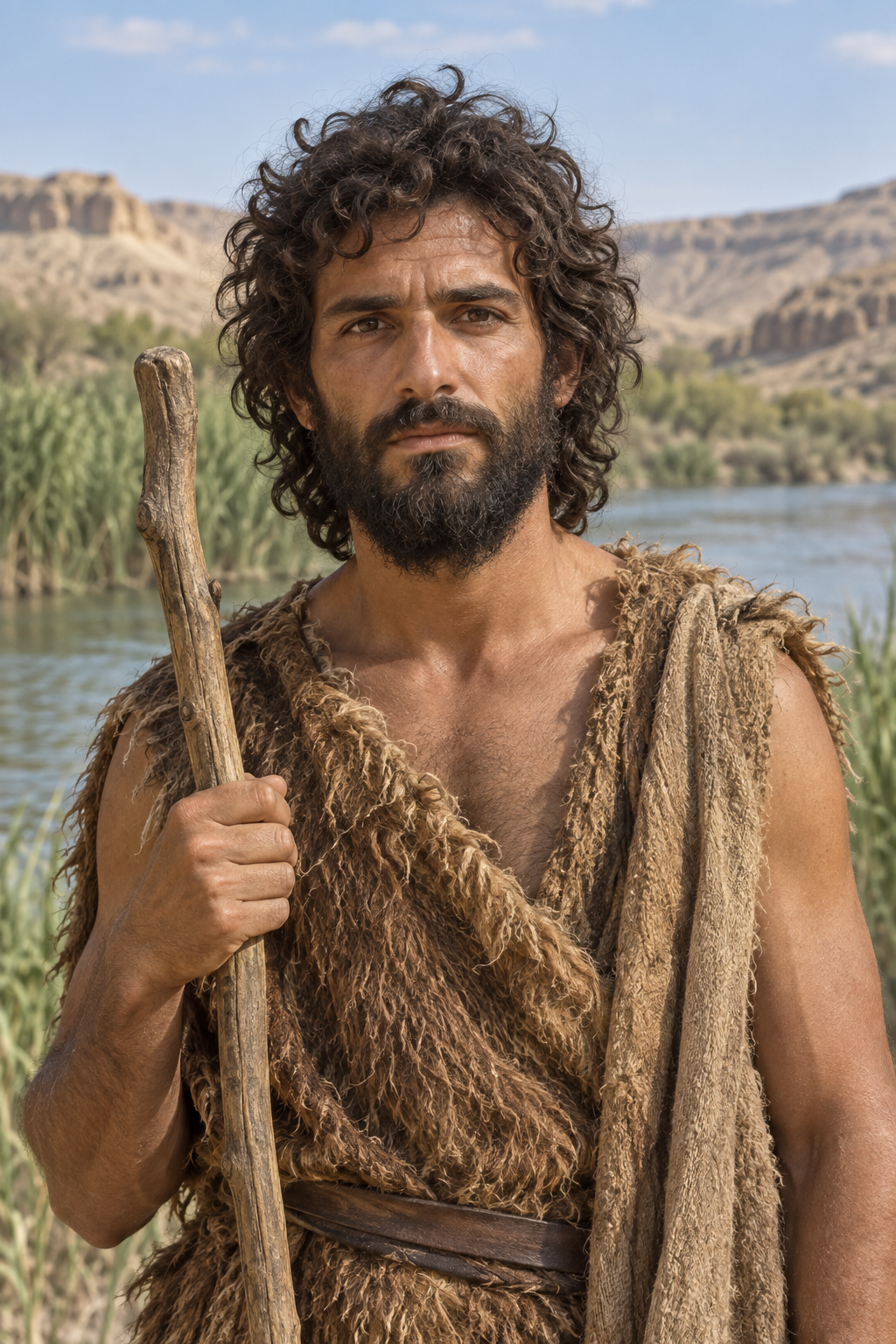
Mark introduces the adult John in rough clothing, with a leather belt and a diet of locusts and wild honey. People come from Jerusalem and Judea to confess their sins and receive baptism in the Jordan. Jesus comes from Nazareth and is baptized by him. Mark's account surrounds that encounter with the opened heavens, the descending Spirit, and a voice declaring Jesus to be God's beloved Son. John's own preaching points beyond his water baptism to one more powerful who will baptize with the Holy Spirit.
Repentance had practical consequences. In Luke, John tells people with extra clothing or food to share with those who have none. Tax collectors must stop taking more than they are owed; soldiers must abandon extortion and false accusations. These instructions meet people within their daily work and possessions. John asks for changed behavior, not confidence in ancestry or an outward ceremony alone.
The Gospel of John describes him as a witness who refuses to claim the place of the Messiah. Questioned by representatives from Jerusalem, he directs their attention toward someone they have not yet recognized. When Jesus approaches, he identifies him as God's Lamb. Two disciples who hear him then follow Jesus; one is Andrew. Later, John's followers complain that people are going to Jesus instead. He answers with the image of a bridegroom's friend, whose joy comes from hearing the bridegroom rather than competing with him. The scene makes relinquishing attention part of his witness. His work points beyond himself.
Imprisonment did not end John's questions. Matthew recounts how he sent disciples to ask Jesus whether he was the expected one or whether they should look for someone else. Jesus answered by directing them to the healings and good news reaching poor people. After the messengers left, Jesus spoke to the crowd about John: they had not gone into the wilderness to see a courtier in fine clothing, but a prophet. He also contrasted the reception of their different ways of life. People rejected John's austerity and criticized Jesus for eating and drinking. Matthew preserves the prisoner's inquiry alongside Jesus' public recognition of his mission. Matthew also places John at a turning point: the earlier prophets and law led toward his ministry, and Jesus identifies him with the expected Elijah, inviting the crowd to listen.
In Mark's account, John rebukes Herod's marriage to Herodias and is imprisoned. Herodias seeks his death. At a birthday banquet, her daughter's dance leads Herod to make an oath; the girl, prompted by her mother, demands John's head. Herod orders the execution rather than withdraw his promise before the guests. John's disciples retrieve his body and bury it. Mark does not name the dancing girl.
Josephus gives a different explanation for the killing: Herod feared that John's influence might develop into rebellion and acted before a revolt could occur. He names Machaerus as the place of imprisonment and death. His account does not include the banquet or dance. The two narratives preserve distinct explanations, rather than one continuous report of the ruler's motives.
John's influence continued after his death. Acts introduces Apollos as an eloquent teacher who knew only John's baptism; Priscilla and Aquila helped him understand the Christian way more fully. Later, at Ephesus, Paul meets people who also report receiving John's baptism. Paul explains it as a preparation for belief in Jesus, and they are baptized in Jesus' name. These episodes show the author of Acts placing John's ministry within the developing Christian story. They also preserve the memory of people whose religious formation still carried his name, far beyond the Jordan where he had preached.
Christian worship remembers both his birth and his death. The Roman calendar celebrates the Nativity on June 24 and his martyrdom on August 29. The Church's Directory on Popular Piety also notes his familiar presence in baptisteries and near baptismal fonts. These commemorations express his continuing role in Christian prayer; their calendar dates are not documentary dates for the events of his life.
Wondering how to weigh the stories and sources? Learn how to read a saint biography.
Explore similar vocations
Prayers for John the Baptist
John the Baptist: Collect excerpt
Make us so to follow his doctrine and holy life, that we may truly repent according to his preaching;