Biography
John Won Gyeong-do
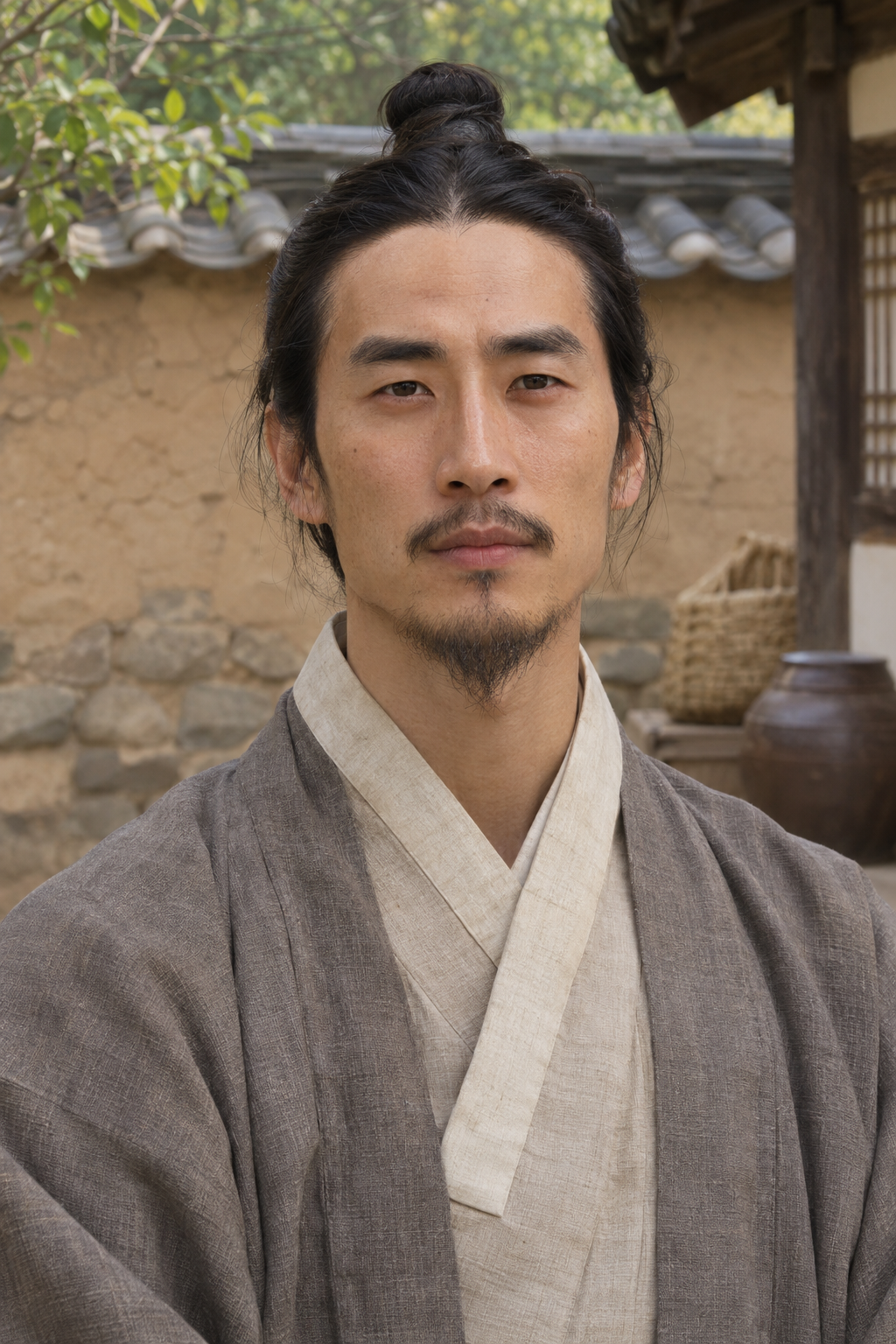
About John Won Gyeong-do
John Won Gyeong-do lived in Yeoju, in Gyeonggi Province, and was also known as Sasin. He came from a noble family. Cha Gi-jin places John within a Soron family that had withdrawn to live in Yeoju. The current Church biography places his birth around 1774, while an older encyclopedia entry gives 1773. Neither account supplies a month or day. What can be followed more clearly is the change in his household after he accepted Catholicism in 1797.
He learned with his cousin Martin Yi Jung-bae. The current official life names their teacher as Josaphat Kim Geon-sun, a friend through whom they encountered Catholic doctrine. John then brought the rest of his family into the Church. He married a daughter of Marcellinus Choe Chang-ju, another Yeoju Catholic. The religious choices of his wife’s family and of his cousin would later meet in the same prison.
The encyclopedia records that he also persuaded his older brother Won Gyeong-sin to discontinue ancestral rites. This brought the new religion into practices by which the family had honored its dead. Yeo Jin-cheon describes John’s character as upright and firm, with a habit of self-restraint. His 2007 account names Martin as the person who taught him. The received accounts thus differ in the way they describe his instruction, while agreeing on the close relationship between the two cousins.
At Easter in 1800, John and Martin went to a gathering arranged by Jeong Jong-ho at Yangseom. They prayed the Easter Angelus, sang hymns and beat time on gourds and a wine container. Ju Jeong-a’s account describes the gathering being interrupted after an outsider informed against the Catholics. Officers seized the people they found there and took them towards the government office. The celebration brought the community together in a place where its prayers could also attract notice.
The prisoners’ route passed John’s house. His elderly mother came out in tears and begged the officers to let her see her son. They refused. At the government office, the magistrate immediately demanded that the prisoners abandon Catholicism and disclose other believers. John answered for the group. He connected the refusal to supply names with the prohibition against harming other people, and refused to deny God. His statement met the two demands together: he would neither change his profession nor expose someone else.
After the first arrests, the magistrate ordered a wider search for Catholics on his own initiative. More believers were brought into the prison. More than six months of imprisonment followed. John received repeated punishments that left severe wounds. The Catholic accounts say that those wounds repeatedly healed in an extraordinary way. Ju presents this as a reported miracle, not an account of ordinary medical treatment. In the same period, Marcellinus was brought into the prison after a separate arrest. The father-in-law who had encouraged his family’s Catholic practice was now confined with the son-in-law who had joined that family.
His household continued trying to reach him. An elderly woman enslaved in his family came to the prison describing the grief of his mother and wife. The news affected him more deeply than the magistrate’s threats, and his resolution began to weaken. Martin intervened. Yeo’s account remembers the cousin standing beside John and looking so fiercely at the woman that she withdrew and would not return. John’s endurance was sustained by another prisoner at a moment when the people he loved had become the strongest reason to seek release.
In October 1800 the prisoners were taken to the Gyeonggi governor’s office. Further interrogation followed when the persecution intensified in 1801. Their cases reached the royal court through Governor Yi Ik-un. The surviving royal decision did not deal with all the prisoners alike. It ordered Martin, Im Hui-yeong and Yu Han-suk executed without waiting for the usual season, but placed John with Marcellinus, Jeong Jong-ho and James Yun Yu-o in a group requiring detailed State Council review of their capital cases.
John was eventually returned to Yeoju for execution. On April 25, 1801, he was beheaded outside the southern gate of the government office, together with Martin and Marcellinus. The family and friendship connections through which he had learned and practiced the faith were still present at the end of his imprisonment.
Later Yeoju parish commemorated John both near the remembered execution area and at Yangseom. Ju’s 2017 report describes a parish memorial inscribed with seventeen local martyrs’ names, as well as monuments at the island and at Bigak Street, a proposed execution location. Those different sites remember the gathering, imprisonment and deaths without making every modern monument the precise location of the earlier event.
Lee Seung-hun visited Yangseom in 2016 and described a monument erected by the parish on May 31, 2015. Six names were inscribed on it. River works had transformed the island into a park in 2012.
Wondering how to weigh the stories and sources? Learn how to read a saint biography.