Biography
John XXIII
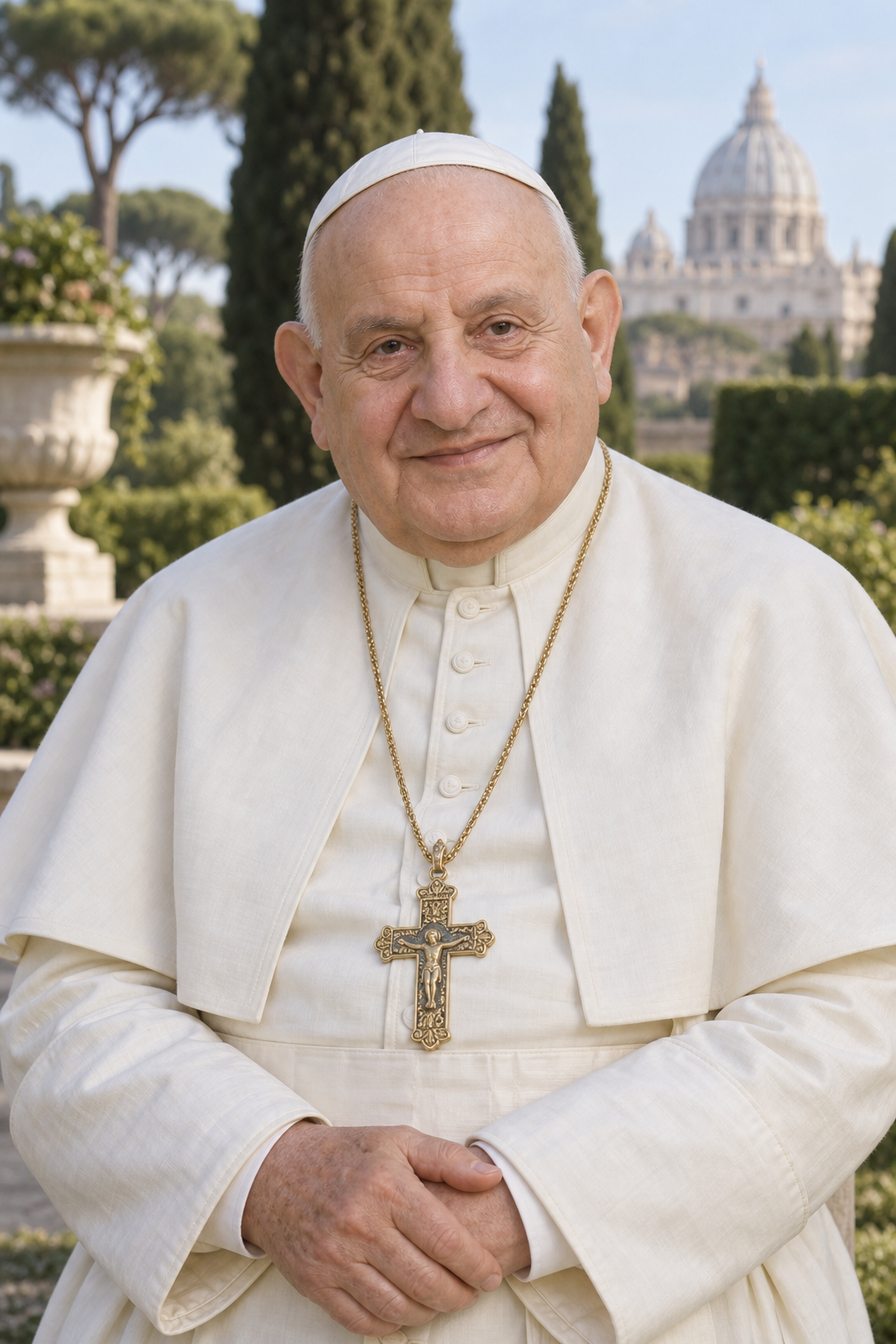
About John XXIII
Angelo Giuseppe Roncalli was born on 25 November 1881 at Sotto il Monte, near Bergamo. He entered seminary and was ordained in Rome in 1904. As secretary to Bishop Giacomo Maria Radini-Tedeschi, he learned firsthand about the difficulties facing working people. He also taught future priests. During the First World War he served first in medical work and then as a military chaplain, caring for soldiers in hospitals.
Teaching and historical research remained important to him. He studied Charles Borromeo's visitation of Bergamo, publishing research even after becoming pope. In 1921 he was called to Rome to reorganize the Italian work of the Society for the Propagation of the Faith. Diplomatic assignments took him to Bulgaria, Turkey and Greece, and France. In wartime Istanbul he ran an information office for prisoners of war.
His wartime assistance also included helping Jewish refugees obtain transit visas. In 1953 he became Patriarch of Venice, returning to direct diocesan ministry. On 28 October 1958 the cardinals elected him pope, and he took the name John XXIII.
John soon made a visit that placed him face to face with people confined behind prison walls. On 26 December 1958 he went to Regina Coeli in Rome and spoke to the inmates without a prepared script. The prison's central rotunda had been arranged as a chapel for the occasion. He told those gathered that the encounter would remain deeply impressed on him. The visit made personal contact part of his public ministry, rather than leaving care for prisoners solely to messages delivered from elsewhere.
A month later, on 25 January 1959, he addressed the cardinals at Saint Paul's monastery in Rome. He spoke about the responsibilities he carried both for the city and for the wider Church. Rome's growth and changing conditions presented pastoral needs that could not simply be ignored. He announced a diocesan synod, an ecumenical council, and a revision of canon law. Rather than presenting a complete programme for others merely to accept, he asked the cardinals for suggestions. These were concrete institutional proposals, intended to help the Church carry out its mission amid the circumstances of contemporary life.
He also pursued relationships across Christian divisions. He received the Anglican Archbishop Geoffrey Fisher in December 1960 and entrusted Cardinal Augustin Bea with the new Secretariat for Christian Unity. His contacts extended to the Orthodox Patriarch Athenagoras. He ordered offensive references to Jews removed from the Church's Holy Week liturgy and liturgical books. These steps changed some longstanding relationships without dissolving the differences between communities. They also gave practical form to the work of conversation and renewal developing around preparations for the Council.
In Mater et Magistra, published in 1961, John addressed the conditions of economic life. He argued that workers should have an active part in the enterprises where they worked. He did not prescribe one arrangement for every workplace, recognizing that the form of participation would depend on circumstances. His concern was that a worker should be treated as a responsible person, not simply as an instrument of production. Increasing education and technical skill, he believed, strengthened the case for greater responsibility. This teaching connected social reform with the daily experience of people whose decisions and abilities helped an enterprise function.
John opened the Second Vatican Council on 11 October 1962. In his address, he resisted the assumption that the present age offered nothing but decline. He asked the bishops to preserve Christian doctrine while examining how it could be expressed effectively to people of their own time. Simply repeating earlier theological discussions was not the purpose of gathering a council. He favoured patient explanation and mercy over an approach centred on condemnation. That did not mean he thought every opinion equally true: his address explicitly upheld the Church's teaching. The task he set was both demanding and pastoral, joining fidelity to belief with responsibility for how that belief reached other people.
Only weeks later, the Cuban missile crisis brought the danger of nuclear war into immediate public view. On 25 October John broadcast an appeal in French to the world's leaders, asking them to spare humanity the horrors of war. The appeal belongs to his effort for peace; it does not establish that he alone resolved the crisis. He used the means available to him to call attention to the lives endangered by decisions made at the highest level.
In April 1963, Pacem in Terris renewed his appeal for peace. He called for disarmament under mutual controls and for trust to replace the arms race. Negotiation required sincerity and respect for commitments, not merely reassuring language. These were demands addressed to public responsibility, accompanied by prayer.
John died on 3 June 1963, before the Council had finished its work.
Francis canonized him on 27 April 2014. At the ceremony, Francis remembered John's openness to the Holy Spirit in calling the Council, presenting leadership as a form of service. The recognition honours a life whose public initiatives grew from the work of a priest and pastor.
Wondering how to weigh the stories and sources? Learn how to read a saint biography.
Explore similar vocations
Prayers for John XXIII
John XXIII: sourced prayer excerpt
to strengthen the bonds of mutual love