Biography
John Yu Jung-cheol
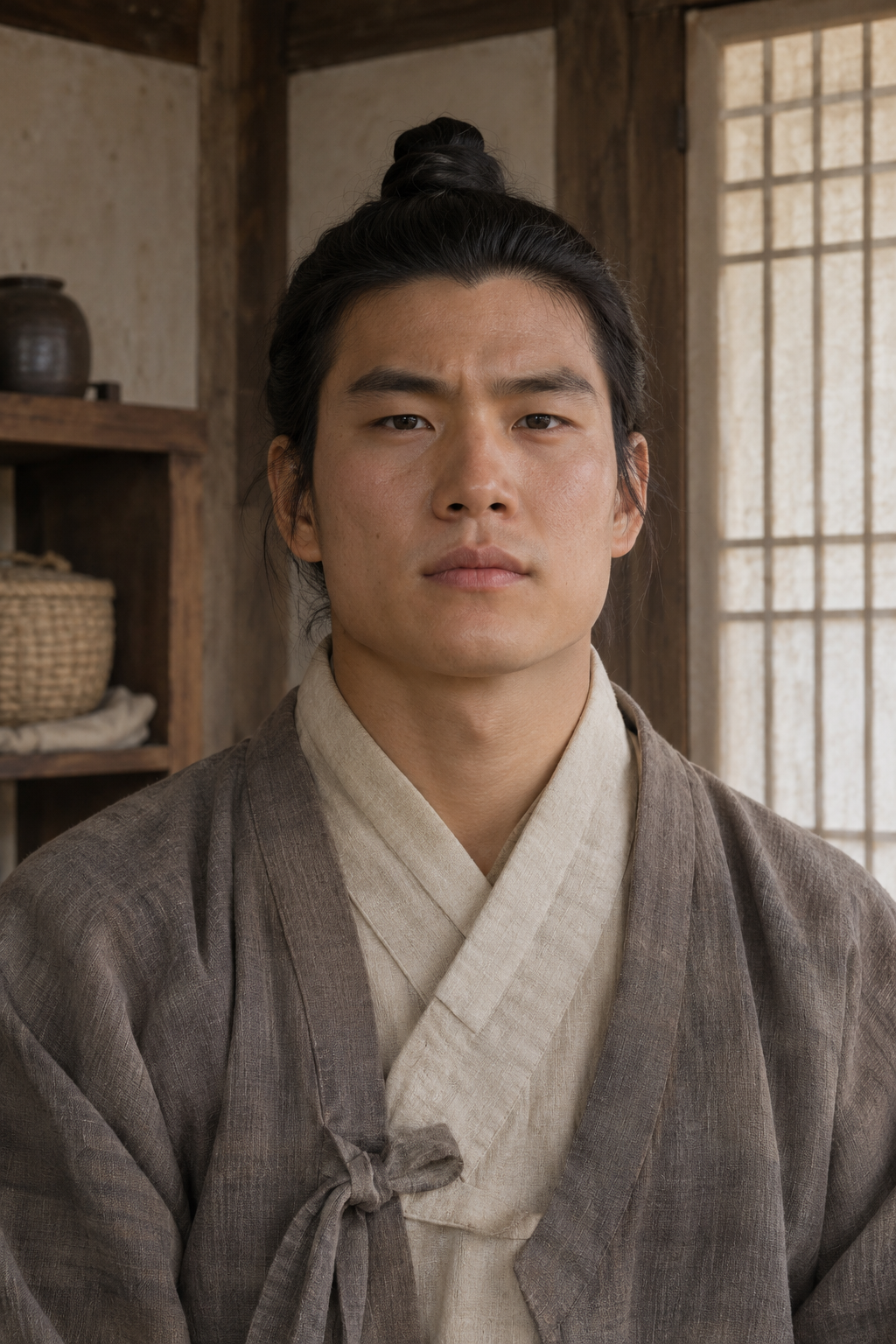
About John Yu Jung-cheol
John Yu Jung-cheol grew up at Chonam, a village near Jeonju in southwestern Korea. Born in 1779 to Augustine Yu Hang-geom and Sin Hui, he was the eldest son in a prosperous family of the yangban, the country’s ruling social class. One of his younger brothers, Yu Mun-seok, would receive the same baptismal name as John.
John grew up among some of the earliest Catholics in his province. His father had gone to Yanggeun to learn about Christianity from a relative, Francis Xavier Kwon Il-sin. Back in Chonam, Augustine taught his own family and their neighbours. People came to the house for instruction, and John received baptism as a child.
Among the people who shaped his childhood was his tutor, Stanislaus Han Jeong-heum. John studied with him for years and learned to read. Another important visitor was James Zhou Wen-mo, a priest who came to Chonam in 1795. John received his first Communion on that visit. He was sixteen. With both his father and the priest present, he told them he wanted to remain celibate.
A decision to remain single concerned the whole household. Marriage ordinarily meant bringing a wife into the family and raising children to carry on its line, a particular responsibility for an eldest son. In Seoul, a young woman named Lutgarda Yi Sun-i was also seeking a way to remain celibate. Zhou knew of their wishes separately. He proposed a marriage in which neither would have to ask the other to give up that commitment.
John and Lutgarda married in October 1797. An illustrated account in the Korean Catholic press distinguishes their wedding from a promise they made before their parents the following September. The current Korean bishops’ biography places the promise at their marriage. Both accounts describe the same undertaking. The couple would live in the Yu household as husband and wife and keep the sexual abstinence that each had chosen.
Catholic Times emphasizes the couple’s mutual care and their responsibilities to parents, relatives and neighbours. Interviewed for that account, Father Kim Jin-so understood their commitment through practical charity and trust within family life.
Officers took John to prison in Jeonju in the spring of 1801. His brother Mun-seok made repeated trips with food. He could bring John something to eat, but could not get a change of clothes to him. Summer came, and John was still wearing his winter things. A heavy wooden collar stayed around his neck through the night as well as the day. In the autumn Mun-seok, Lutgarda and other members of the family were arrested.
Authorities had condemned Augustine on a charge of treason. Under the practice of holding relatives liable, the sentence against the father reached his sons. On November 14, 1801, John and Mun-seok were hanged in the prison at Jeonju. John was twenty-two.
A short message found in John’s clothing survived through later accounts of the couple. Catholic Times reproduced this final note in its 2001 account. He addressed his wife as his sister, offered comfort and encouragement, and hoped to meet her in heaven. Lutgarda herself was beheaded at Supjeongi the following January.
Two of Lutgarda’s prison letters survive through copies. She addressed one to her mother and another to two women in her family, her sister and her sister-in-law. Her letters circulated together with writings by her brothers, who were also imprisoned. In 1965 a church historian identified a handwritten collection in the home of descendants of a Korean martyr. Those who kept and copied the letters preserved a wife’s account of a marriage otherwise known largely through the history of the persecution.
John’s remains lay first at Baubaegi. In 1914 Father François Baudounet and local Catholic lay leaders brought them to the parish in Jeonju. On April 19 they were taken to the family grave on Mount Seungam. There the two brothers were buried together with other members of their family.
The family grave was opened again in 1993 while the diocese prepared the beatification cause. The remains were examined and placed in new white porcelain containers before reburial. Kim Jeong-suk’s later account describes this as another stage in the local preservation of a family killed and scattered during the persecution.
The preservation of the grave had depended on intervention by local Catholics. Kim’s account says its earlier burial land passed into Japanese ownership, and threatened disturbance led believers to tell Father Baudounet. His response brought the family’s remains into a Catholic burial place. The later examination continued that work of identifying and protecting the dead.
A commemoration at Chonam in October 2004 returned to the day Lutgarda joined John’s household. About three hundred people gathered for the occasion. They prayed the rosary for the couple’s beatification, attended Mass with Bishop Lee Byeong-ho and heard a reading from Lutgarda’s prison correspondence. At Mass, married couples renewed their own promises to love each other and raise their children in the faith.
Wondering how to weigh the stories and sources? Learn how to read a saint biography.