Biography
José Sánchez del Río
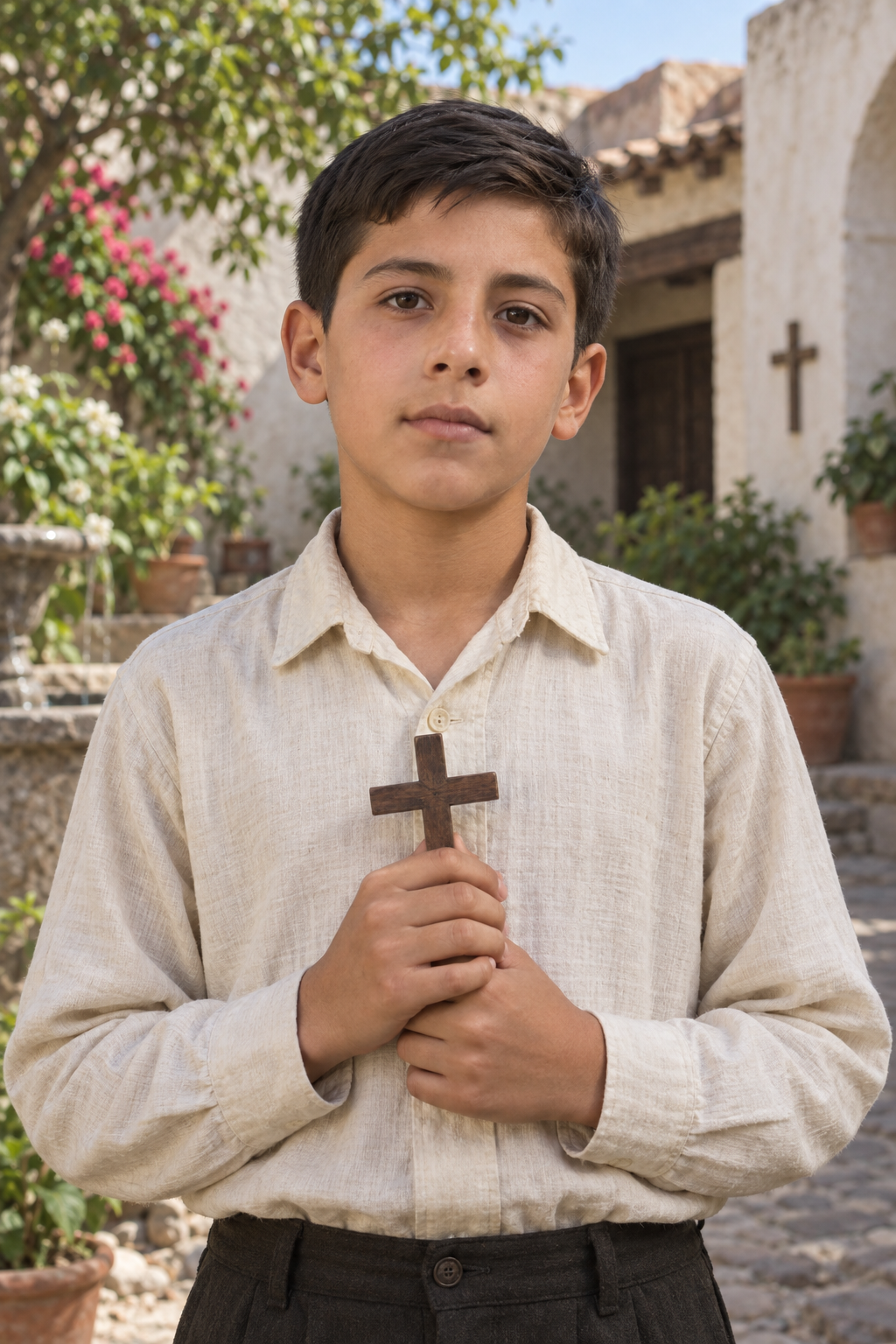
About José Sánchez del Río
José Sánchez del Río was born on March 28, 1913, in Sahuayo, Michoacán, Mexico, to Macario Sánchez Sánchez and María del Río. He grew up during a period of severe conflict between the Mexican state and the Catholic Church. Measures enforcing anticlerical provisions restricted public worship and church activity; armed Catholic resistance known as the Cristero movement followed. The official biography prepared for his beatification identifies José as the third of four children and records that his family temporarily moved to Guadalajara. This setting explains his choices without making a child responsible for resolving the political and military struggle around him.
In Guadalajara, José visited the tomb of Anacleto González Flores, a Catholic lay leader killed in 1927. The Dicastery for the Causes of Saints says that the visit deepened his desire to join those resisting the persecution. His older brothers had entered the Cristero forces. José repeatedly asked his parents and commanders to let him accompany them. He was first refused because of his age, then accepted in a supporting role. Ecclesial sources remember that he tended horses, carried supplies, helped in camp, and led the rosary. He was therefore a participant in an armed force, though the reviewed accounts emphasize service rather than combat.
The beatification biography says that José received the nickname Tarsicio, after the young Roman martyr traditionally associated with protecting the Eucharist. In early February 1928, fighting near Cotija placed his unit under pressure. When General Luis Guízar Morfín's horse was killed, José gave the commander his own mount so that the adult officer could escape. José was then captured with another young man. The account presents the exchange as a deliberate act of protection. It is a concrete reason Catholic memory associates him with courage and service, while the wider battle and its casualties should not be romanticized.
His captors took him first to Cotija and then back to Sahuayo. There he was confined in the parish church, which government forces were using as a prison. The official account says that José objected when fighting cocks were kept in the sacred space and killed the birds, an episode preserved by the beatification materials. From captivity he wrote to his mother, expressing acceptance of death and asking for her blessing. These letters are among the most direct witnesses connected with him. They show a teenager communicating with his family under coercion rather than a remote legendary hero untouched by fear or pain.
Authorities tried to secure José's release through payment and demanded that he renounce his allegiance. Official Catholic sources report that he refused. On February 10, 1928, his captors cut the soles of his feet and forced him to walk toward Sahuayo's cemetery. The thanksgiving homily delivered after his beatification explicitly recalls the bloody walk. Along the route and at the cemetery, the received testimony says that José continued to acclaim Christ as king and the Virgin of Guadalupe. He was stabbed and shot before his fifteenth birthday. These details come through the ecclesiastical cause and witness tradition; they are documented by that process, not by a neutral modern recording.
José's death occurred within a conflict that involved coercion, political repression, armed rebellion, and suffering on multiple sides. Catholic recognition calls his death martyrdom because the cause judged that he was killed in hatred of the faith and remained faithful under pressure. That judgment does not require celebrating the war itself. His witness is clearest in particular actions: he accepted humble work in camp, gave his horse to protect another person, wrote tenderly to his mother, and refused to exchange conviction for safety. His age also requires careful language. He was capable of moral agency, yet still a child caught in adult violence.
José was beatified on November 20, 2005, with Anacleto González Flores and other Mexican martyrs. Cardinal José Saraiva Martins celebrated a thanksgiving Mass in Sahuayo the following day and described José as fourteen years and eleven months old at death. Pope Francis canonized him in Saint Peter's Square on October 16, 2016. The Vatican formula names José Sánchez del Río among the new saints, and the Holy See Press Office identifies him precisely as a Mexican layperson and martyr. These acts document Roman Catholic recognition; they do not transform every popular story about him into established history.
Roman Catholic communities commemorate José on February 10, the date of his death. His short life is significant not because youth made suffering easy, but because his surviving choices joined loyalty with practical care. The historical record is strongest when it remains concrete: a boy sought a supporting place among people he admired, protected a commander during retreat, endured imprisonment, corresponded with his family, and would not make the demanded renunciation. Remembering him responsibly also keeps the Cristero War visible as a dangerous human conflict rather than a picturesque setting for heroism.
Wondering how to weigh the stories and sources? Learn how to read a saint biography.