Biography
Joseph Marello
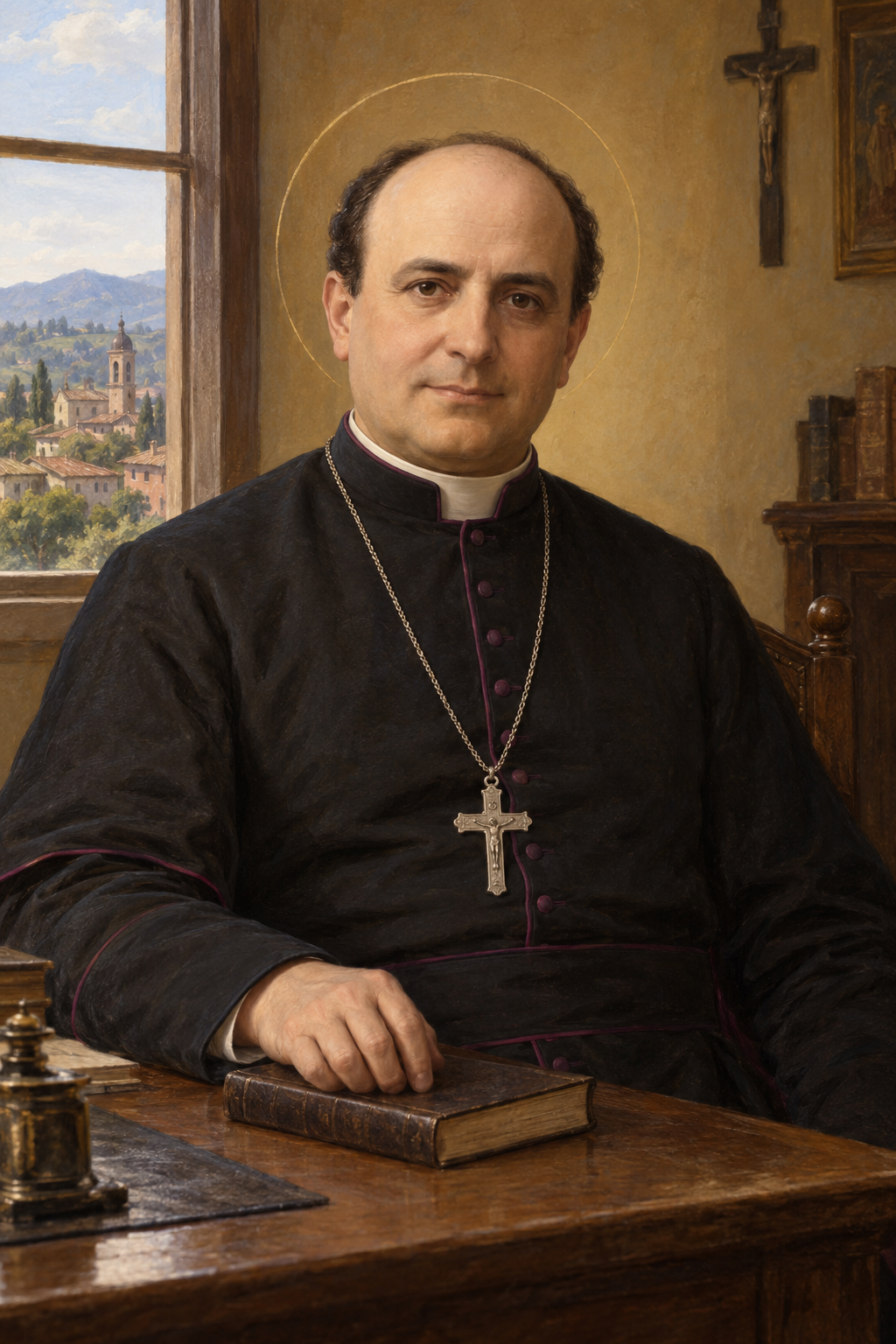
About Joseph Marello
Joseph Marello grew up between Turin and San Martino Alfieri, in a family marked by the early death of his mother. John Baptist Cortona, an early member of the congregation he later founded, records that his father returned with Joseph and his brother to the family’s village so their grandparents could help raise them. Joseph’s parish priest noticed his attention to catechism and service at Mass. He entered seminary in 1856, but the course of his preparation was interrupted. During the war of 1859 the seminary buildings were used as barracks, and the students found other lodging while continuing classes. In 1862 Joseph left for business studies after pressure from his father. A severe illness and a renewed conviction about his vocation preceded his return to the seminary in 1864.
Ordained on September 19, 1868, Marello became secretary to Carlo Savio, bishop of Asti. The later biography by Maria Angela Verna and Gennaro Citera describes how that appointment became a ministry of attention to other priests and their needs. He accompanied Savio to Rome for the First Vatican Council, leaving in November 1869 and returning to Asti in July 1870. His duties included attending the bishop and carrying out business in ecclesiastical offices. The experience brought him into contact with a Church wider than his own diocese. Back at his desk, he continued a correspondence through which he encouraged friends and urged practical work for young people. In 1873 he cared for his dying father. After that loss he again considered withdrawing into a Trappist monastery, but Savio advised him to remain. His work in Asti continued, joining administrative duties to concern for people who needed counsel or assistance.
That concern eventually took the form of a new religious community. On March 14, 1878, Marello gathered the first members of what became the Oblates of Saint Joseph. The congregation’s history describes their early work with elderly people, people with disabilities and orphaned boys. Marello chose Joseph, the foster father of Jesus, as their model of service carried out without seeking attention. His intention embraced both priests and brothers, whose responsibilities could include helping bishops and parish clergy as well as educating young people. The community’s own account remembers that its founder often remained little known even as its work became more visible. He wanted useful service to take precedence over personal recognition. The eventual development of youth ministry and religious education belonged to this same practical purpose: the religious family was to answer needs in local churches while keeping its life centered on God.
Prayer sustained that outward activity. Gregory Finn’s account, drawing attention to testimony gathered for Marello’s canonization, describes people recognizing in him a settled habit of prayer. His devotion to Saint Joseph offered a model of closeness to Jesus within ordinary responsibilities. As a canon of Asti cathedral he participated in the regular Divine Office, while the celebration of Mass held a central place in his daily life. Finn stresses the attention and reverence witnesses remembered in those celebrations. In this portrait, his ministry did not depend only on organizational ability or a readiness to work. Repeated prayer, listening and contemplation accompanied the service that others could see. Those habits are part of the congregation’s remembered explanation of the patience and availability associated with its founder.
Leo XIII appointed Marello bishop of Acqui, and he was consecrated on February 17, 1889. The Vatican biography emphasizes his efforts to bring clergy and people together. He encouraged catechism, the Christian education of young people, parish missions and a life of faith expressed in practice. His episcopal responsibilities added a whole diocese to the work he had already undertaken as a priest and founder. He remained active despite declining health. In May 1895 he travelled to Savona for celebrations marking three centuries since the death of Philip Neri, and died there on May 30. The later Church recognition honored a life spent largely in pastoral service, education and care for people whose needs were easily overlooked.
The Oblates continue to express his spiritual inheritance through the relationship between inward recollection and active ministry. Their account of their charism presents careful performance of ordinary duties as a path of holiness. It joins a disciplined interior life to service beyond the religious house, and places Jesus at the center of community life shaped by the Holy Family. Care for children and young people remains a particular emphasis. In that understanding, community is itself part of the work: the members are to live their shared vocation as a family while serving the Church. Marello’s legacy thus includes both the institutions he began and the pattern of prayer, common life and practical responsibility that he sought to give them.
John Paul II beatified him in Asti on September 26, 1993, and canonized him on November 25, 2001. His liturgical remembrance is May 30.
Wondering how to weigh the stories and sources? Learn how to read a saint biography.