Biography
Joseph of Thessalonica
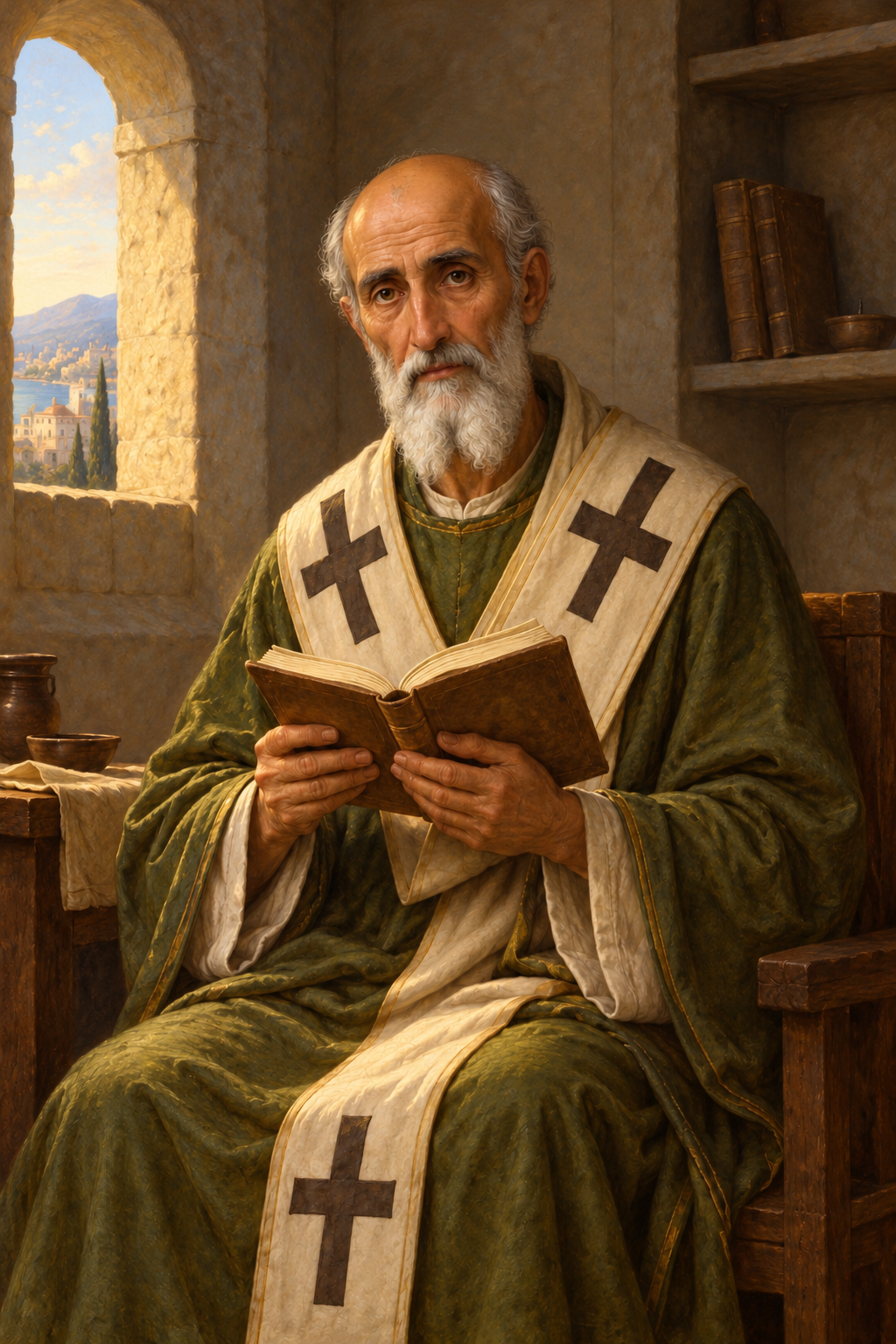
About Joseph of Thessalonica
Joseph of Thessalonica was a Byzantine monk, archbishop, and writer whose life was closely connected with that of his brother Theodore the Studite. Born in Constantinople around 762 to Photeinos and Theoktiste, he entered monastic life with his family at Sakkudion under his uncle Platon. Later he joined the community at Studion in the capital.
Joseph had already experienced exile before becoming an archbishop. In 797 he and Theodore were sent to Thessalonica after opposing Constantine’s marriage to Theodote, who was their relative. The emperor’s fall brought their release later that year. They returned to Sakkudion before settling at Studion. Thessalonica therefore entered Joseph’s life first as a place of banishment, years before it became the city entrusted to him as bishop.
He became archbishop of Thessalonica late in 806 or early in 807. His episcopal career was interrupted by the conflict over Emperor Constantine VI’s second marriage and then by renewed imperial opposition to icons. These were distinct disputes, although both drew Joseph into resistance alongside his brother.
The marriage controversy concerned the standing of another Joseph, the priest who had performed the imperial wedding. The Studite monks refused communion with Patriarch Nicephorus after that priest’s restoration.
The renewed dispute became visible during Joseph’s visit to Constantinople in 808. He avoided the patriarchal liturgies because the restored priest was serving at Hagia Sophia. An imperial official came to Studion to demand an explanation for his absence. By the end of the year, troops had surrounded the monastery, and Joseph, Theodore, and two other monks were taken into custody at the monastery of Saint Sergius.
In January 809, a council summoned by Emperor Nicephorus I expelled them from their monastery and sent them into exile. Joseph of Thessalonica was among those punished.
The Orthodox Encyclopedia explains that the council also reduced Joseph to priestly rank, apparently because he had celebrated services outside his diocese without the local bishop’s permission. It places his exile on the island of Proti. Reconciliation in 811 allowed him to resume his episcopal office, but the settlement did not end the larger conflicts surrounding the Studite community.
Separation did not end the brothers’ correspondence. Pargoire describes letters passed between the exiled Studite leaders and notes two surviving replies from Theodore to Joseph. In correspondence with the dispersed monks, Theodore sometimes replaced personal names with letters of the alphabet; Joseph appeared as the second letter, beta. Pargoire also notes a request from Theodore to see a work Joseph had written. The work’s subject is not specified in that request, although Pargoire considers opposition to the marriage settlement likely. Ten letters from Theodore are addressed to Joseph, preserving part of their sustained exchange.
In 814–815 he joined bishops defending icon veneration against Leo V. After another period of detention and exile, he was released early in Michael II’s reign and met Theodore again at Pteleai in Bithynia. In 824 he helped conduct the funeral of Nicetas of Medikion, together with the archbishop of Ephesus.
His writing was another part of that common life. Jules Pargoire’s study identifies Joseph and Theodore as contributors to the Triodion, the collection used during the season leading to Easter. It lists works transmitted under Joseph’s name, including the canon for the Sunday of the Prodigal Son and shorter compositions for the weeks of Lent.
Attribution requires care. Joseph the Hymnographer was a different ninth-century poet, and Pargoire distinguishes works assigned to him from those of the archbishop. He also examines sermons about the Cross, Demetrius, and Lazarus, while rejecting other pieces that had acquired Joseph’s name through misleading manuscript headings. Joseph’s literary legacy is substantial enough to recognize without assigning every work bearing his name to him.
The surviving material includes preaching as well as poetry. Pargoire traces a sermon associated with the Cross through manuscripts in several libraries and distinguishes two texts with similar openings. One turns toward fasting, while the other remains a discourse on the Cross. He leaves questions about their attribution open, showing why a familiar author’s name or a matching opening cannot by itself settle the identity of a sermon.
After Theodore’s death, Joseph remained an influential defender of icons. Under Theophilus he was arrested again; the Orthodox Encyclopedia links the accusations to visits from senior officials. It places his final exile in Thessaly and records that he had spent a considerable time in confinement before his death.
He died on July 15, 832. The scholarly prosopography bases that date on a note by Nicholas the Studite in a Gospel manuscript copied in 835. His remains were later brought to Studion with Theodore’s and buried near Platon’s grave.
The Orthodox Church in America commemorates Joseph on January 26. Its account remembers his refusal to sign an iconoclast confession despite imprisonment and his lasting work as a hymn writer.
Wondering how to weigh the stories and sources? Learn how to read a saint biography.