Biography
Joseph the Hesychast
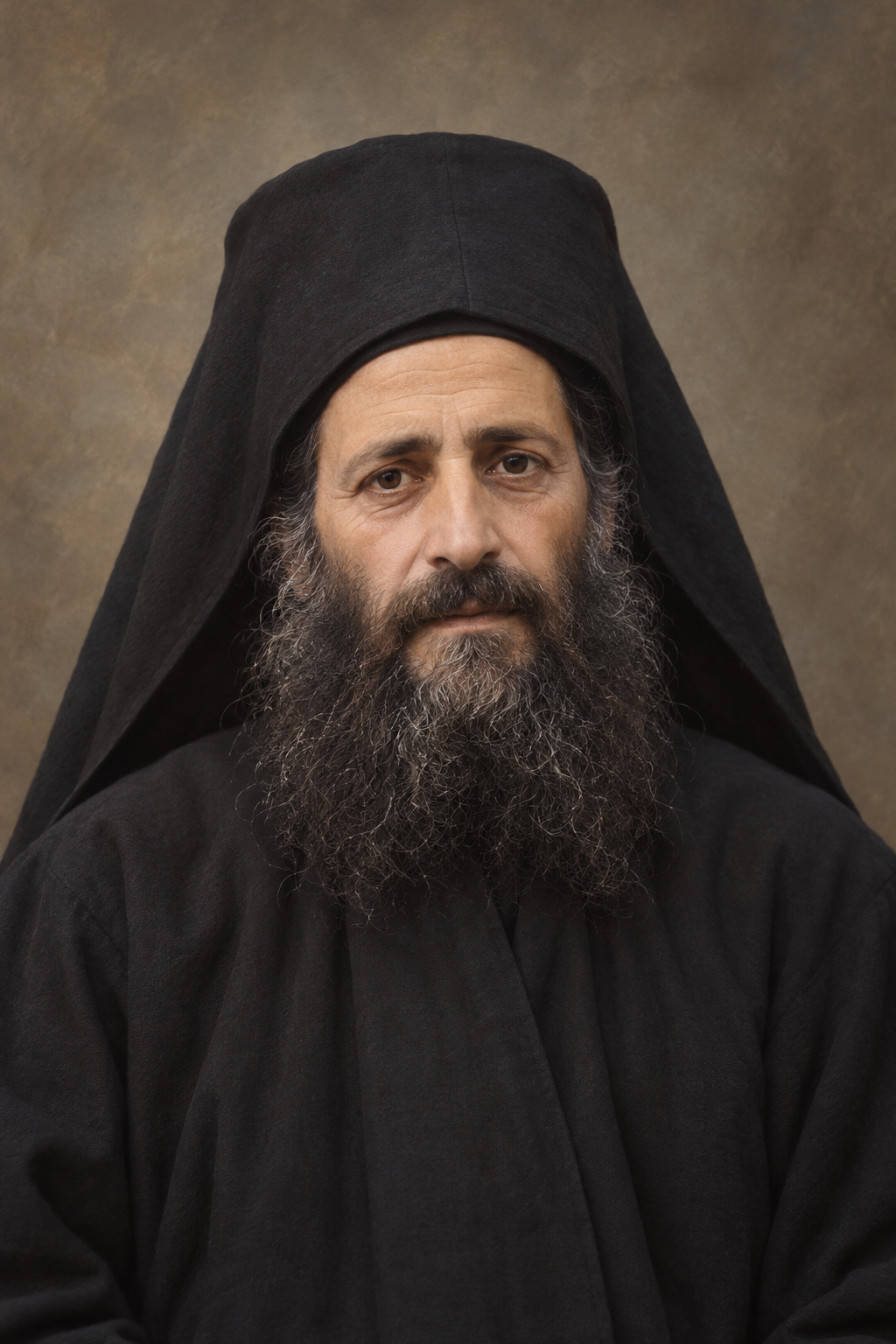
About Joseph the Hesychast
Joseph the Hesychast was born in Lefkes on Paros in 1897 and was known as Francis before becoming a monk. After work and naval service, he turned toward ascetic life through reading Christian spiritual writers. On Mount Athos he sought solitude, but also guidance. He and his companion Arsenios consulted Daniel of Katounakia, who urged them to begin under an elder’s blessing.
Joseph reached Athos in 1921. Cristian-Ovidiu Groza’s study places the community at Saint Basil from 1928 to 1938, at Little Saint Anne’s until 1953, and then at New Skete. Groza found conflicting dates even among accounts by Joseph’s direct disciples, making their testimony valuable but requiring comparison. His research also describes the unequal beginnings of Joseph’s partnership with Arsenios. Arsenios already had years of monastic experience when they met, yet accepted the younger man as his spiritual guide. Their community remained small, shaped by both its remote setting and Joseph’s demanding expectations.
The monastery’s account describes a demanding life of prayer, fasting, and night vigils. Other monks gradually joined the small community. When illness made their remote surroundings difficult, Joseph agreed to move to New Skete. He died in 1959. His disciples included Joseph of Vatopedi and Ephraim of Philotheou, through whom his teaching reached other communities.
Joseph’s correspondence extended that circle to monks, nuns, and laypeople. Groza observes that he answered practical questions rather than writing simply to display his experience. The researcher could not establish the letters’ chronological order without access to the originals. The published correspondence therefore preserves his counsel more securely than it reveals a complete sequence of changes in his thinking.
In letters about the Jesus Prayer, Joseph described beginning with spoken repetition and careful attention to the words. He connected persistent practice with prayer becoming inward and habitual, while insisting that its fruit depended on God’s grace. His counsel reached beyond the mountain: he mentioned visitors from Germany and letters from America and Paris. For a correspondent occupied with ordinary responsibilities, he recommended praying whenever time allowed. He did not tell everyone to leave that life; keeping Christ’s commandments toward other people could be their proper calling.
Other letters addressed relationships within the community. Joseph warned against noticing only other people’s faults while overlooking their gifts. Self-knowledge meant acknowledging personal weakness, not merely counting ascetic achievements. When advising someone troubled by anger, he urged restraint in speech and a delay before attempting correction. A person should wait until anger had subsided and judgment was calm. He wrote that kindness and sincere love had proved more effective than harshness in his own experience.
The theologian Daniel Coriu identifies discernment as a necessary balance to Joseph’s ascetic discipline. In his reading of the disciples’ accounts, practices varied according to the person and circumstances. Their recollections describe Joseph allowing younger companions more food than he took himself. Coriu also distinguishes ordinary judgment, learned through practice, from the spiritual discernment Joseph understood as God’s gift. This distinction helps explain why Joseph’s teaching joined strenuous effort to an insistence that effort alone could not produce spiritual maturity.
Groza also records nine surviving poems, in which Joseph expressed spiritual desires and feelings outside the form of correspondence. Joseph also wrote the Ten-Voiced Trumpet, a sustained account of the contemplative life. A study by Pavel Polevoy and Andrei Lysevich examines how its ten chapters describe a movement through purification, illumination, and union with God. Early chapters concern bodily discipline and the struggle against conceit. Later ones discuss the experience of divine consolation and its withdrawal, the danger of spiritual deception, and love. These are descriptions of religious experience and guidance within his tradition, rather than independently verifiable stages of human development.
The same study draws attention to his manner of writing. Joseph usually addresses an individual reader as a brother, creating the tone of a conversation rather than a public sermon. He calls for attentive reading and repeated reflection. Comparing his work with John Climacus’s Ladder, the authors emphasize Joseph’s particular attention to grace as the power that carries the ascetic forward.
On March 9, 2020, the Ecumenical Patriarchate entered Joseph into its catalogue of saints. Its announcement recognized his contribution to the renewal of Athonite monastic life through his disciples. It also remembered his commitment to church unity during divisions among monks.
At Vatopedi’s celebration in 2022, the preaching emphasized silence, obedience, and prayer as connected features of his life. The monastery observed his feast on August 16 according to the old calendar, transferring it from the Dormition feast on which he died.
His teaching continues to circulate in print. Vatopedi’s 2023 edition retained the Life and Teaching written by his disciple Joseph, while reserving his separate work, the Ten-Voiced Trumpet, for a future publication with translation and commentary.
A Greek Orthodox church in Florence, Arizona, bears his name.
Wondering how to weigh the stories and sources? Learn how to read a saint biography.