Biography
Julian of Mesopotamia
About Julian of Mesopotamia
Julian of Mesopotamia, also known as Julian Saba, was an ascetic associated with the region of Edessa. His life is remembered through early Christian writing rather than a detailed personal record. Syriac scholar Sebastian Brock identifies a pilgrimage to Sinai among the few securely known features of his life.
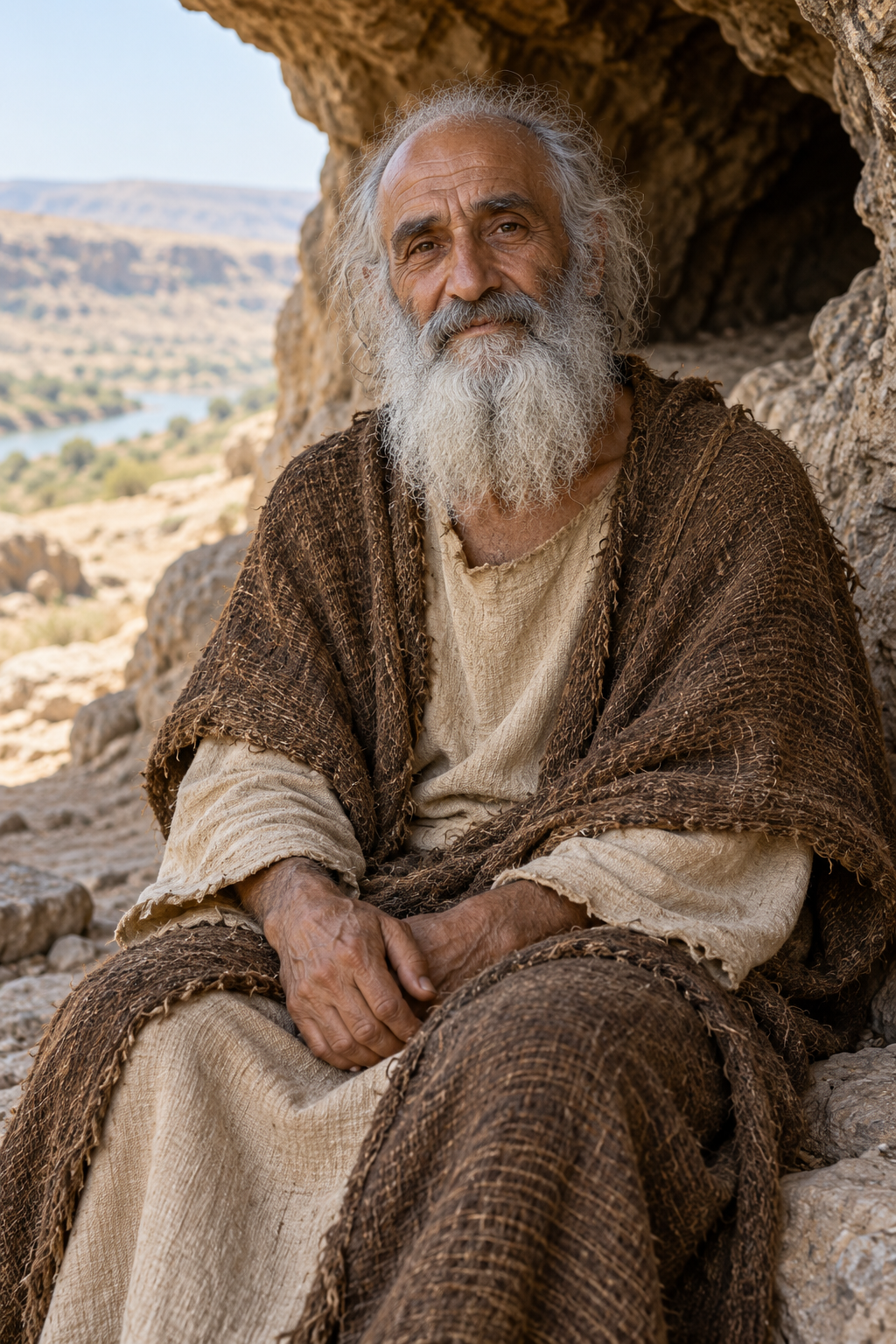
Theodoret’s account presents a teacher who lived in a cave, prayed the psalms and attracted disciples. Alongside its descriptions of severe asceticism, it includes moments of accommodation. Julian allowed his followers to improve storage for their food and accepted figs brought by his disciple Asterius, despite initially resisting the gift. The narrator uses these episodes to praise humility as well as endurance.
Julian also entered the religious conflicts of his time. According to the New Catholic Encyclopedia, he went to Antioch during the reign of Valens to deny claims that he supported the Arian party, before returning to his retreat in Osrhoene. His authority as an ascetic thus mattered beyond his own community.
Theodoret tells this episode from a strongly partisan standpoint. He connects Julian’s prayers with the deaths of religious opponents and recounts miraculous healings. These passages express the author’s theological interpretation; they should not be read as independent proof of supernatural events. At the close, he names Acacius as a source for his account and describes Julian returning to his disciples.
His memory also survives in Syriac poetry. Brock notes a collection of twenty-four hymns attributed to Ephrem, judging the first four probably authentic. Theodoret’s chapter circulated separately in Syriac translation. These different forms of remembrance preserve the esteem in which the ascetic was held while leaving much of his chronology uncertain.
The Orthodox Church in America commemorates Julian on October 18 and remembers his prayer near the Euphrates and his association with Sinai.
The New Catholic Encyclopedia also lists January 17 among his feast observances. Its account gives alternative death years, a reminder that the calendars and later summaries do not supply a single settled chronology.
Wondering how to weigh the stories and sources? Learn how to read a saint biography.