Biography
Kallistos Angelikoudes
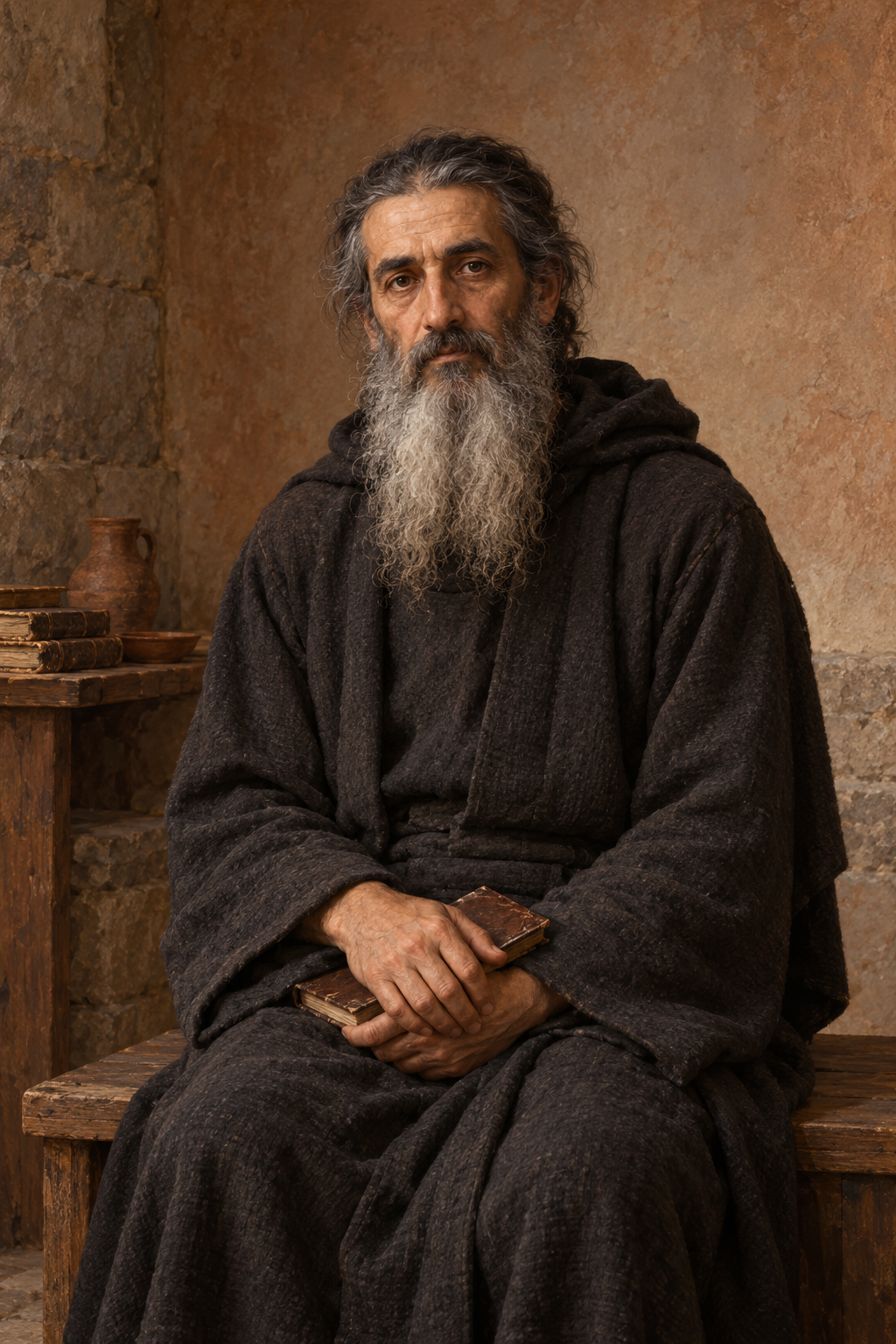
About Kallistos Angelikoudes
Kallistos Angelikoudes led a small monastic community near Melenikon in Macedonia during the fourteenth century. A writer associated with the teaching of Gregory Palamas, he founded the monastery of the Theotokos Kataphygion. His life is known chiefly through records concerning that community and through the surviving manuscripts of his writings.
His precise birth date and early life remain uncertain. A birth around 1325 is a scholarly estimate, not a recorded date. The Orthodox Encyclopedia also cautions that it is unknown whether he visited Mount Athos, although his monastery’s connections with Athonite communities are documented.
Life in his community was not free of conflict. Some monks resisted his spiritual direction and received support from the local bishop. Patriarch Philotheos Kokkinos intervened in 1371, confirming Kallistos’s authority as their confessor and recognizing his community as a monastery directly subject to the patriarch. This arrangement changed its relationship with local ecclesiastical authority.
The Austrian Academy’s historical database dates the confirmation as confessor between March and May 1371 and the monastery’s new status to May. It also records a document of 1377 mentioning Kallistos and his monks.
His several names have complicated the recovery of his work. Kallistos Kataphygiotes, Kallistos Telikoudes and Kallistos Melenikeotes appear in the manuscript tradition. Dionisiy Pospelov explains how writings by Angelikoudes entered the Philokalia under several attributions, including that of a patriarch named Kallistos. He distinguishes this author from the two fourteenth-century patriarchs who bore the same first name.
Chapters that belonged to larger collections circulated in smaller groups, and works were printed under different names.
Kallistos’s teaching centers on the disciplined inner life. In the opening of Discourse XVI, he compares spiritual effort to warfare, with understanding serving as sight and stillness as the place in which the struggle occurs.
He connects stillness first with repentance and then with a renewed capacity to know God. The discourse draws on Scripture and earlier Christian teachers, including Basil, Gregory the Theologian and Isaac. It presents withdrawal from distraction as part of a demanding monastic vocation.
In describing the effects of stillness, he links love of God with sincere love of one’s neighbor. Prayer, reading and attention to thoughts belong to the discipline he describes.
Kallistos also wrote polemically against Thomas Aquinas, engaging the Greek translation of the Summa contra Gentiles made by Demetrios Kydones. His literary activity thus included both instructions for contemplative life and arguments against another theological tradition.
The exact organization of his writings remains a scholarly question. Oleg Rodionov warns against assuming that the thirty discourses preserved in Vaticanus gr. 736 correspond precisely to the original work called Hesychastic Consolation. Their order and boundaries raise problems.
The same study explains that the extensive collection of chapters in two Barberini manuscripts once formed a single unit. Parts later appeared in the Philokalia, and Paisius Velichkovsky translated the chapters into Church Slavonic.
His death cannot be dated precisely. The Orthodox Encyclopedia places it no earlier than 1377, while treating later proposed dates as uncertain.
Pravmir’s Orthodox library identifies Kallistos as a venerable saint.
Wondering how to weigh the stories and sources? Learn how to read a saint biography.