Biography
Kizito
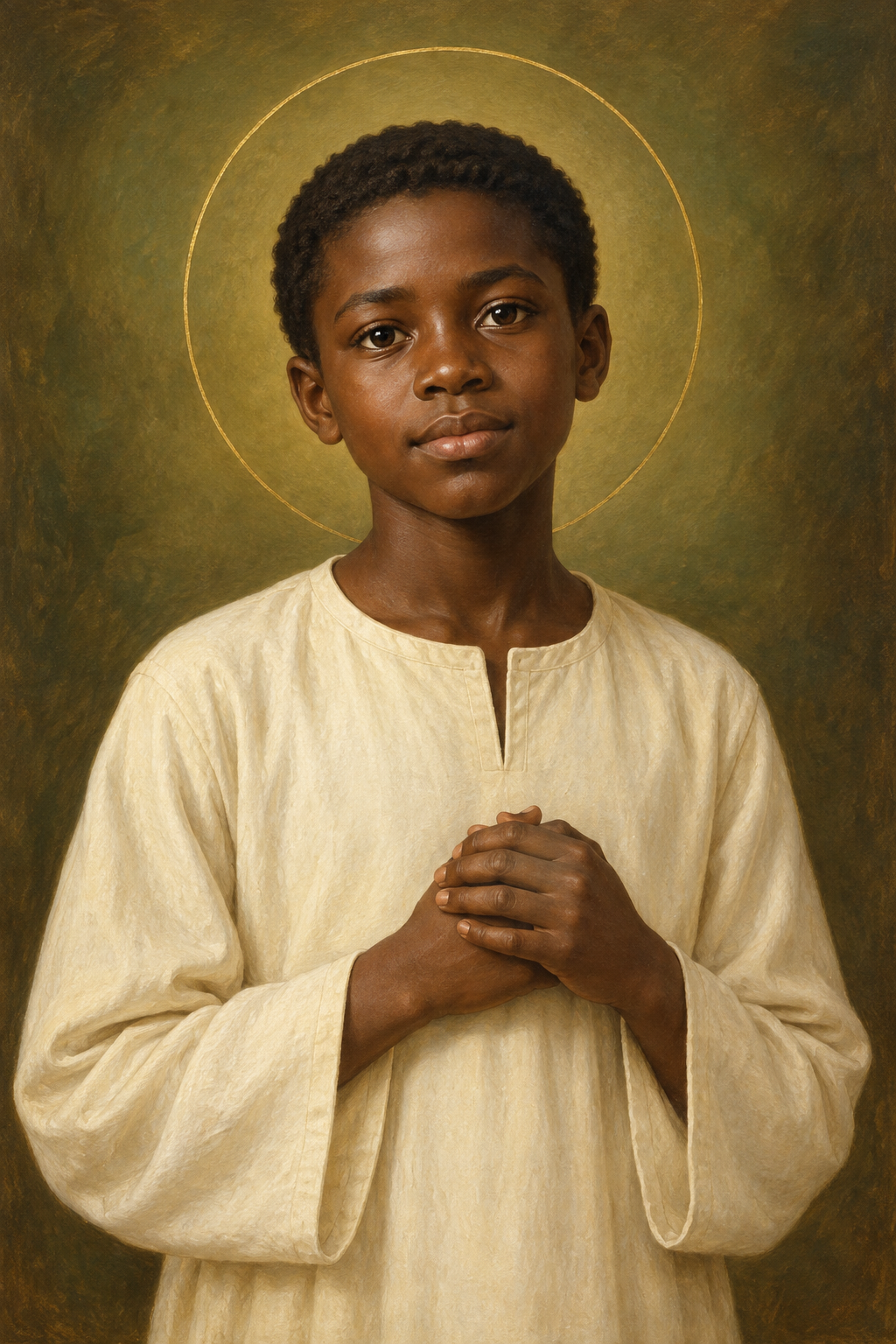
About Kizito
Kizito was the youngest of the Catholic martyrs of Uganda. He served as a page in King Mwanga’s household and became a Christian while still a boy. Aylward Shorter’s biography identifies his parents as Lukomera and Wangabira and describes his adoption by the royal official Nyika.
He repeatedly asked the missionaries for baptism, but they considered him too young and insufficiently instructed. Shorter describes his persistence and the encouragement he received from Charles Lwanga. When the danger to the Christian pages became immediate, Lwanga baptized him shortly before their arrest.
The accounts give different ages for him. Shorter places him at fourteen or fifteen, whereas Benedict XV’s beatification document describes him as being in his thirteenth year. He was a child; his exact birth year is uncertain.
The beatification document remembers Kizito resisting the king’s sexual advances and encouraging other Christian pages to remain steadfast. These are accounts of a child facing coercion by a powerful adult. They also preserve the Church’s memory of mutual support among the prisoners, including the image of companions walking together hand in hand.
Kizito was killed at Namugongo on June 3, 1886, with fellow Christians who were burned to death.
His memory has become important in devotion concerned with children. Historian Jude Kateete documents his patronage of children and primary schools and discusses the dedication of a parish at Bwaise to him in 1987. Kateete also examines a difficult tension in later Ugandan public memory: celebrating a child’s courage can coexist with failures to protect children from violence. His analysis compares the reception of Kizito with the later celebration of child soldiers; it does not identify Kizito himself as a soldier.
Paul VI canonized the Ugandan Catholic martyrs on October 18, 1964.
Nominis includes Kizito in that group and lists his feast on June 3.
Wondering how to weigh the stories and sources? Learn how to read a saint biography.