Biography
Leo Hong In
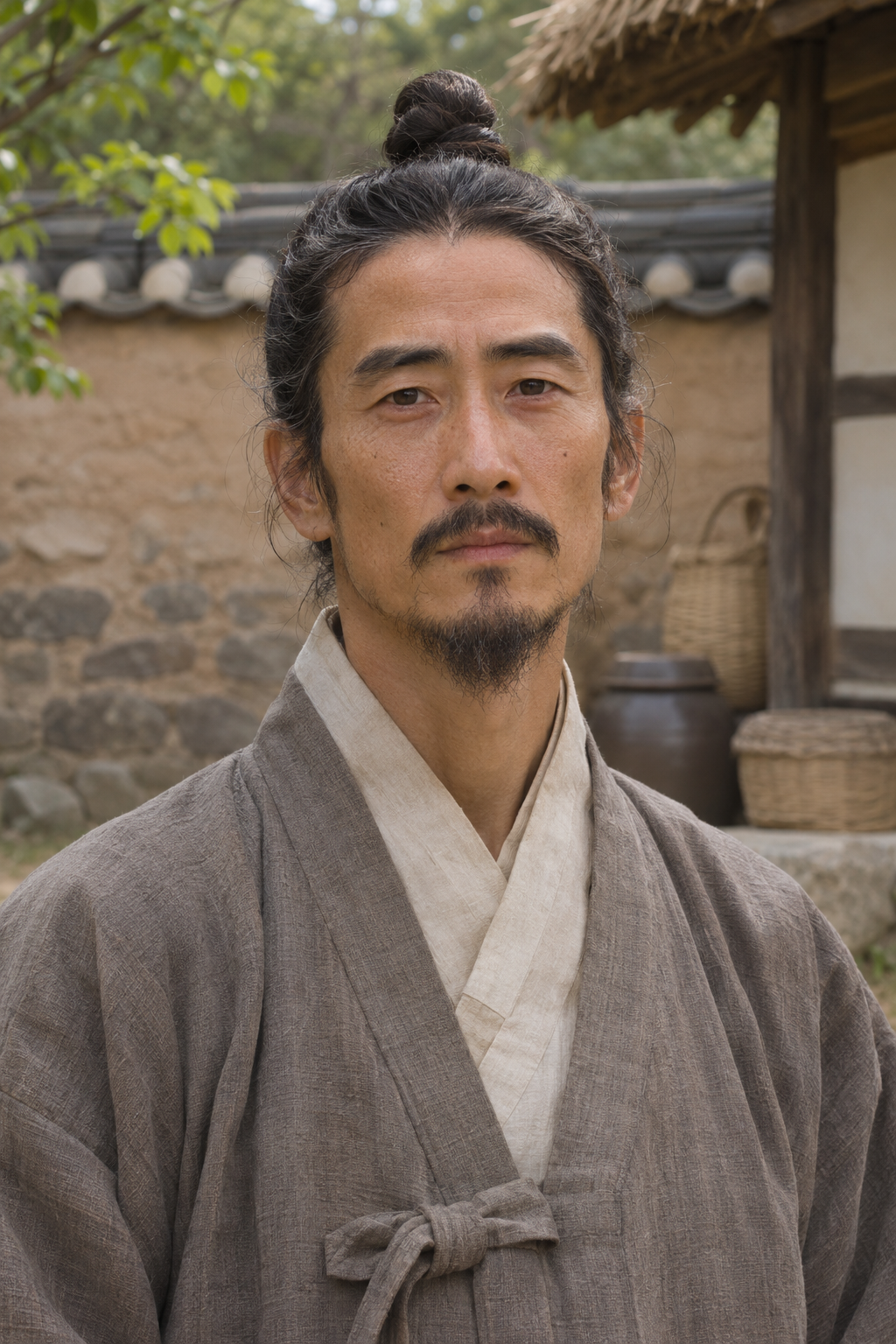
About Leo Hong In
Leo Hong In grew up in Pocheon. His father, Francis Xavier Hong Gyo-man, belonged to Seoul’s yangban elite. Their household became a center of Catholic activity. The family’s religious connections extended beyond Pocheon: Francis learned from his relatives in the Kwon family at Yanggeun, while Leo came to know believers in the capital, including Anthony Hong Ik-man and Alexis Hwang Sa-yeong. Leo’s surviving story is closely connected to his father’s, but his imprisonment and execution followed a different course.
His precise birthplace remains uncertain between Seoul and Pocheon. Jeong Min challenges an older chronology that placed the family’s move after Francis passed an examination in 1777. He identifies Francis at the head of a 1774 appeal for rebuilding Pocheon’s Yongyeon school, demonstrating an earlier local presence. This does not establish whether the family had settled there before Leo’s birth. Jeong also revisits accounts of father and son instructing one another, warning against a simple sequence in which Leo alone brought an otherwise unconverted father into the Church. His sister married Charles Jeong Cheol-sang, son of Augustine Jeong Yak-jong.
The official biography dates the family’s encounter with Catholic teaching to around 1791. It describes Leo learning from his father and then becoming convinced before Francis was ready to commit himself. In this account, Leo patiently helped resolve his father’s doubts. Their shared practice developed after James Zhou Wen-mo entered Korea at the end of 1794. Father and son sought out the priest, received baptism and attended Mass. They then worked together to spread the faith in Pocheon.
Cha Gi-jin describes their teaching as work carried on among neighbors and relatives. They encouraged Catholics who had stopped practicing and spent nights instructing believers who gathered at the house. Leo’s contribution therefore included sustaining an existing community as well as introducing Christianity to others. Cha presents his modest manner as part of the way he approached this work.
In 1801, Leo and Francis agreed to receive a chest of Augustine Jeong Yak-jong’s books and conceal it at their home. Thomas Im Dae-in was arrested while transporting the chest to Seoul, bringing the family’s names into the investigation. Their books and their relationships had become evidence against them. Leo was taken through several places of confinement: Pocheon, the Gyeonggi provincial office and the police bureau in Seoul. The Catholic Encyclopedia describes further interrogation at the Ministry of Punishments before his sentence.
Accounts do not agree on the exact circumstances of the arrest. The official life says the two men returned from hiding and were seized when officers came to their house. The editors of the beatification documents identify two successive stages. The father went before the State Tribunal the day after their arrest. Leo had his first examination at the police bureau and was then sent to Pocheon. His later appearance before the police in Seoul was a return to that bureau.
His police statement reports renunciation after his father’s execution. Yeo Jin-cheon describes what followed. Leo had been separated from his father and learned of his death while still in custody. Questioning resumed at intervals of three or four days. In Yeo’s account, remembering his father’s death eventually helped Leo face the prospect of his own. Earlier Church narratives describe a prisoner who remained constant throughout. The police statement and the later accounts thus differ on how he answered during those months. Yeo also places him with Zhou for religious instruction in 1800, before the arrests. He spent ten months in custody before his death sentence.
Historian Kim Gil-su places the duration of Leo’s imprisonment within the changing character of the 1801 persecution. In his analysis, an early struggle shaped by political rivalry broadened after Zhou’s surrender and the discovery of plans involving foreign ships. Hwang’s captured letter then intensified official suspicion that Christian networks threatened the state. Kim distinguishes Leo’s early arrest alongside his father from his much later execution. His case thus remained unresolved while the investigation around the Church expanded. This explains the wider setting of his captivity without making him personally responsible for every plan attributed to other Catholics.
Francis was executed in Seoul before his son. Leo eventually received a death sentence and was sent back to Pocheon, where he was beheaded on 30 January 1802. The official biography gives his age as forty-four.
His ordeal’s locations required later identification. In 2014, Oh Se-taek found neither prison nor execution building surviving. Parish guides identified the former county office and prison site, and a sandy stretch beside the stream near Pocheon Second Bridge as the execution area. Markers preserved the association, but the reporter could not pinpoint the original spot in the changed landscape. The memorial preserves a local historical identification, rather than an intact eighteenth-century prison or execution ground.
In 2014, Cho Gwang urged researchers to read records concerning either man in relation to their shared household and religious life.
Wondering how to weigh the stories and sources? Learn how to read a saint biography.