Biography
Leo Luke of Corleone
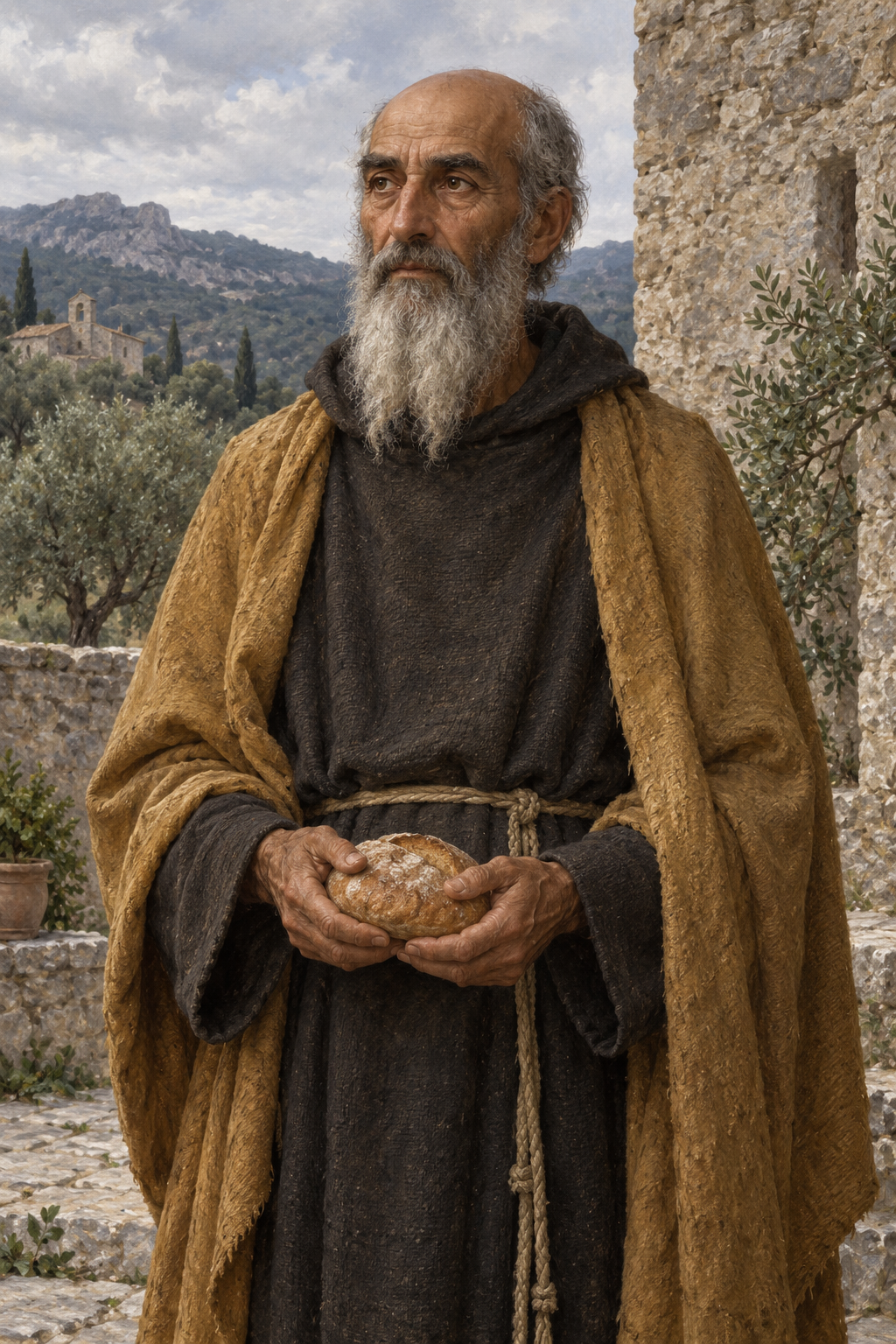
About Leo Luke of Corleone
Leo Luke of Corleone was a Sicilian monk who became an abbot in Calabria. His biography remembers him first as Leo, a young man from Corleone whose parents had died. He entered the monastery of Saint Philip at Agira, where an older monk advised him to leave Sicily amid the Arab attacks. He traveled to Calabria and made a pilgrimage to Rome. On returning, he joined a monastery in the Mula mountains, received the monastic name Luke and became a disciple of its abbot, Christopher.
A tradition preserved in the Orthodox Encyclopedia gives a laywoman a part in this decision. When the young traveler sought advice, she encouraged him to begin with life in a community rather than immediate solitude. He followed her advice.
Leo Luke and Christopher later founded communities in the Mercurion region and at a place called Vena. Before his death, Christopher entrusted the monastery to his disciple. The account describes a growing community of more than a hundred monks under Leo Luke’s leadership. Near the end of his own life, he named Theodore and Euthymius to continue its care. He was buried in the monastery’s church of the Mother of God; his remains were reportedly transferred later to Monteleone in Calabria.
His teaching is remembered through stories. One describes a monk giving his last bread to hungry visitors and later finding loaves in his cell. Stelladoro considers whether such anonymous examples concealed Leo Luke’s experiences. The episode remains a devotional account of charity, not an independently established miracle.
The surviving texts need careful handling. Maria Stelladoro, who edited the Life, explains that its early printed versions are in Latin. Ottavio Gaetani published one in 1657 using manuscripts found at Palermo, Mazara and Corleone. The Bollandists subsequently printed another version from a manuscript in Giuseppe Acosta’s collection. Their text stayed closer to the older style, while Gaetani polished the language.
The dates are especially uncertain. Stelladoro presents the familiar lifespan of about 815–915 as a calculation that depends on accepting both an earlier editor’s death year and the tradition that Leo Luke lived to nearly one hundred. It is not an independently documented chronology.
The Orthodox Encyclopedia gives a substantially later reconstruction, placing his death around 990. It connects a Saxon healed in the narrative with soldiers who accompanied Otto I or Otto II in Calabria in 968 or 982. That identification is itself an interpretation of a healing story.
The healing accounts also need to be read in their religious setting. Antonio Macchione examines a story in which elderly parents bring their distressed son from Sassone to Leo Luke’s monastery. His analysis emphasizes the narrative’s purpose: to present a holy person as a source of relief and hope. Details of prayer and ritual give the story its religious meaning, but do not make it a precise historical or medical report.
Leo Luke’s memory remains part of the public religious life of both Corleone and Vibo Valentia. The Italian archival service identifies him as Corleone’s patron.
The Diocese of Mileto-Nicotera-Tropea likewise lists him as patron of Vibo Valentia, with a celebration on March 1.
In a homily for his feast in 2023, Archbishop Gualtiero Isacchi drew attention to the saint as part of a Corleone history too easily overshadowed by violence and the Mafia. He used the celebration to ask how families and communities could encourage lives of charity.
Wondering how to weigh the stories and sources? Learn how to read a saint biography.