Biography
Leoba
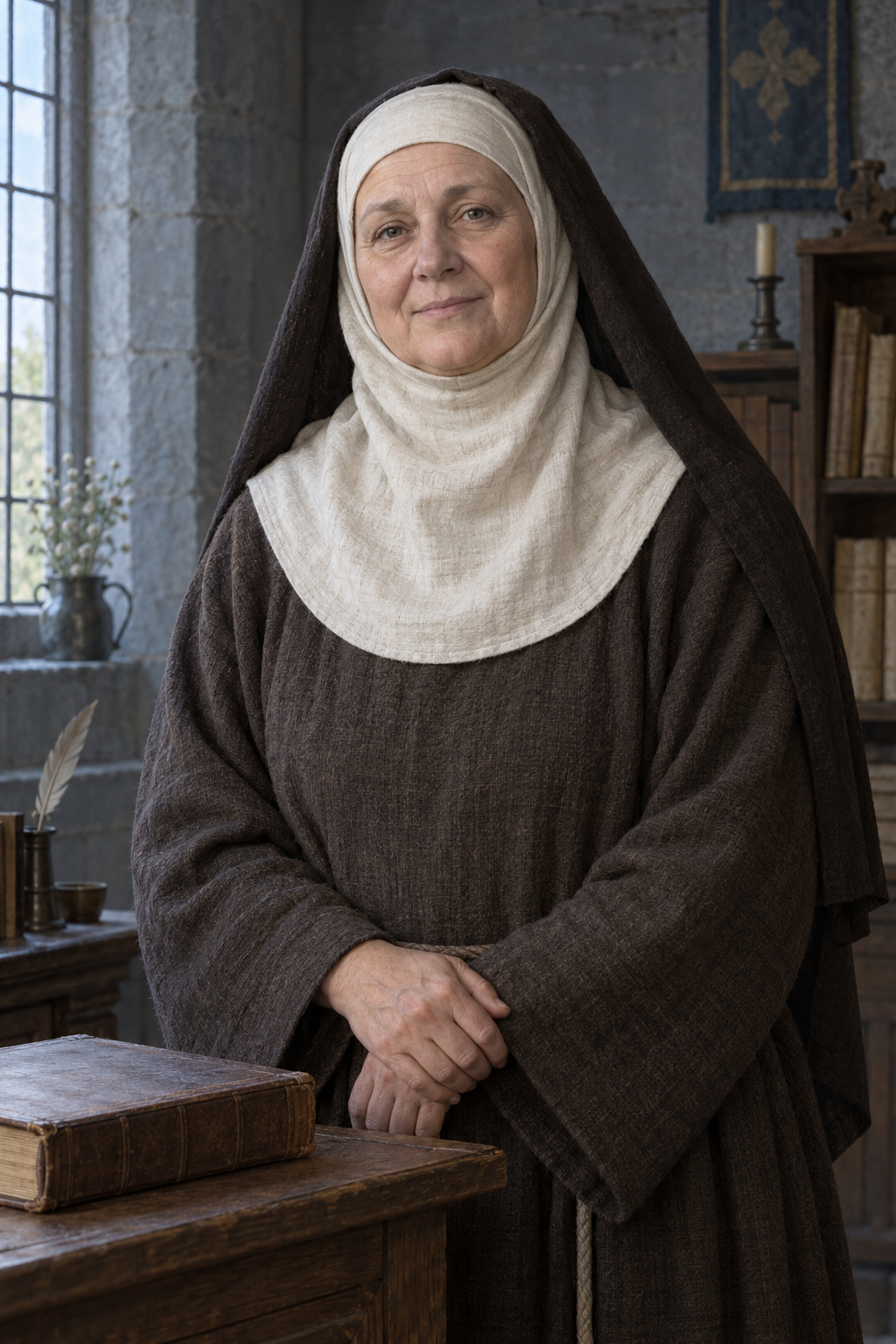
About Leoba
Leoba was an English nun whose teaching helped establish communities of women in the mission associated with Boniface in Germany. Known also as Lioba and Leobgytha, she became abbess of Tauberbischofsheim. The women educated there went on to lead other houses. Her authority joined religious leadership with learning: the German biographical dictionary describes a woman interested in practical work as well as books, whose asceticism remained moderate and whose desire to learn lasted throughout her life.
Her formation belonged to the monastic world of Wessex. Wimborne, in Dorset, had been founded as a double monastery, with communities of men and women, and followed the Benedictine rule. Its nuns lived within a strict enclosure. Under Abbess Tetta it had a large community that included Leoba and her companion Thecla, later an abbess at Kitzingen. The connection between these women and the German foundations shows how an English monastery could become the starting point of religious work far beyond its own region.
Rudolf of Fulda, writing her Life in the following century, portrays her education as a sustained apprenticeship. Leoba listened, read, remembered, and tried to put what she learned into practice. His account says she noticed different strengths in the women around her: patience in one, gentleness in another, attention to prayer or reading in others. She worked with her hands but devoted still more time to Scripture. The same account stresses moderation in food and the importance of charity. These are features of Rudolf’s remembered portrait of her character, rather than a record written during her childhood. His narrative preserves the community’s memory of an abbess who valued learning from others.
A surviving letter lets Leoba speak in her own voice. Writing to Boniface, probably about 732, she recalls his friendship with her father, Dynne, who had died eight years earlier. Her mother, Aebbe, was related to him and was suffering from a long illness. Leoba identifies herself as her parents’ only daughter and asks to trust Boniface as a brother. The language expresses a desired spiritual relationship, alongside the kinship she names through her mother. She sends a small gift so that distance will not lead him to forget her, asks prayers for her father and herself, and requests help with her writing. She wants Boniface to correct her Latin style and send a letter she can study as a model. She also includes four lines of verse, explaining that Eadburga had taught her poetry and that she was still exercising her abilities. The letter preserves both family concerns and a student’s willingness to seek correction.
Boniface asked Tetta to send Leoba and other nuns to assist his work. The Norwegian church biography places their departure in 748. At Tauberbischofsheim she led a community in which reading, writing, and some knowledge of Latin supported the mission. The Norwegian church biography describes work in the writing room, kitchen, bakery, brewery, and garden, with the common prayer of the Church ordering the day. Education did not remove the women from ordinary tasks, and practical work did not displace prayer or learning. The house became a place from which other communities sought abbesses. Neighbors turned to Leoba in difficulties, while bishops and influential laypeople asked her advice. Her influence therefore extended through both the women she trained and the people who came to consult her.
Her knowledge also brought her into contact with rulers and bishops. Columbia’s scholarly biography, summarizing Rudolf, reports that bishops discussed spiritual questions and church discipline with her. Her learning included the Bible, Christian writers, councils, and church law. Charlemagne sent her gifts, and Queen Hildegard sought her company. Leoba accepted a visit but declined the queen’s wish that she should live at court. Her ties to the mission were also expressed at Fulda: Boniface wanted her buried near him, and she received an exceptional permission to pray within the monastery. These connections placed a woman formed in an enclosed English community in conversation with leading churchmen and members of the Frankish royal household.
In old age she withdrew with some nuns to Schornsheim. Rudolf says that, after her last visit to Hildegard, she returned there and became seriously ill. An English priest, Torhthat, brought her Communion before her death. The monks took her body to Fulda, but placed it near Boniface rather than opening his tomb. Rudolf records that distinction even while emphasizing their shared work.
The dates attached to her life differ. Weitlauff places her journey to Germany around 735. The NDB entry favors death in 782 but records an older Fulda obituary giving 780. Its discussion also explains how Rudolf used notes preserving recollections from four disciples and borrowed literary elements from the Life of Germanus of Auxerre. Those layers belong to the history of how her work was remembered.
The Norwegian church calendar commemorates Leoba on September 28 and records the later association of her relics with Petersberg near Fulda.
Wondering how to weigh the stories and sources? Learn how to read a saint biography.