Biography
Leocadia
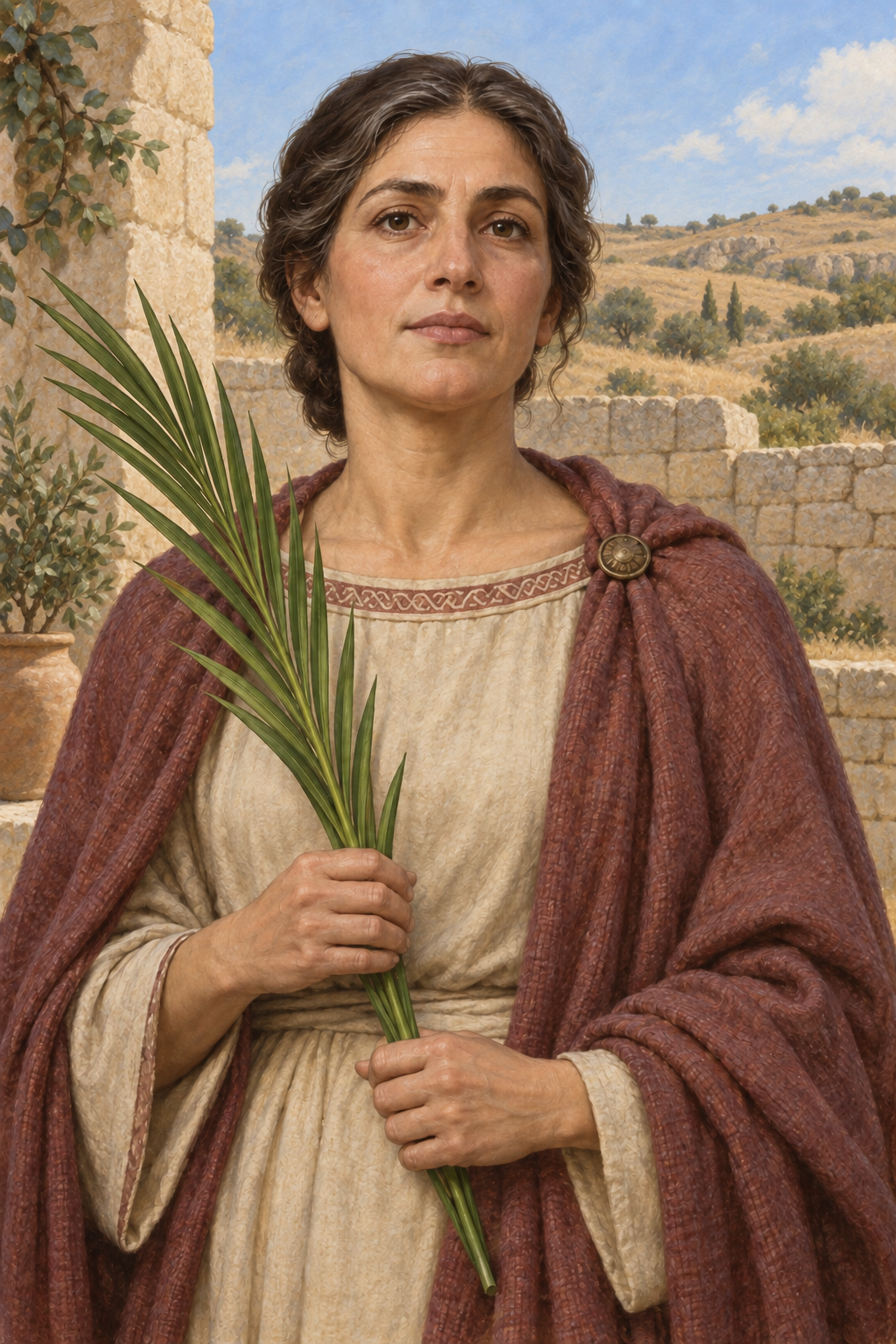
About Leocadia
The secure historical record for Leocadia is chiefly evidence for her veneration in Toledo, rather than an account of her individual life. The acts of the Fourth Council of Toledo state that the council met in the basilica of the “blessed and holy martyr Leocadia” in 633. The Seventeenth Council’s opening in 694 places its meeting in the church of Leocadia in Toledo’s suburb and describes her as a “glorious virgin and confessor of Christ.” These conciliar references show that a church and cult associated with Leocadia were established by the seventh century. Their different titles—martyr in 633, virgin and confessor in 694—are evidence of early ecclesial commemoration, not independent proof of the circumstances of her death.
The surviving Old Hispanic liturgical evidence also connects Leocadia with Toledo’s worship. A tenth-century antiphoner preserves a December 9 chant whose rubric directs it ad sepulcrum, “at” or “to the tomb.” Modern scholarship identifies this as the sole surviving example of a saint-related procession in the Old Hispanic liturgical repertoire. It witnesses the medieval ritual memory of Leocadia’s tomb; it does not establish a modern tomb location or independently verify the body’s identity.
The Archdiocese of Toledo continues to celebrate Leocadia on December 9 and calls her a virgin and martyr. Its diocesan sanctoral also recounts a late-third-century Toledo birth, imprisonment in the Diocletianic persecution, and death in prison on December 9, 303, while noting that older documents called her a confessor. Because the reviewed evidence does not corroborate those personal details, this profile leaves her birth and death dates and places unknown and presents the passion narrative only as a later diocesan tradition. No individual events are entered.
Wondering how to weigh the stories and sources? Learn how to read a saint biography.