Biography
Leonard of Noblac
About Leonard of Noblac
Leonard of Noblac is remembered as a hermit of the Limousin and a protector of prisoners. His traditional setting is sixth-century Frankish Gaul, but the surviving account of his life is much later. Louis Goosen dates the anonymous legendary Life to no earlier than about 1030 and notes the absence of firm historical documentation. The familiar stories therefore cannot be treated as a contemporary biography.
The tradition connects Leonard with Clovis and Saint Remigius. It tells of his withdrawal from courtly life, his settlement in a forest above the Vienne and his prayers for a queen experiencing a difficult childbirth. Freed prisoners appear among those who clear the land and cultivate it around his chapel. These stories explain the hopes associated with his shrine; they do not establish a reliable chronology of his life.
His cult spread from France into German-speaking lands from the eleventh century. Goosen links later interest with the danger of captivity during the crusading period and subsequent conflicts. In mountain regions, devotion expanded from the sixteenth century to include protection of livestock, especially horses. These changing associations belong to the history of his veneration, rather than to independently known events in his lifetime.
At Saint-Léonard-de-Noblat, the Romanesque collegiate church dates from the eleventh and twelfth centuries. It preserves relics venerated as Leonard’s and forms part of the French Routes of Santiago de Compostela World Heritage property, on the route from Vézelay. The church and its pilgrimage setting are tangible evidence of the devotion that grew around his name.
The town’s Quintaine celebration gives the theme of liberation a public form. Held on the second Sunday after November 6, it includes riders striking a model fortress with wooden clubs. The municipality explains the breaking of this prison-like structure as a symbol of release. A procession and worship in the collegiate church accompany the custom, which is organized by the confraternity responsible for the saint’s relics.
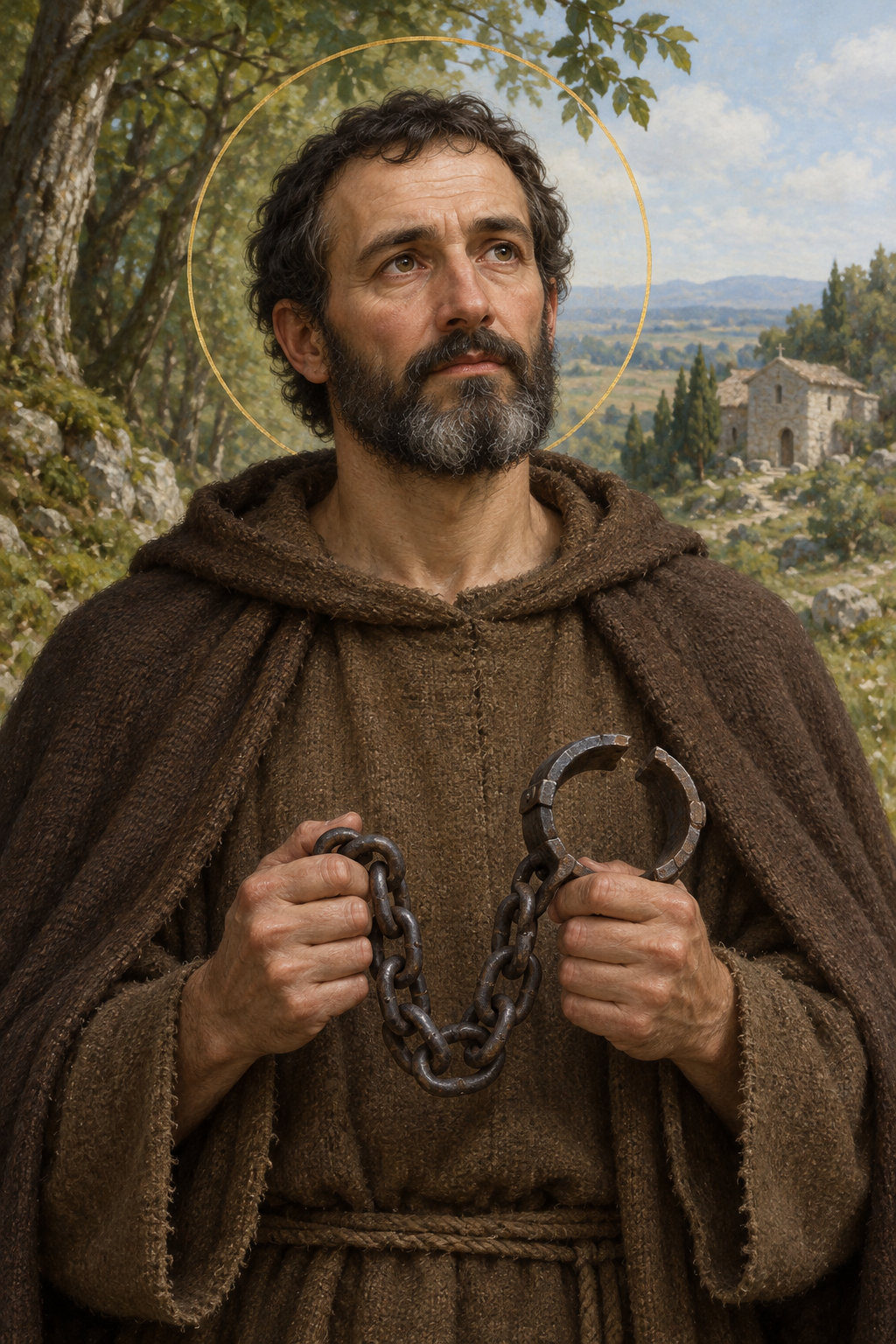
Art also made this association recognizable. A sixteenth-century Florentine painting in the UK Government Art Collection shows Leonard with fetters; the museum describes chains, locks and manacles as his customary attributes. Such images convey his devotional identity without supplying a verified portrait of the early hermit.
The French bishops’ Nominis calendar lists his local feast on November 6. It identifies him as patron of prisoners and describes his protection of expectant mothers and of the town bearing his name. The emphasis on people who await freedom, safety or a child’s birth remains central to the way he is remembered.
Wondering how to weigh the stories and sources? Learn how to read a saint biography.