Biography
Leonella Sgorbati
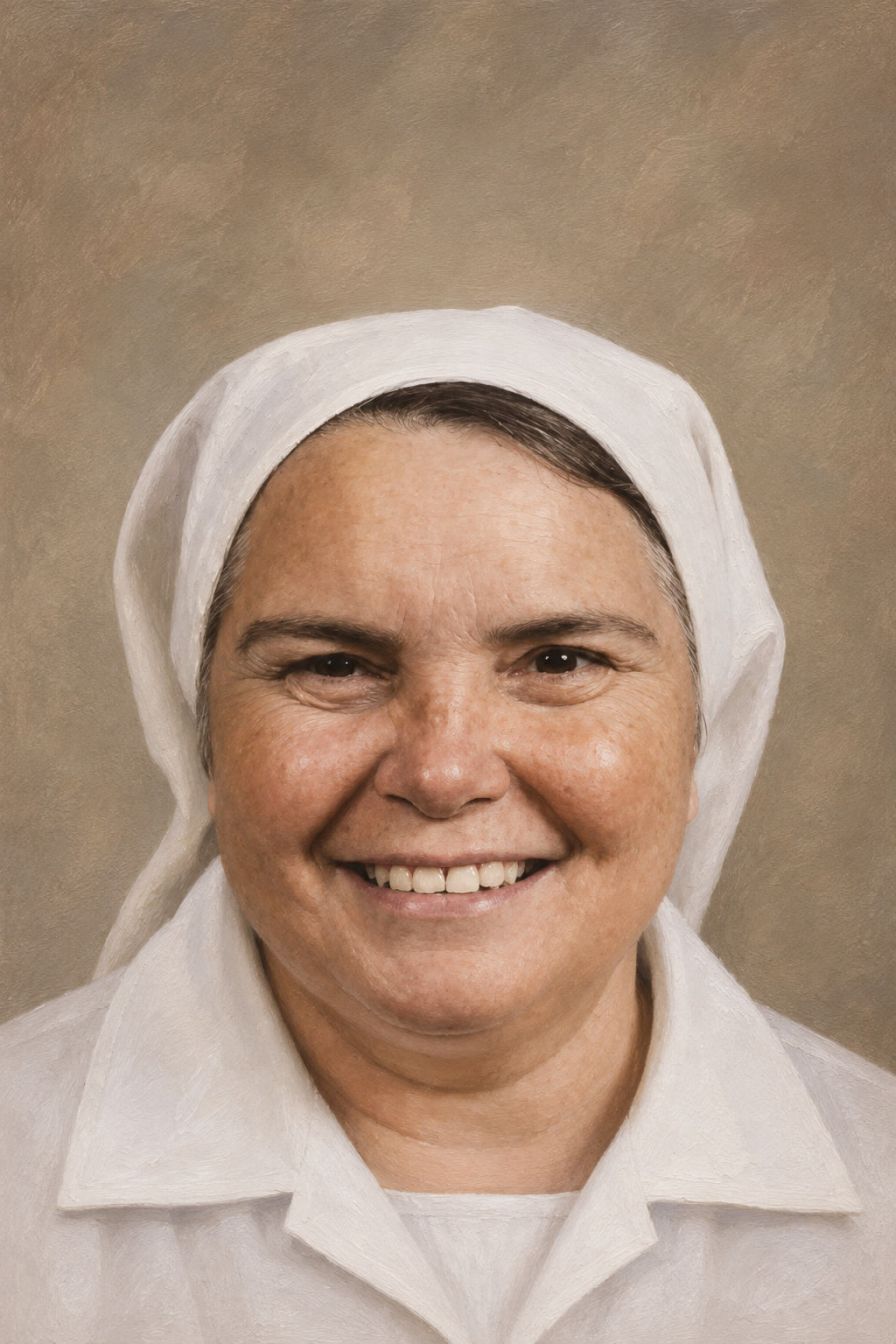
About Leonella Sgorbati
Leonella Sgorbati’s missionary work grew from a decision to make religious service and nursing part of the same life. Born Rosa Sgorbati at Rezzanello di Gazzola in 1940, she belonged to a farming family that moved to Sesto San Giovanni in 1950. She entered the Consolata Missionary Sisters in 1963 and received the name Leonella. After her first profession she studied nursing in England. Her preparation led to an assignment in Kenya, where hospitals and the education of nurses became central to her work.
Her responsibilities were also within the religious community itself. From 1993 to 1999 she served as regional superior of the Consolata sisters in Kenya. The congregation’s account places those six years within a longer career of hospital work and the training of young nurses. Leadership in the congregation accompanied her professional work rather than ending her connection with it. The congregation’s timeline describes her Kenyan leadership as service to the sisters of her religious family.
The postulator Renata Conti later recalled a concern that extended to the people working in those institutions. While involved in Kenya’s conference of women religious, Leonella asked for hospital employees’ salaries to be reviewed so that their work would be treated fairly. Conti also remembered her commitment to giving young people opportunities through education. These are recollections of a colleague, not a record that every proposal achieved its aim. They show how her concern for care reached students and workers as well as people receiving treatment.
The contemporary account from SOS Children’s Villages supplies a practical outline of that career. It names hospitals at Nyeri and Nairobi and identifies her earlier leadership of the nurse-training school at Nkubu. In April 2002 she went to Mogadishu to establish a nursing school and a four-year programme at the SOS clinic. She became its principal. The first group of students had recently finished the programme when the organization issued its statement after her death. The school therefore offered a path through sustained training, with graduates beginning to emerge while she was still alive.
Serving in Somalia brought danger. Conti recalled a conversation in May 2006 in which Leonella acknowledged the possibility that she would be killed. When Conti suggested leaving for a time, Leonella spoke about the young people and the sisters who depended on her presence. This testimony presents fear and commitment together. It does not describe someone unaware of danger, or someone seeking it for its own sake. Her stated reasons for remaining were connected with people she already knew and responsibilities she had accepted.
On 17 September 2006 gunmen attacked her as she left the hospital for the nearby SOS village. Her guard died at the scene. Leonella died soon afterward in the clinic’s operating room. Three other Italian sisters were evacuated that evening. The organization brought her body to Nairobi in accordance with her wishes. Its statement remembered her ability to communicate with students, preserving the educational relationship at the center of her last assignment.
Within a week, Benedict XVI publicly remembered her death. He spoke of her work among poor people in Somalia and repeated the report that her final words expressed forgiveness. The pope interpreted that response as a Christian witness to peace. This was a religious interpretation of her death, grounded in the testimony being shared by her community. It helped carry her memory beyond the hospital and the congregation whose members had known her personally. His tribute emphasized a response grounded in compassion rather than retaliation against those responsible.
The Catholic Church later recognized her killing as martyrdom. Her beatification took place at Piacenza on 26 May 2018, with Cardinal Angelo Amato presiding. His account connected her service with the Consolata congregation’s commitment to offer consolation through concrete care. The public recognition remembered her as a nurse and educator as well as a religious sister. The Catholic account also remembers that her guard was a Muslim.
Her community also retained two journals. Before the beatification, Conti described them as evidence of an inward life that accompanied demanding external work. She noted that the final entry, written only days before the killing, was unfinished. The journals were among the objects selected for the ceremony’s remembrance of her life. Their survival provides a different kind of trace from an employer’s statement or a public tribute: a record kept by Leonella herself, preserved and interpreted by the congregation. Conti said she hoped the journals would eventually be published.
Preparations included plans for representatives from Kenya and church leaders who had known her in eastern Africa. That continued relationship is part of her specific legacy. Her last years were spent helping young people gain nursing skills in a setting of insecurity. The students, colleagues and sisters who remembered her kept that work in view alongside the circumstances of her death.
Wondering how to weigh the stories and sources? Learn how to read a saint biography.