Biography
Léonie Aviat
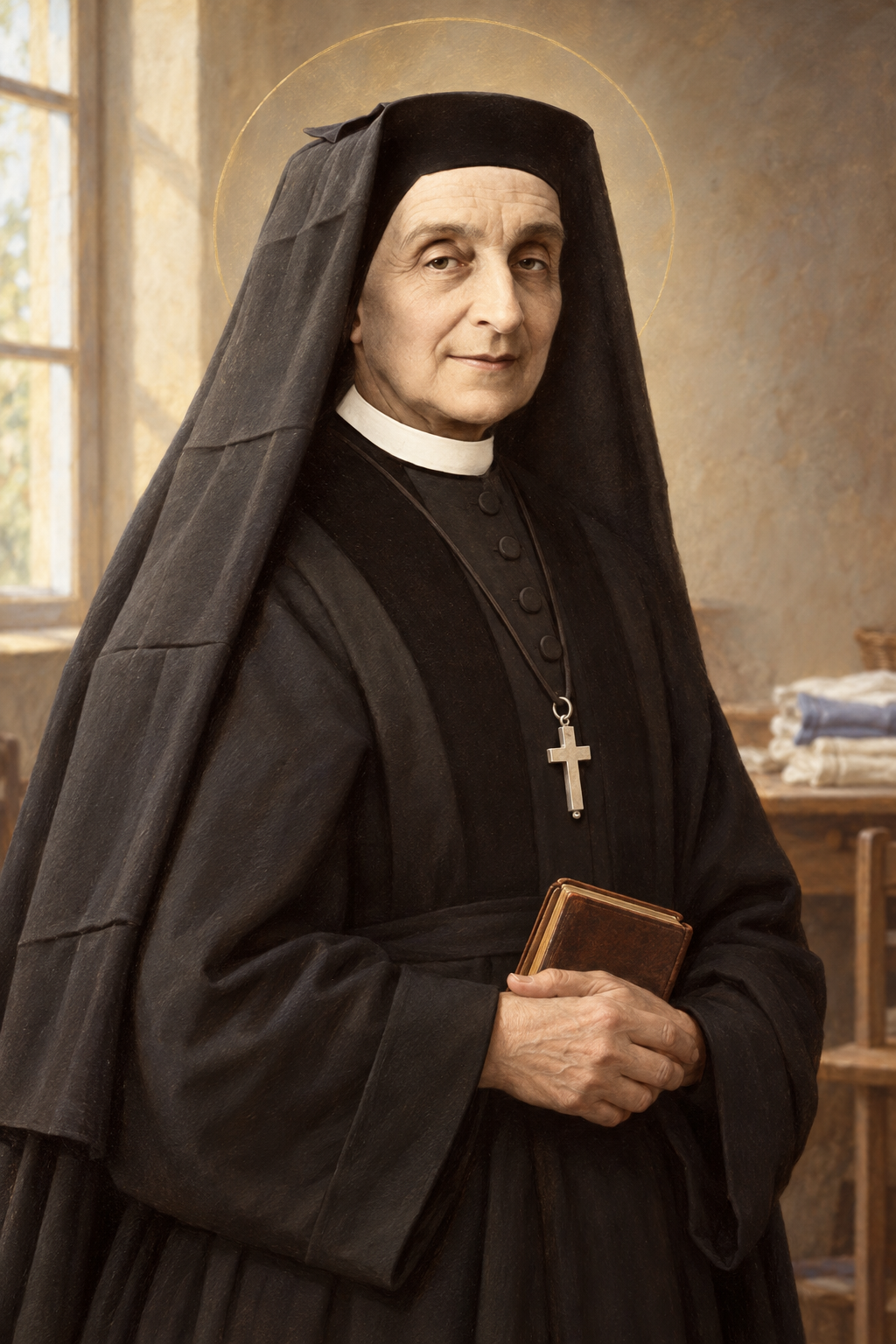
About Léonie Aviat
Léonie Aviat, known in religious life as Françoise de Sales, helped found the Oblate Sisters of Saint Francis de Sales to serve young working women. She was born at Sézanne, in Champagne, on September 16, 1844. At the Visitation school in Troyes, Mother Marie de Sales Chappuis and the chaplain Louis Brisson became important guides in her religious formation.
She initially hoped to enter the Visitation community. Her vocation took a different direction after an encounter with young women at work in an optical factory. The Vatican biography describes her desire to join them as a guide and companion. In April 1866, she entered Brisson’s work for young factory workers with Lucie Canuet, a former school companion.
Their work grew within the textile industry of Troyes. The sisters offered accommodation, instruction and religious formation to girls who had often come from the countryside. Historian Jean-Louis Humbert describes the Tauxelles home’s connection with the Hoppenot factory and the support of its owners. During the disruption of 1870–1871, workers there received reading and writing lessons as well as instruction in cutting and sewing.
This assistance also belonged to a paternalistic industrial system. Humbert explains that employers hoped for trained, compliant workers and that the Oblates collected some workers’ weekly pay, although his sources do not identify every factory involved. His broader assessment of the Troyes workrooms finds that narrow specialization could limit girls’ training and reinforce the low status of women’s labor. These findings qualify a simple picture of rescue: material help, religious education and control of working life could coexist.
Humbert also records inspectors’ criticism of charitable workrooms in 1884: repetitive production could benefit an institution without teaching a complete trade. This was a criticism of the wider system, not an accusation directed specifically at Aviat.
Aviat understood work itself as part of religious life. In a reflection prepared for her canonization, Oblate superior Lewis Fiorelli connects her approach with Jesus’s hidden life at Nazareth. Prayer and ordinary labor were not separate paths to holiness. He recalls that Brisson encouraged her to learn factory mending, a task associated with poor working women, and that the sisters were to work alongside those they served. The aim was both practical companionship and the renewal of Christian faith among workers.
Fiorelli explains this spirituality through the sisters’ daily routine. Beginning work promptly and willingly could itself become an act of prayer. Their active service drew on practices learned from the Visitation, while taking those practices into the lives of women earning their livelihood.
She took the religious name Françoise de Sales in 1868 and professed vows in 1871. The following year she became the congregation’s first superior general.
The decree on her heroic virtues describes the congregation’s widening educational work. She spent eight years in Paris rebuilding a boarding school for girls from prosperous families, a different setting from the workers’ homes. Returning to Troyes in 1889, she lost a position of responsibility amid opposition from some sisters. The decree presents this as a painful period of humility and fidelity. It does not make the internal conflict disappear from her story.
She was elected superior general again in 1893 and held the office until her death. The congregation developed communities in Europe, South Africa and Ecuador. In 1903, French measures against religious congregations forced major changes. Aviat arranged for some sisters to remain in ordinary clothing where work could be preserved, while others left France. She moved the motherhouse to Perugia in Italy and continued guiding the institute from there. Its constitutions received papal approval in 1911.
The history of the present Lycée Léonie Aviat records one local response to the crisis: laypeople bought the Tauxelles property for the sisters, allowing some to remain. The site’s educational work continued through later changes of purpose and name. In 2002, the school adopted Léonie Aviat’s name, preserving its connection with the woman who had taken charge of the work among young factory workers in 1866.
Aviat died at Perugia on January 10, 1914.
John Paul II canonized her on November 25, 2001. In his homily, he emphasized the prayer that sustained her service and her determination to set aside selfishness. He invited her sisters to remain attentive to the social and spiritual needs of their own time. This interpretation places her example in the continuing work of discernment, rather than requiring every nineteenth-century arrangement to be reproduced unchanged.
At Mount Aviat Academy in Childs, Maryland, she is honored as the school’s patron. A diocesan report on the centenary of her death describes students learning to connect her memory with kindness and practical help for others.
She is also named patron of the Longjumeau pastoral sector in a Chilly-Mazarin parish bulletin. Its account of a youth gathering presents her commitment to others’ happiness as a program for shared action.
Wondering how to weigh the stories and sources? Learn how to read a saint biography.