Biography
Leutfridus
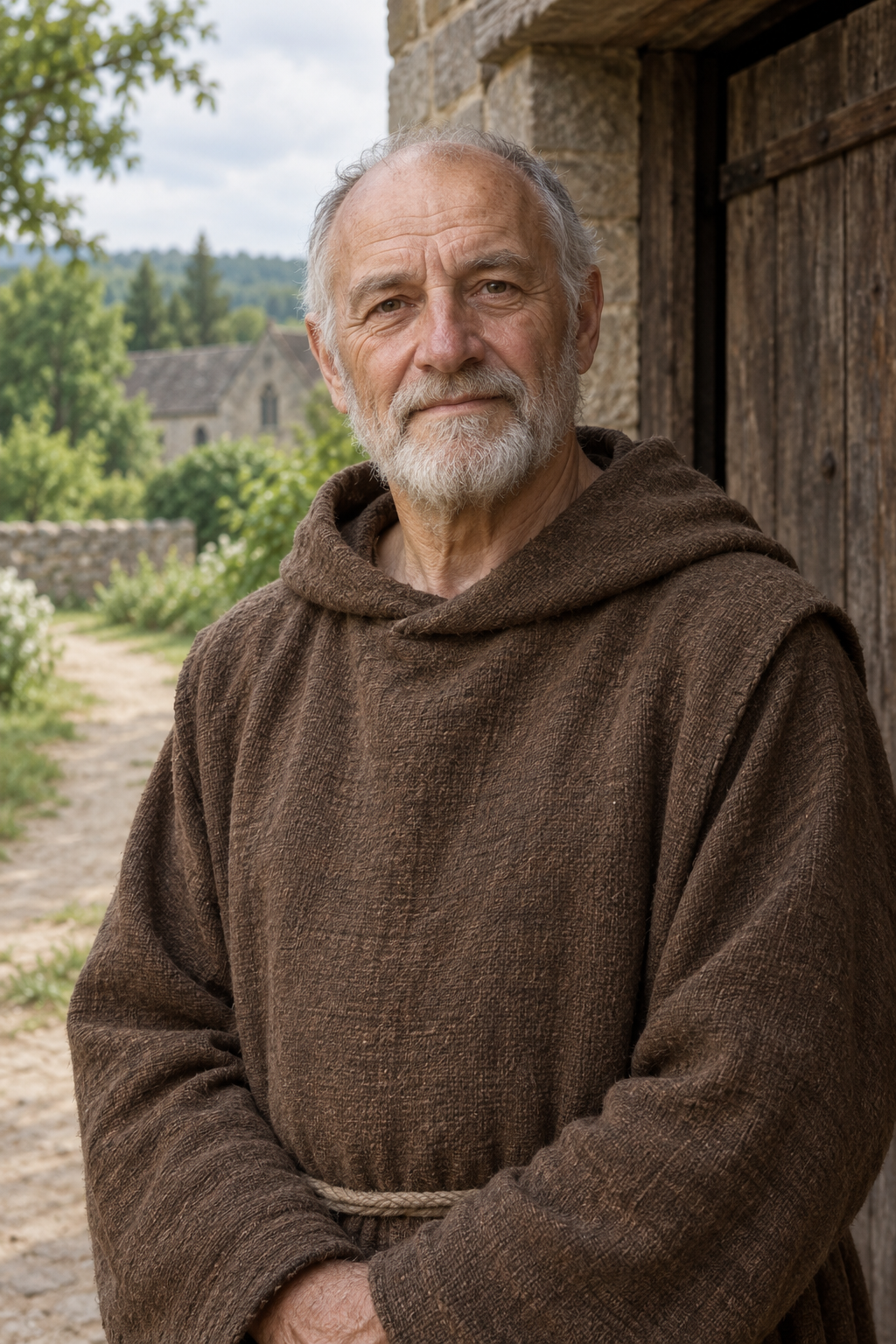
About Leutfridus
Leutfridus, known in France as Leufroy, is remembered as the founder and long-serving abbot of La Croix-Saint-Ouen, the monastery that later bore his own name. His received life places his birth near Évreux and his education first there, then at Condat and Chartres. After returning home he taught local boys. His later path led through a period of solitude to monastic training at Rouen, before he returned to establish a community in the region of his birth. The Norwegian church biography places the foundation around 690 and credits him with forty-eight years as abbot. It gives his death as June 21, about 738, and names his brother Agofred as his successor. These dates belong to the traditional chronology of the life.
The account of his education is also preserved in É. Brouette’s scholarly encyclopedia entry. It describes a young man from a respected family near Évreux, study at Chartres associated with Ouen’s encouragement, and a short period of teaching before a decisive departure from home. At Cailly he placed himself under a hermit’s direction. At Rouen he learned from Sidonius, an Irish monk, received the monastic habit, and became a friend of Ansbert. Returning to his own country, he governed the house he had founded until his death. This outline connects the schoolmaster, solitary, and abbot as stages in one received vocation, while leaving their precise duration uncertain. Brouette also follows the later movement of his relics: an elevation in 851, removal to Saint-Germain-des-Prés in Paris during the Norman troubles of the ninth century, and a return to La Croix in 1222. His feast is June 21.
Founding the monastery also brought Leutfridus into a dispute over authority. The historian Josef Semmler reads the surviving tradition against the changing relationship between bishops, monasteries, and the rising Carolingian family. The bishop of Évreux resisted the development of Leutfridus’s house, claiming authority over a foundation within his diocese. Leutfridus appealed to Charles Martel, whom he visited at Laon. Semmler places that appeal within a wider pattern in which the Carolingian rulers intervened in monastic affairs. He is careful about the result: the institutional consequences can be inferred only from later evidence. By 818 or 819, La Croix belonged among the royal monasteries expected to provide service, gifts, and prayers to the ruler. This history gives the founder’s encounter with a powerful patron a practical setting. The monastery was a religious community, but its establishment also raised questions about who could control its property and leadership. Semmler’s interpretation supplies that setting without making the later legal position a surviving charter personally issued to Leutfridus.
The anonymous Life fills that outline with a portrait of learning joined to generosity. After his studies, neighbors entrusted their sons to him. The writer says he taught both letters and religious conduct, while supplying food and other necessities to poor people, widows, and orphans. Guests ate in his house, and he gave them provisions when they left. Later, as abbot, he provided a hostel for the poor and sought to secure its support by a written disposition. These details place care for material need beside prayer and teaching. The same work describes his last illness as a fever. Though weakened, he continued the psalms, received Communion, and spent his final night in prayer. He was first buried in the church of Saint Paul. The author says that his remains were subsequently moved to the principal basilica dedicated to the Holy Cross and Ouen, and treats that transfer as an event within the writer’s own time.
The critical commentary connects the Life’s closing translation with the ninth century, more than a century after Leutfridus’s traditional death. Its editors compared several manuscripts and earlier editions. They explain 738 as a calculation from the received foundation date and forty-eight-year abbacy.
The community’s later history brings his remembrance into firmer documentary view. Jacques Le Maho’s study examines a letter written between 885 and 890 by Gautier, bishop of Orléans, to Lambert, bishop of Le Mans. It asks for help for monks who had fled the Normans and were running short of provisions. Le Maho argues that they belonged to La Croix-Saint-Ouen, rather than to the better-known monastery of Saint-Ouen at Rouen. His study also revisits the 851 elevation of Leutfridus’s remains. A later notice describes their placement in a reliquary in the abbey church, so they could be carried away if danger forced the monks to leave. Le Maho cautions against reading this as an immediate transfer to Paris: Saint-Germain’s possession of the relics belongs to the later history of the community. The study sets that movement against royal confirmations of the monastery’s property in 884 and its later transfer to Saint-Germain in 918. The careful distinction preserves both the monks’ attachment to their founder and the uncertainty surrounding the route by which his relics eventually reached Paris.
Wondering how to weigh the stories and sources? Learn how to read a saint biography.