Biography
Lorcán Ua Tuathail
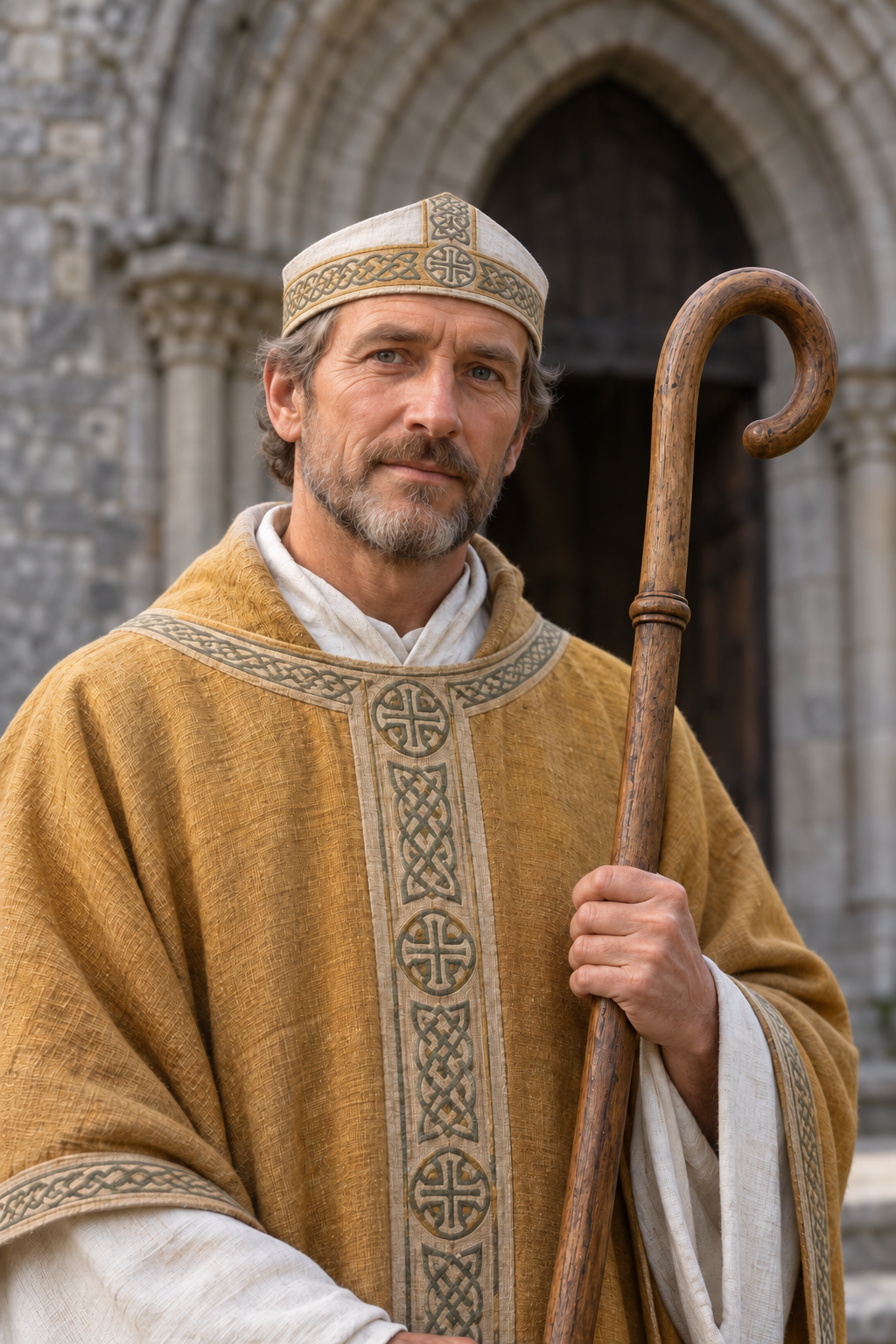
About Lorcán Ua Tuathail
Lorcán Ua Tuathail, also known as Laurence O’Toole, was abbot of Glendalough before becoming archbishop of Dublin in 1162. His life joined the discipline of a religious community to the difficult work of caring for a city caught in political change. Dublin’s diocesan account remembers practical generosity: food for people suffering famine and a home for children without shelter. It also describes his early morning prayer with the cathedral community and his retreats to Glendalough.
He was born around 1128 into a ruling family of northern Leinster. His early life included being held as a hostage by Diarmait Mac Murchada, followed by education at Glendalough. His family connections remained important after he entered religious life. The historian Ailbhe Mac Shamhráin considers dynastic support a probable factor in his advancement, while also finding the accounts of his charity and asceticism credible.
Church reform did not free him from those family obligations. His nephew Thomas became abbot of Glendalough and appears to have been married. Mac Shamhráin identifies a tension between this family succession and reforms opposing hereditary office and married clergy. The circumstances remain uncertain; the evidence does not support a simple picture of reform untouched by political compromise.
At Christ Church he introduced Augustinian canons and reorganized the cathedral community. Its history distinguishes this institutional work from the later rebuilding associated largely with his successor, John Cumin. The Romanesque and Gothic fabric developed over time, and nineteenth-century restoration changed the building again. Remembering Lorcán as a founder of its religious life does not mean that every feature visitors see today dates from his episcopate.
When Anglo-Norman forces approached Dublin in 1170, Lorcán negotiated for its citizens, but the city was seized during the talks. Gerald of Wales later accused him of organizing armed resistance; other sources do not corroborate that allegation. He participated in the Windsor negotiations of 1175, although the evidence gives Archbishop Cadla Ua Dubthaig a more central role.
An older devotional biography by Legris recounts an assault during a visit to Canterbury. A man struck Lorcán with a club as he approached the altar; the narrative describes his recovery and his subsequent plea that the attacker be spared execution. The episode is presented here as a received account, not as independently verified medical history. It preserves another aspect of his reputation: intercession for a person who had harmed him.
The diocesan account describes his journey to the Third Lateran Council in 1179 and his appointment as papal legate. The following year he again sought an agreement between the Irish and English kings. Henry II refused to deal with him, and Lorcán followed the king to Normandy. Illness ended the journey at Eu. His attempts at mediation had required repeated travel and had not secured a lasting settlement.
He died at Eu on November 14, 1180. Michael Richter’s study of the canonization process dates his canonization by Honorius III to December 5, 1225. Richter also draws attention to four surviving Latin Lives and to documents concerning the process published in 1926. These materials help distinguish the surviving evidence from the simpler outlines often given in devotional retellings. His medieval reputation reached beyond the country where he had served.
In Eu, devotion developed around his burial at the abbey of Sainte-Marie. The city’s heritage account connects the larger collegiate church, built between 1186 and 1240, with the need to receive pilgrims at his tomb. Its crypt preserves an effigy of the saint alongside the tombs of the counts of Eu. The church’s later fires, repairs and restorations belong to the long history of that place of remembrance, rather than to Lorcán’s lifetime.
A separate chapel on the hill above Eu commemorates his arrival. The present brick building dates from the late nineteenth century, replacing earlier chapels damaged by storms. The town describes an annual pilgrimage from the collegiate church to this chapel around May 10, recalling the transfer of his remains. The hilltop memorial and the burial church are distinct sites, joined by a local tradition of prayer and procession.
Dublin preserves another part of that memory in the heart traditionally attributed to him at Christ Church. Stolen in 2012, the relic was recovered and formally returned in April 2018. The service brought together the cathedral community, civic representatives and a representative of the Catholic archbishop. The Anglican diocesan report describes the return as a moment of gratitude and shared remembrance across religious traditions. Its account documents the modern event, rather than independently establishing the relic’s medieval identity.
In 2025 Archbishop Dermot Farrell traveled to Eu for the eight-hundredth anniversary of the canonization. His homily emphasized that Lorcán left no large body of writings; his memory rests chiefly on the witness associated with his life. That continuing relationship between Dublin and Eu keeps together the two places most closely connected with his ministry and death.
Wondering how to weigh the stories and sources? Learn how to read a saint biography.