Biography
Louis-Zéphirin Moreau
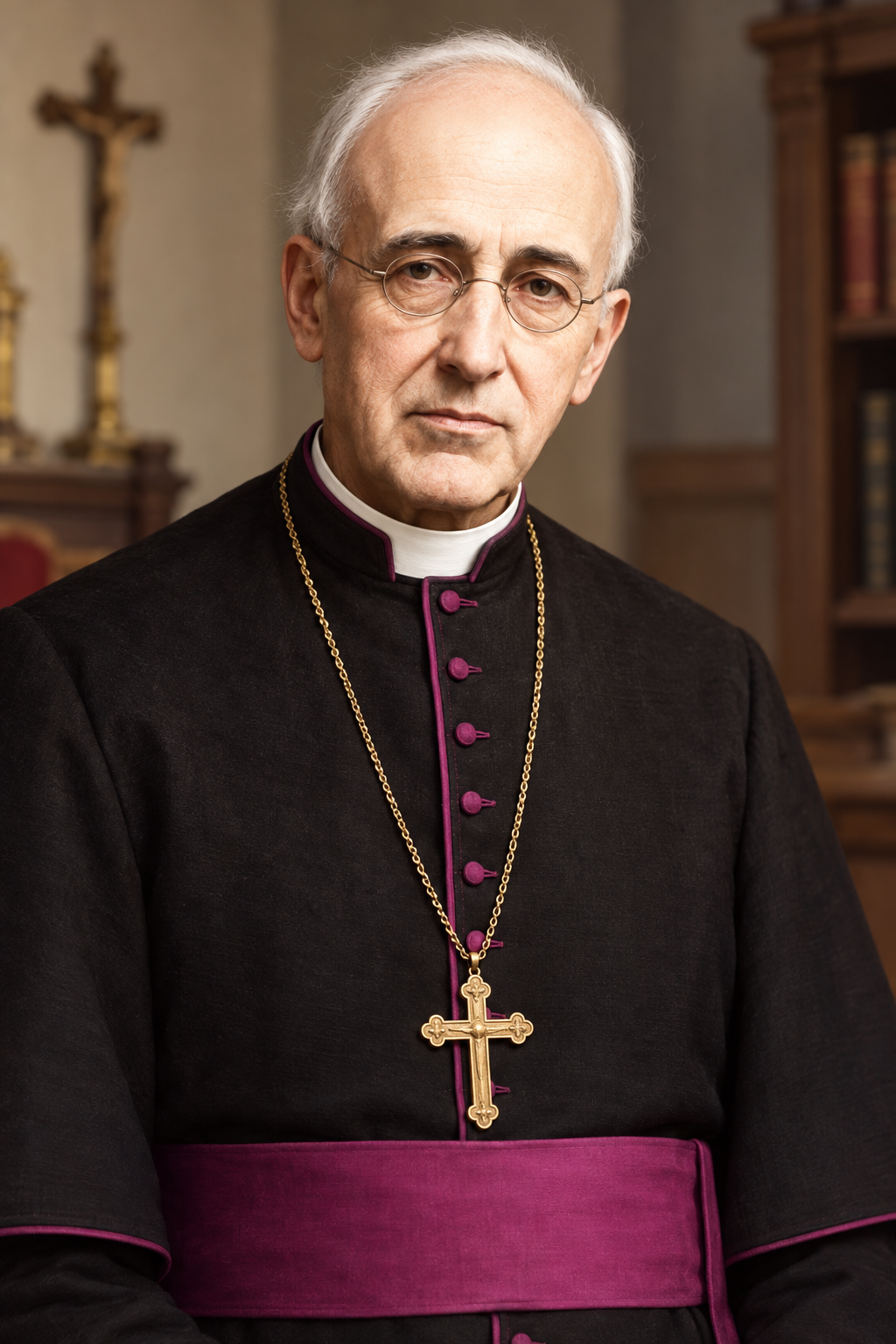
About Louis-Zéphirin Moreau
Louis-Zéphirin Moreau was born at Bécancour and studied at the seminary in Nicolet. Poor health interrupted his preparation for the priesthood. After the bishop of Québec asked him to withdraw, he sought admission to the diocese of Montréal. Bishop Ignace Bourget accepted him and entrusted his preparation to Jean-Charles Prince. Moreau was ordained a priest in December 1846.
His early appointments combined administrative work with service to vulnerable people. He worked at the cathedral and chancery and served as chaplain to the Asile de la Providence, a hospice for poor people. When the diocese of Saint-Hyacinthe was created in 1852, he became secretary-chancellor to its first bishop.
His administrative responsibilities are visible in a letter sent after Bishop Charles La Rocque’s death in 1875. Moreau informed the cardinal responsible for the Propaganda congregation that he had been appointed diocesan administrator. He explained the authority under which he acted and reported the bishop’s death. The letter shows him maintaining communication with Rome while the diocese awaited a new bishop.
Moreau served the diocese under its first three bishops, taking responsibility at different times for cathedral ministry, diocesan finances, and general administration. He also administered the diocese during absences and vacancies. He was consecrated its fourth bishop on January 16, 1876. He supported religious communities engaged in education and founded the Sisters of Saint Joseph and the Sisters of Saint Martha for distinct educational and service needs.
Canon Gaston Giguère’s diocesan remembrance describes Moreau receiving poor people at the bishop’s residence on Monday mornings. It places this care alongside the difficulties of a young diocese facing financial problems, fire, and changes of leadership. The account also links his support for rural education to the needs of people in villages and farming communities. His work for mutual insurance sought assistance for families left in financial distress.
In 1874, before becoming bishop, he founded the Union of Saint Joseph to help workers facing illness, injury, and unemployment. The bishops’ biography notes his reading of French Catholic social writers. It also recalls his concern for the continuing formation of priests, including conferences and publication of their discussions.
Moreau also took part in conflicts over church authority and public life. Historian Nive Voisine describes his strong commitment to papal authority and his initial alignment with Bishops Bourget and Laflèche against Archbishop Taschereau. Their disagreements included clerical intervention in elections and university affairs. After decisions from Rome favored Taschereau, Moreau changed sides, putting obedience to the pope ahead of earlier alliances. He later supported the creation of the diocese of Nicolet, a division he had previously opposed, and joined its first bishop in visiting Laflèche to ease the resulting tensions. During the Manitoba school controversy, he supported Archbishop Langevin’s defense of Catholic interests and wrote repeatedly to politicians and Rome. He sharply criticized the papal delegate’s apparent willingness to listen to Liberal politicians and clergy. Nevertheless, he accepted Pope Leo XIII’s 1897 encyclical on the dispute and urged his people to receive it obediently. His pursuit of unity therefore included political disagreements and changes of position.
He died on May 24, 1901. Contemporary reports preserved by the Centre d’histoire de Saint-Hyacinthe describe the public mourning that followed his death. The bishopric’s secretary, Pierre-Zéphirin Decelles, sent local newspapers an announcement specifying the funeral arrangements. La Tribune reported the death the next day, while Le Courrier described arriving messages of condolence and flags lowered on public buildings. Visitors gathered around the body at the bishop’s residence. For its transfer to the cathedral, residents decorated houses, shops and public buildings along the procession route with mourning drapery. Schoolchildren, religious communities, seminarians and teachers took part, followed by municipal officials and other townspeople. After the funeral on May 30, he was buried beneath the cathedral’s Saint Anne altar. These newspaper accounts record a civic as well as a religious response, involving institutions he had served over many years. Their descriptions of devotion testify to his reputation among mourners; they do not by themselves establish the healing claims associated with it.
At Moreau’s beatification on May 10, 1987, Pope John Paul II recalled his visits to parishes and schools and his personal attention to those who sought him out. The pope described his consultation with priests and his encouragement of their spiritual and intellectual formation. He also emphasized Moreau’s cooperation with religious congregations in education, care for sick people, and the formation of future clergy. In this remembrance, prayer and practical pastoral work belonged together.
Addressing Canadian pilgrims the following day, John Paul II presented Moreau as a bishop attentive to the needs of the whole community. He emphasized the cooperation of priests, religious, and laypeople around their bishop, rather than treating diocesan life as the work of one individual. Moreau’s recognition thus recalled both his personal service and the shared institutions through which a growing Canadian diocese met its needs.
Wondering how to weigh the stories and sources? Learn how to read a saint biography.