Biography
Lucy Yun Un-hye
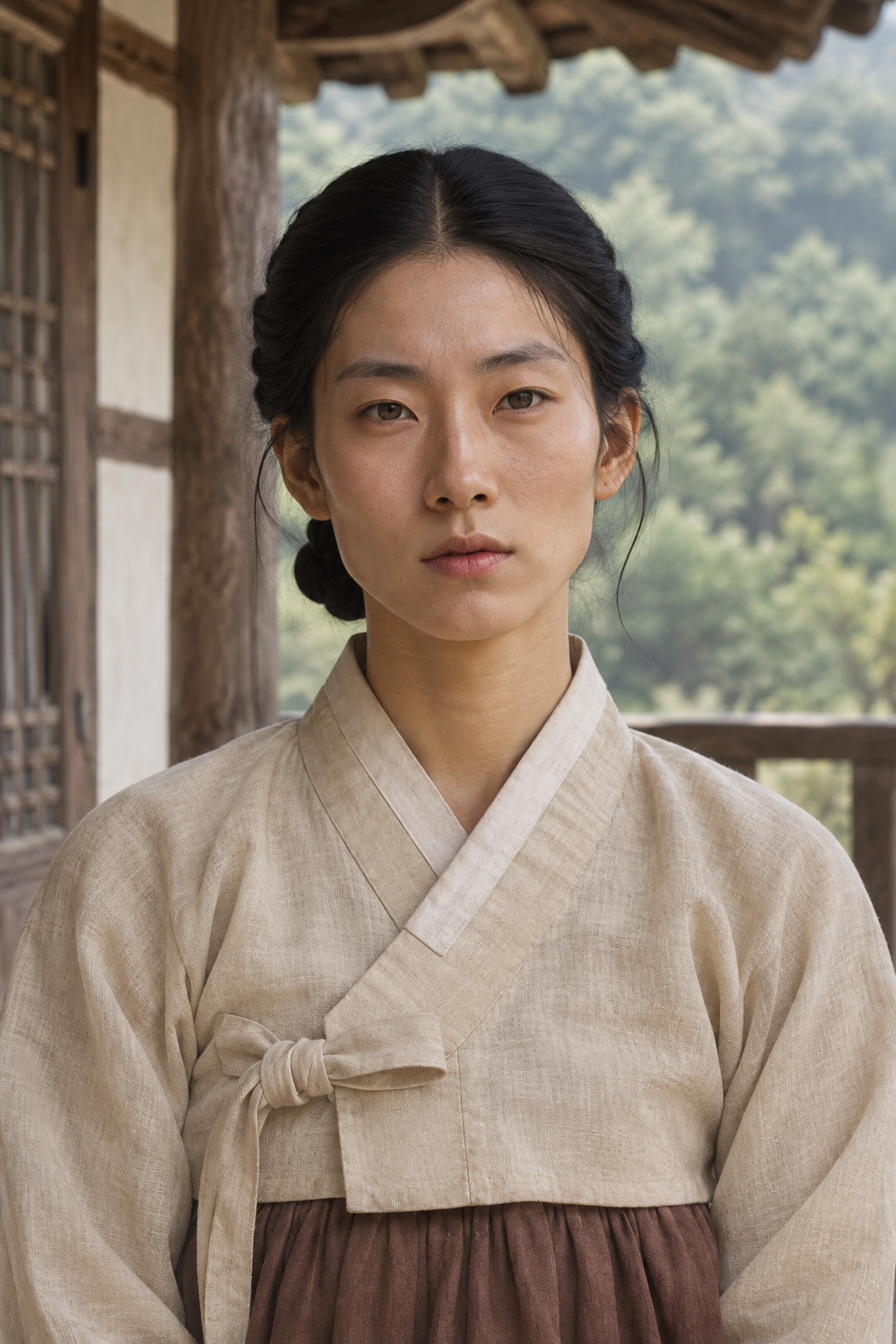
About Lucy Yun Un-hye
Lucy Yun Un-hye grew up within a family in which Catholic teaching passed from mother to daughter. Her mother, known by the surname Lee, taught her the religion; her elder sister was Agatha Yun Jeom-hye. The Korean Catholic Encyclopedia places her early home at Jeomdeul in Geumsa and says that she later moved with her father to Hanganggae. It dates the two sisters’ baptism by the Chinese priest James Zhou Wen-mo to 1797. Lucy’s birth year is not known. The older encyclopedia calls her Martha; the present Church biography uses Lucy.
She married Barnabas Jeong Gwang-su, whose parents opposed the match because she was a Catholic. Their objection had consequences beyond an unhappy welcome: the formal marriage documents were not exchanged. Ancestor ceremonies brought further conflict. Lucy refused to participate in rites forbidden by her Church, while the family expected the couple to observe them. In 1799 husband and wife left for Byeokdong in Seoul, seeking a place where they could practise their religion.
They settled among other believers rather than opening an isolated meeting room. Hong Yeon-ju’s encyclopedia account identifies Choe Hae-du and Jerome Jo Seop as neighboring Catholics and describes openings between the households. In Lucy’s home the couple prepared a place for Zhou, gathered for Mass and studied Catholic doctrine. The residence also became a place where religious books, pictures and devotional objects were made and sold.
Among those who regularly gathered at her home were Philip Hong Pil-ju, Simon Kim Gye-wan, Anthony Hong Ik-man, Columba Kang and Candida Jeong. Zhou celebrated Mass there, while the couple received the visitors and continued their work for the Church.
Cha Gi-jin’s account gives a more detailed description of their working routine. At night the couple drew pictures of Jesus and Mary, carved wood for rosaries and copied religious books. During the day they visited believers’ homes to distribute what they had prepared. The house itself had been obtained with help from fellow Catholics, and rooms were added to provide space for meetings. The work depended on contributions and assistance from the community as well as the couple’s own labor.
Lucy devoted particular attention to teaching women. The Catholic Encyclopedia names Columba Kang Wan-suk, Candida Jeong Bok-hye and Kim Hui-in among her close fellow believers. Yeo Jin-cheon records that her sister-in-law Barbara Jeong Sun-mae learned Catholic doctrine from Lucy before moving to Seoul.
A shopkeeper’s story preserves another route by which people came into contact with Lucy’s household. In Jeong Min’s account, an elderly woman called Choe Jo-i supplied kimchi and fermented sauce to the surrounding taverns. Geum-i, a young enslaved girl in the Jeong household, regularly bought food there. At year’s end she brought the shopkeeper a costly bundle of cotton, explaining that it came at her mistress’s wish. Choe sent food in return, and an invitation to visit followed. Jeong presents this exchange of goods and hospitality as the beginning of contact with the Catholic household. Jeong also identifies the shopkeeper’s daughter, Seong Jo-i, as a convert in this neighborhood network.
The persecution of 1801 broke into this network through Lucy’s own family. When her elder sister was arrested, she expected that her household would be searched too. She helped her husband take refuge and moved Catholic books and devotional objects to another believer’s house. Lucy stayed behind in her own home and was arrested in February.
The Ministry of Punishments named Lucy in a joint submission with Charles Jeong Cheol-sang, Yi Hap-gyu, Candida Jeong Bok-hye, Peter Choe Pil-je and Thaddeus Jeong In-hyeok. It accused the six of organizing meetings, receiving baptism and religious names from Zhou, and spreading religious pictures and books. These were the prosecution’s collective allegations, expressed in hostile terms, rather than six separate personal testimonies. The ministry requested review by the State Council. The royal reply approved its proposal and ordered execution without waiting for the usual season. Lucy’s book and image work thus appeared among the charges supporting her death sentence.
She was questioned at the police bureau and the Ministry of Punishments, where officials demanded that she abandon Catholicism. According to Hong Yeon-ju’s account, she did not retreat from her profession of faith and refused to reveal more than had already become known. The authorities sentenced her to death. On May 14, 1801, she was beheaded outside Seoul’s Small West Gate; her husband remained alive and would die after being taken back to Yeoju.
The couple are remembered together at Eonong, on land associated with Lucy’s Papyeong Yun family. Lee Seung-hun’s 2017 report distinguishes their commemorative graves there from an identified burial containing their remains. It also directs pilgrims to Yanggeun, where Lucy had lived, and Yeoju, associated with her husband’s origin and death. These memorial places bring together lives that persecution separated: Lucy was executed in Seoul, while Barnabas died in Yeoju the following year.
Wondering how to weigh the stories and sources? Learn how to read a saint biography.