Biography
Ludmila of Bohemia
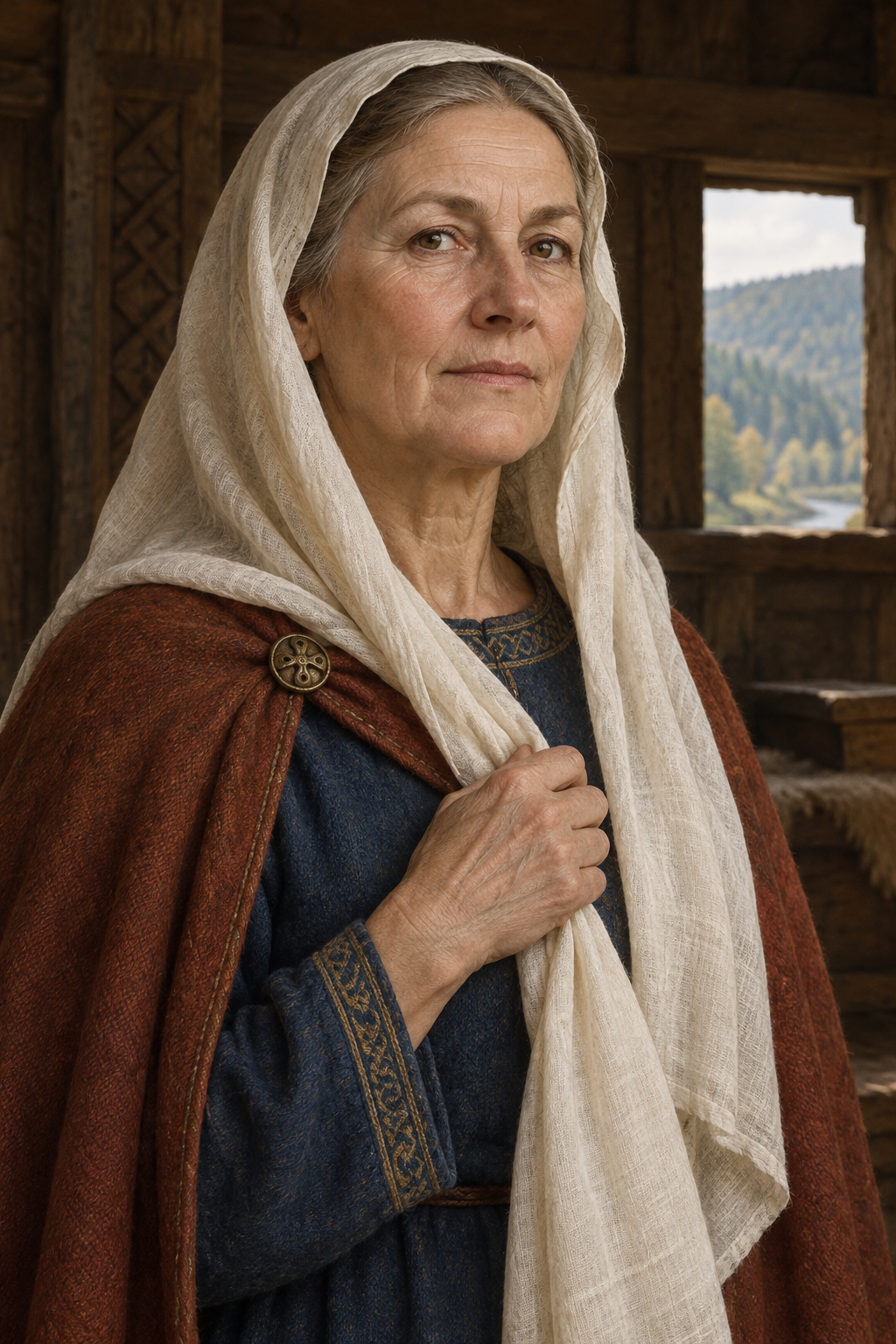
About Ludmila of Bohemia
Ludmila of Bohemia was a duchess whose family helped shape the beginnings of Christian rule in Bohemia. Born around 860, she married Bořivoj, the first ruler of his family whom historians can securely identify. Her own origins remain uncertain: medieval accounts connect her either with the region around Mělník or with the Slavic lands farther north. She became a Christian during the same period as her husband, as their family’s authority developed within the influence of neighboring Moravia.
She outlived her husband and her sons Spytihněv and Vratislav, who successively ruled the principality. After Vratislav’s death in 921, his young son Wenceslaus became central to a dispute over authority and upbringing. Ludmila was closely associated with his Christian education, while his mother, Drahomíra, also had a claim to direct his future. The conflict ended with Ludmila’s withdrawal to Tetín.
The historian Jakub Izdný cautions that the political world in which these women acted was not yet a state in the modern sense. Power rested partly in an extended ruling household and its property. A widow could preserve that property for her sons and exercise influence through it. Ludmila may already have performed such a role after Bořivoj’s death, although the surviving evidence is too thin to reconstruct her responsibilities in detail.
Even Wenceslaus’s age at this time is uncertain. Izdný explains that literary accounts and interpretations of his remains have suggested different ages, leaving the familiar picture of a young child open to question.
Izdný also warns against accepting the legends’ simple religious contrast between the two women. Drahomíra was almost certainly Christian herself. Property, family authority and rivalry over government may have mattered more than a disagreement over belief. Proposed differences in foreign alliances remain uncertain, and even a primarily personal conflict cannot be excluded. This caution leaves room to recognize Ludmila’s faith without turning her opponent into a figure whose motives are completely known.
Joanna Nastalska-Wiśnicka’s study examines how the written accounts shaped their readers’ understanding. They praise Ludmila’s generosity to poor people, widows and orphans, her prayer and her support for churches. Drahomíra appears as her moral opposite. These are texts written to honor saints, with literary patterns and religious purposes. Their descriptions cannot simply be read as neutral portraits of either woman’s character.
The dates of these accounts also matter. Nastalska-Wiśnicka places the original form of Fuit in the later tenth century, while its earliest surviving manuscript is from the twelfth. The date and authorship of Christian’s legend have long been debated. The distance between an event and its written witnesses complicates any reconstruction.
The same study emphasizes the practical division of power. Drahomíra controlled the ruler’s property and armed following, while influential supporters stood behind Ludmila. Neither woman held undisputed authority. Ludmila’s move to Tetín did not necessarily remove her from political life; interpretations of her intentions remain hypotheses. The later description of a completely peaceful retirement is therefore more certain as a feature of the saint’s story than as an explanation of every decision she made.
She was murdered at Tetín during the night of September 15–16, 921. The early legends name Tunna and Gommon, men from Drahomíra’s following, as her killers. Tradition describes strangulation with her veil or scarf, which became a familiar attribute in images of the saint. In 925, according to the received account, Wenceslaus had her remains brought to the church of Saint George at Prague Castle.
The Benedictine women of Saint George’s helped preserve her memory through texts used in worship. The National Library’s account describes increasing numbers of manuscripts about Ludmila in the thirteenth century and a broader development of her cult under CharlesIV. Her story also circulated among Utraquists and later in Catholic preaching during the Counter-Reformation. These changing settings gave her life meanings beyond the original struggle within her family.
Her presence in Prague can still be traced through buildings and sculpture. The city district’s heritage encyclopedia points to the church dedicated to her on Náměstí Míru, a Baroque statue in a niche chapel on Vyšehrad and the sculptural group of Ludmila with Wenceslaus preserved in the Gorlice hall. Such works often join the grandmother and grandson, making their relationship visible to generations who encountered them through prayer, public art or the streets of their city.
The 1100th anniversary of her death in 2021 brought renewed public attention. An exhibition devoted to her opened at the Wallenstein Palace, the seat of the Czech Senate, with participation from public officials and the historian Jakub Izdný. The Foreign Ministry’s report also noted interest among Czech communities abroad. Her commemoration thus reached beyond a single church or town, joining religious remembrance with questions about the beginnings of Bohemian history.
She is honored as patron of Bohemia.
The Czech bishops’ conference also names grandmothers, mothers, educators and church schools among her patronages. Her feast is September 16.
Wondering how to weigh the stories and sources? Learn how to read a saint biography.