Biography
Luke Hong Nak-min
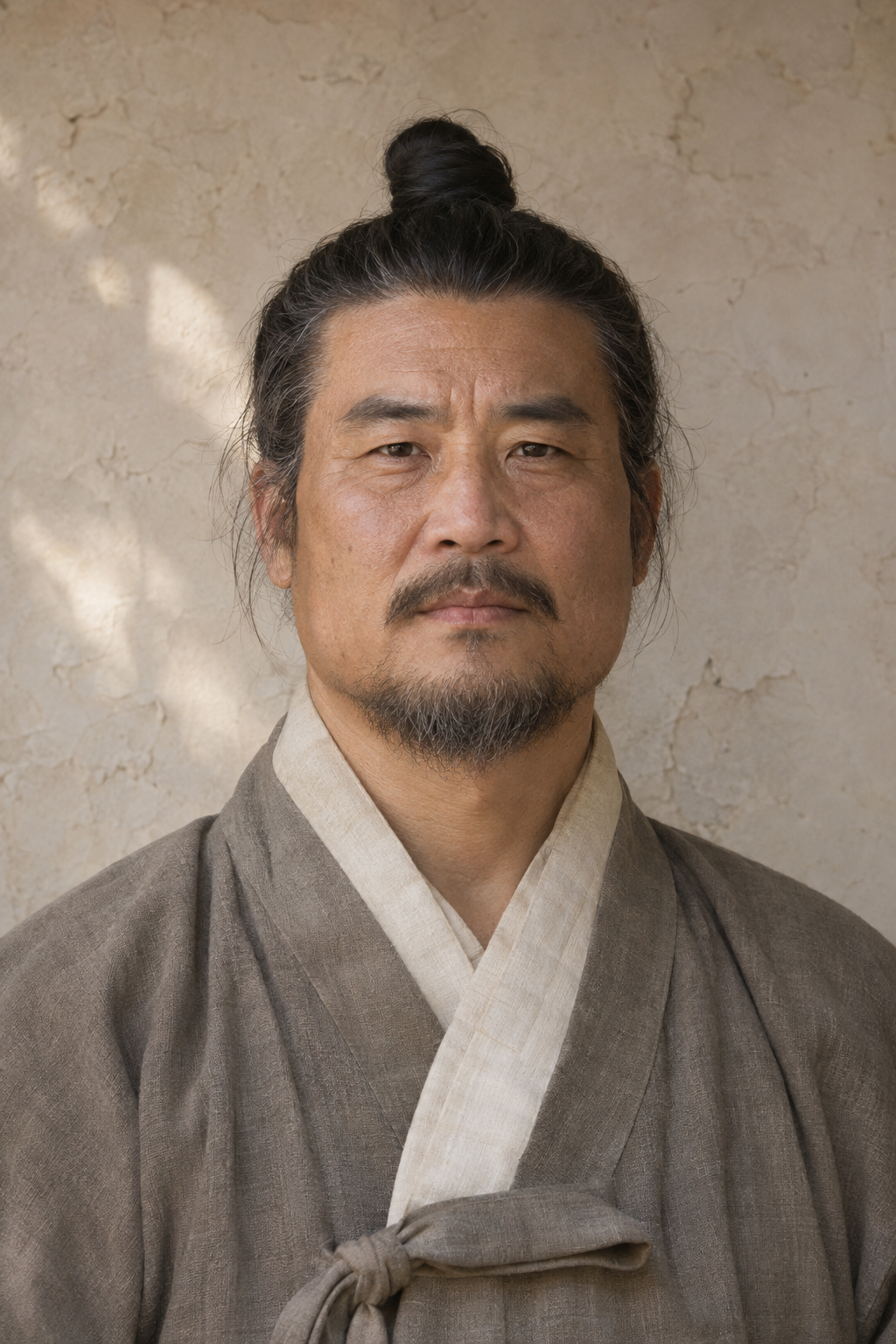
About Luke Hong Nak-min
Luke Hong Nak-min came from a family with a place in the government of Joseon. Born in 1751, he was the son of Hong Yang-han and a daughter of Yi Jong-hwan. His courtesy name, Seongnul, appears in accounts of his public career. Friendships among scholars in Seoul brought him into contact with Catholics such as Peter Yi Seung-hun.
His family belonged to the gentry of Yesan in Chungcheong Province. Luke lived in Chungju and then in Seoul. In 1776 he became a student of Kwon Cheol-sin, a scholar at Yanggeun. Four years later he passed the first level of the state examinations.
One of those men was Peter Yi Seung-hun. After returning from Beijing, Peter baptized Luke. Another connection ran through marriage. Luke was close to Jeong Yak-jeon and his brothers, whose family was related to his by marriage. By 1786 he was one of a small number of men who undertook to administer the sacraments to the growing community. No Catholic priest was living among them at the time.
In the autumn of 1786 Peter chose Luke, Kwon Il-sin, John Choe Chang-hyeon and several others to serve congregations that wanted to celebrate Mass. Doubts arose among the men themselves. They agreed to stop and ask the missionaries in Beijing what they should do. Paul Yun Yu-il carried their letter and brought the reply home in 1790. The missionaries recognized that these Catholics had acted in ignorance of what ordination required.
Luke meanwhile entered the civil service. The historical dictionary of the royal annals, citing the register of examination results, dates his success in the literary examination to 1789. His appointments included posts in the Inspectorate, the Ministry of Personnel and the Office of Remonstrance. In the last of these, an official could offer criticism and advice to the king. Luke would eventually have to answer to that same sovereign for his own beliefs. The bishops’ chronology places his successful civil examination a year earlier, in 1788.
Provincial officials knew his name well before his last arrest. Historian Jang Yu-seung studied copies of letters that Governor Pak Jong-ak sent privately to King Jeongjo about Catholics in Chungcheong. In those papers Luke and his brother Nak-gyo appear alongside Yi Jon-chang, who had studied with them in his youth. The governor treated the brothers as particularly influential in the Naepo region. Jang cautions that this judgment may reflect the family’s local standing as much as a position in the Church.
The governor doubted Luke’s public renunciation in 1791. He had people observe his movements and reported that Luke spoke quietly with acquaintances and had little to say to strangers. Pak thought a change of heart on Luke’s part could influence other Catholics. His letters record the suspicions of a man responsible for investigating the community. They also show how closely the authorities followed a government official after he had assured them of his loyalty.
At home Luke continued to pray and to observe the Church’s days of fasting. The Encyclopedia of Korean Culture records that he received supplementary baptismal rites from Father James Zhou Wen-mo and was preparing for confession in 1795 when an informer exposed the priest’s presence. The discovery brought Luke’s religious affiliations back before the authorities. This time he put his repudiation of the faith in writing.
His petition presented Catholicism as dangerous to families and the state and urged its suppression. His own conduct again diverged from the advice he had offered. When his mother died in 1799, he did not set up an ancestral tablet in her honour. The observance would have been expected of a son in his position, but Catholic teaching forbade its use in the rites.
Early in 1801 officials arrested Luke and questioned him under punishment. He declined to give them the names of other Catholics. Asked about the teaching he had followed, he pointed to the commandments concerning parents and the obligations of subjects to their country.
At first it appeared that Luke would be sent into exile. Under further examination he spoke more plainly. He admitted that for ten years he had distanced himself from his religion, but he would no longer call it evil or speak against Jesus. The historical dictionary records the queen dowager’s order for further punishment after his declaration. The sentence that followed was death.
On April 8, 1801, Luke was taken outside the Small West Gate of Seoul and beheaded with fellow Catholics. The Catholic Encyclopedia names Augustine Jeong Yak-jong and John Choe Chang-hyeon among his companions.
Luke had also taught the faith to his son Protase Hong Jae-yeong. Raised in Seoul after his birth in Chungju, Protase survived the persecution in which his father died and went into exile in Gwangju. He later died for his faith at Jeonju. His own son Thomas Hong Bong-ju was executed in 1866 outside the same Seoul gate where his grandfather had died sixty-five years earlier.
Wondering how to weigh the stories and sources? Learn how to read a saint biography.