Biography
Luke of Steiris
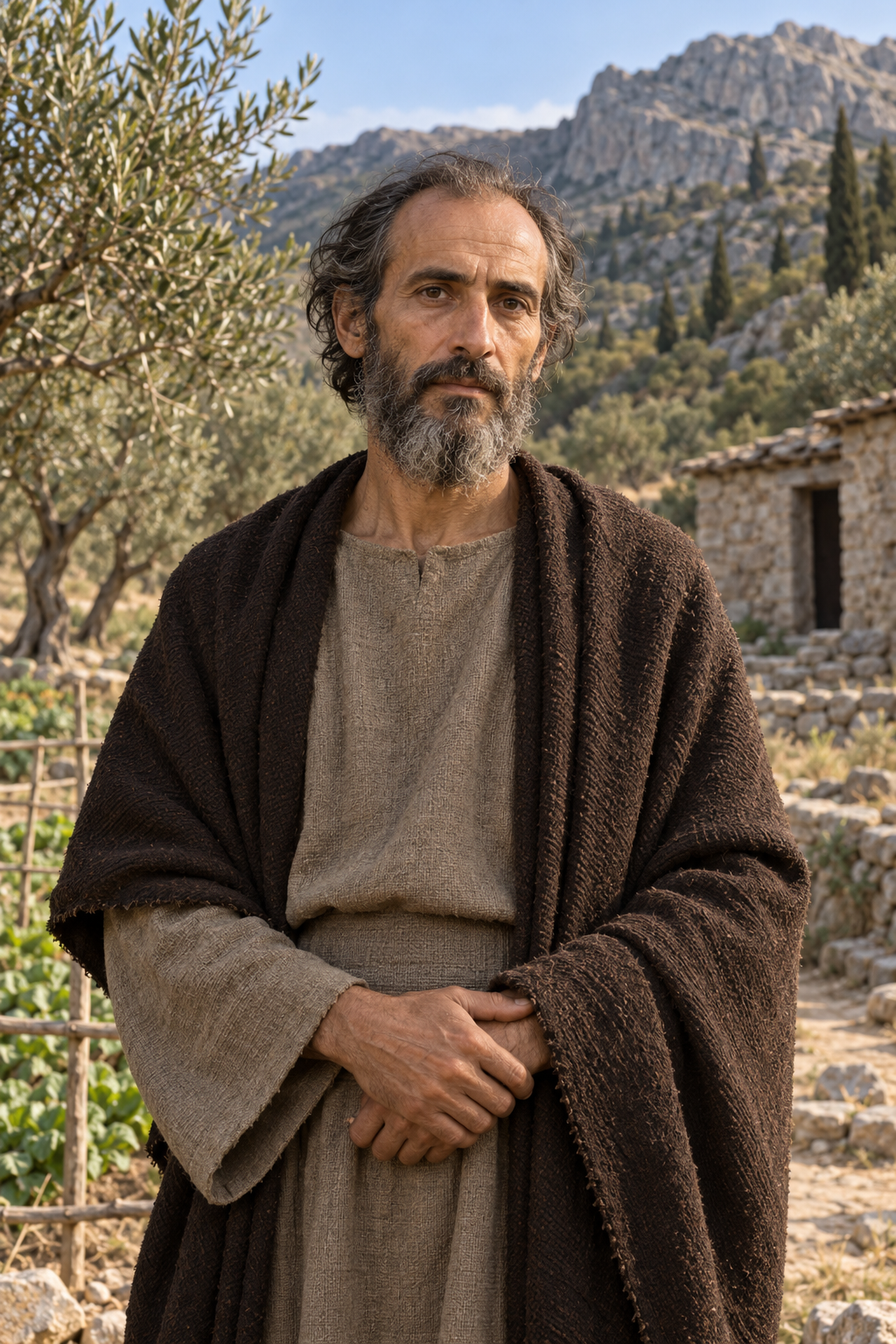
About Luke of Steiris
Luke of Steiris was a Greek monk whose final years gave rise to the monastery now known as Hosios Loukas. He settled near ancient Steiris in 946 and died in 953. The monastery’s early community grew around his cell and burial place, on the slopes of Mount Helicon. Its later buildings made the site one of the best-known monuments of Byzantine monastic life.
He was born at Kastorion in Phokis, to a family that had left Aegina because of raids. His birth is often placed around 896, although scholarly estimates vary. His parents were Stephen and Euphrosyne, and he was one of seven children. The early account of his life places him in a world shaped by displacement and repeated searches for safety.
Carolyn Connor reads the family’s successive migrations against the insecurity of the Aegean coast. In the passage from the life that she translates, leaving Aegina did not end the family’s danger: another coastal home also had to be abandoned. This background connects Luke’s later movements with an experience of displacement that preceded his own monastic career. It also explains why the biography remembers more than one threatened home.
The church tradition remembers a boy who helped his farming family and tended sheep. He gave food and clothing to poor people, sometimes provoking his parents’ objections. These childhood episodes introduce a recurring tension in his biography: his desire for an austere religious life and the expectations of his family. Stories of extraordinary prayer and miraculous abundance belong to the same hagiographic portrait.
After his father’s death, Luke left for a monastery in Athens. His mother wanted him home, and the narrative describes his return before she eventually accepted his vocation. He then lived on Mount Ioannitsa, near a church dedicated to Cosmas and Damian. Prayer, fasting and separation from ordinary comforts shaped this period of his life.
The Orthodox Encyclopedia describes practical work alongside his prayers: at Ioannitsa he planted a garden and shared its fruit and vegetables with people in need. His retreat therefore did not end his contact with neighbors. The same account says that visitors eventually became numerous enough to disturb the solitude he sought.
War interrupted his solitude. Around 917, a Bulgarian invasion drove him toward the Peloponnese. He spent years serving a stylite, an ascetic who lived on a column, at Zemena. Later he returned to his former region, then moved through other retreats, including Kalamion and the island of Ampelon, before settling at Steiris.
Before moving again, Luke sent his disciple Germanos to ask advice from Theophylact in Corinth. The question was whether to remain available to visitors or seek greater seclusion. After receiving the reply, he withdrew toward the coast. At Kalamion, the account describes him sowing wheat, grinding it himself and making bread.
His biography was written by an anonymous monk in the decades after his death. It presents Luke as both an ascetic and a wonderworker whose tomb drew pilgrims seeking healing. The text is close enough to his lifetime to matter for the history of the community, but its religious claims require a different reading from ordinary records of construction or administration.
The account also reached beyond the cloister through memories preserved by people who knew Luke. The Orthodox Encyclopedia identifies his sister Kale and surviving disciples among the witnesses consulted by the anonymous author.
One episode credits him with predicting the Byzantine recovery of Crete under an emperor named Romanos. The conquest occurred in 961, after Luke’s death. The story therefore helps date the biography and shows how the monastery’s memory became associated with imperial victory. It does not independently establish that Luke foresaw the campaign.
A church dedicated to Barbara was financed while Luke was alive and completed afterward. The monks developed the settlement around his burial place. The great churches visible today belong to later stages of building: their precise dates and patrons have been debated. The Hellenic heritage service places the larger katholikon in the early eleventh century. Its mosaics, marble decoration and crypt preserve the scale of the devotion that developed around him.
Local memory has also linked Luke’s birthplace with Delphi. Archaeologist Platon Pétridis describes this as a persistent legend, repeated in popular accounts and some scholarship. Kastorion, the name preserved in the biography, should not simply be replaced by modern Delphi. The distinction matters because a familiar place-name can give uncertain traditions an appearance of geographical precision.
The monastery’s paintings give this connection a visible form: Luke appears as its patron in a chapel used by pilgrims approaching his relics. Another scene shows an abbot appealing to Luke, who turns in prayer toward Christ.
Luke died at Steiris on February 7, 953. His followers preserved the place of his burial and continued the community associated with him. The monastery’s later prominence grew from that remembered connection between the ascetic, his grave and the monks who remained.
Wondering how to weigh the stories and sources? Learn how to read a saint biography.