Biography
Lupus of Sens
About Lupus of Sens
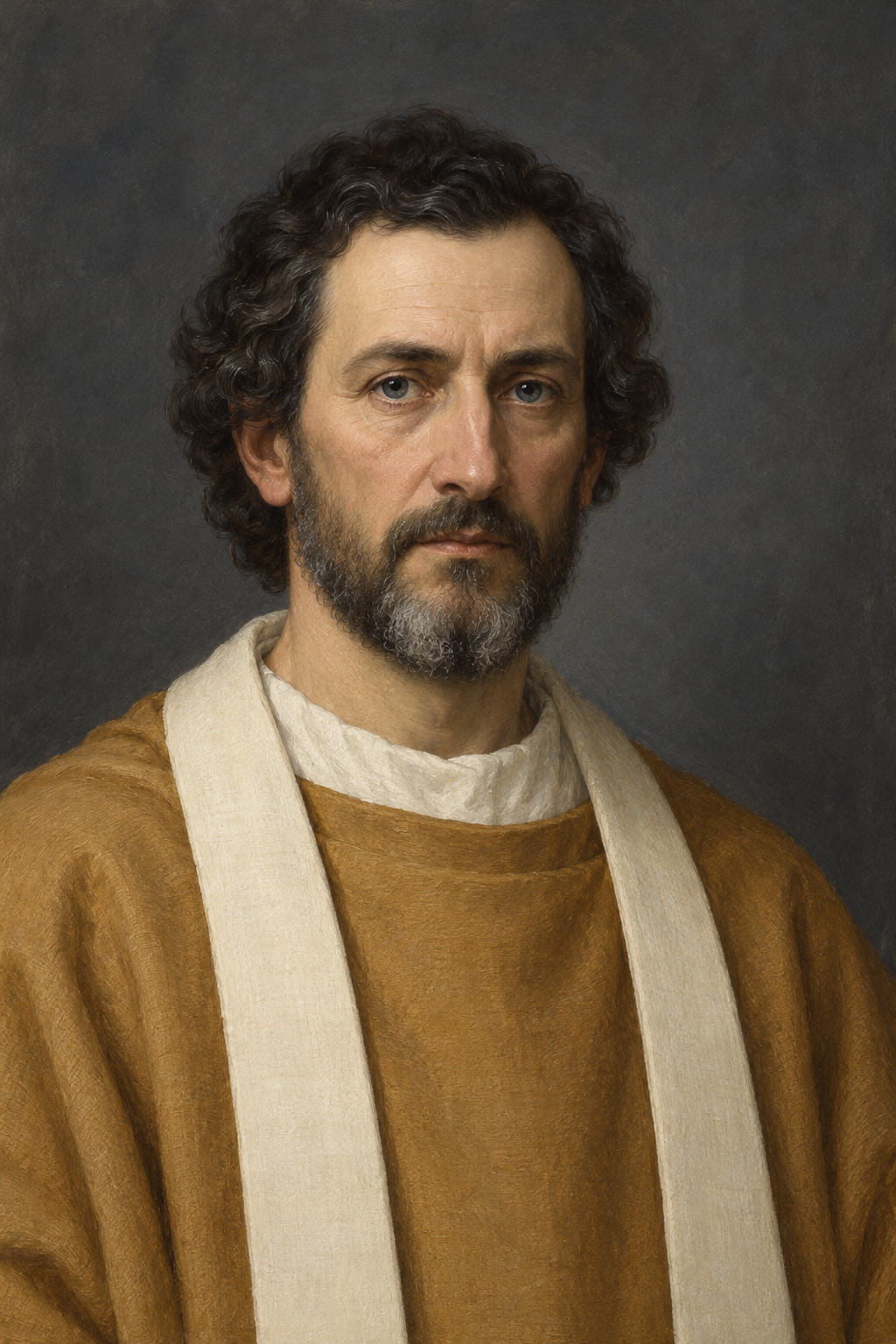
Lupus of Sens, also known as Loup or Leu, was an early seventh-century bishop from the Orléanais. His traditional biography places his education with his maternal uncles, the bishops of Orléans and Auxerre, and his appointment to Sens in 609. His career became entangled with the rival Merovingian kingdoms.
As a supporter of Sigebert of Austrasia, he was exiled by Chlothar II to Vimeu in 613. The received account credits him with preaching there before his pardon and return. He attended the council of Paris in 614 and was buried at Sainte-Colombe near Sens. The Latin Life cited by the New Catholic Encyclopedia is substantially later than these events, dating to around 790.
His story continued to circulate in medieval French. The Arlima manuscript catalogue records a fourteenth-century verse Life in two manuscripts, arranged in sixty-three four-line stanzas. This later literary witness belongs to the history of his remembrance rather than contemporary documentation of his episcopate.
At Brienon-sur-Armançon, tradition attributed the foundation of the Saint-Loup collegiate community to him. Vincent Tabbagh’s institutional history distinguishes that claim from the evidence: the chapter is first attested in 1190. A dedication does not establish that its patron personally founded the institution.
Le Vaudoué honors him as its patron, and its church bears his name. The municipality describes a longstanding pilgrimage held on the first Sunday of September. At Courquetaine, a painting of the bishop of Sens was given to the church in 1747. The heritage description explicitly identifies him as its patron.
The Sainte-Radegonde church at Frayssinet-le-Gélat honors him as a secondary patron. A regional inventory records processions continuing into the 1940s and prayers for children experiencing convulsions. This is evidence of a historical devotional practice. He is also traditionally invoked by people with epilepsy. His feast is September 1.
Wondering how to weigh the stories and sources? Learn how to read a saint biography.